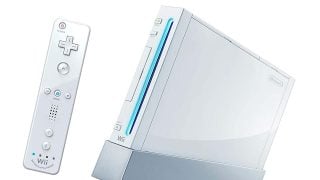


Late in 2006, Nintendo revolutionized the games industry. They didn’t do so by going deep into the existing landscape of dedicated gamers by utilizing cutting edge graphics or high-powered processors. Instead they went wide, aiming for a broad appeal that would bring games to everyone. They believed in this idea so strongly that they named the console they planned to do this with the Wii. It’s a shockingly simple, yet profound, idea — taking the pronoun “we,” used to refer to a group of people while, crucially, also including the individual speaking — and modifying and stylizing it to include a double letter “i” so as to evoke the image of two people standing side-by-side. This attempt at mass appeal worked; the Wii became the best-selling console of its generation, beating the Xbox 360 and PlayStation 3 by roughly 15 million units each.
I was 13 when the Wii finally launched, though I had been looking forward to it since I first saw mention of it in Nintendo Power well before then. I spent the majority of 2006 saving up all the money I could (doing a lot of baby-sitting mostly) to make sure I could buy one as soon as it came out. What young me didn’t anticipate was the fervor that would build around this console’s launch. The Wii quickly sold out on launch day, and I was not one of the lucky 600,000 to obtain a Wii during the launch window, as far as I was aware. What I didn’t know was that my incredible mother managed to get her hands on one, somehow, and that it would make its way into the hands of the whole family that Christmas.
What ensued after that Christmas morning was several hours, days weeks, months, and years of making some of the best memories of my teen years alongside my family. We gathered around the TV experiencing the Mii Channel for the first time, laughing at how silly we could make these simple little characters just by adjusting their facial features. My entire family played Wii Sports for what felt like days on end, mostly Wii Sports Bowling but there were some memorable events for every sport in the game, including a mishap where I accidentally punched my brother in the back of the head with a Wii Remote during a heated match of Wii Sports Boxing. That scenario, all of us gathered around the Wii and the TV having fun with a game, played out several times with different games over the following years.
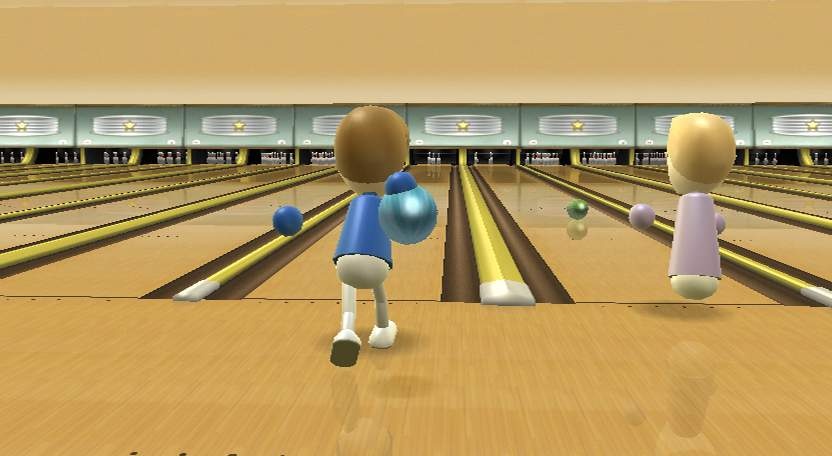
Whether it was one of the nine mini games in Wii Play (my mom often went back downstairs after we were all in bed to try and beat her high score on Find Mii), hours of Mario Kart Wii in my dad’s basement, playing through Castelvania on Virtual Console with my uncle, or my mom sneaking me out of bed to play Super Smash Bros. Brawl after the midnight launch so I could play it without waiting any longer, the Wii gave us a new way to connect with each other. It still happens 20 years later, and although it’s usually a Nintendo Switch or a Switch 2 between us and the TV now, the Wii made gaming a family affair for the very first time.
It was more than just games too. I fondly remember finding out we could put the SD card from the digital camera into the Wii and making endless edits of pictures of my sister’s cat, or excitedly checking what the new questions were going to be on the Everybody Votes channel alongside my siblings. Things like this, outside of games, brought the Wii into more homes than a simpler gaming console possibly could have. I was shocked when my grandparents purchased a Wii, and it was my their primary way of accessing Netflix for years — I suspect many other people will have that same story. Think about it: back during its heyday, it seemed like just about everyone you knew owned a Wii, whether they were into video games or not. That sure seems like Nintendo’s idea of broadening their audience with the Wii worked like a charm.
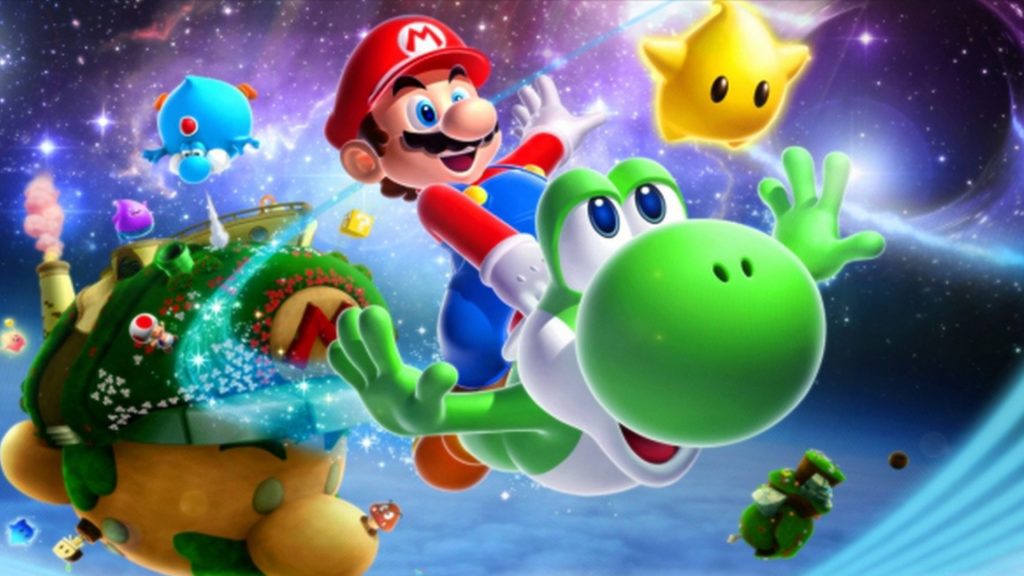
Of course, Nintendo wasn’t content to just have the Wii be the broad appeal console. Some of the best games from Nintendo made their home on the Wii, games like The Legend of Zelda: Twilight Princess, Super Mario Galaxy and Super Mario Galaxy 2, and Donkey Kong Country Returns. There was also access to things like the entire Metroid Prime Trilogy, Pikmin 1 and 2’s New Play Control versions with motion controls, Xenoblade Chronicles, an impressive Virtual Console catalogue, various Rock Bands and Guitar Heroes, the list goes on. It wasn’t as powerful as its competitors, no, but in all honestly it didn’t need to be because it had something for everybody.
Looking back at the last 20 years, I don’t think the gaming landscape of today looks the same without the Wii. Motion controls, accessible games, weird ideas that would lead to an explosion of indie titles on Nintendo platforms over the years, and the way it made itself into what felt like the majority of living rooms in the world, the Wii was the kernel of casual gaming that showed the industry that the market was much bigger than dedicated gamers, leading to the spread of things like mobile gaming and casual party games being something almost everyone is familiar with.
I’m willing to bet everyone of a certain age has at least a few stories or memories like mine, where the Wii not only brought folks together, but made its way into the lives of people who hadn’t owned a gaming console in years, if ever. It has a simple name, but it couldn’t be more apt. The Wii was well and truly “we,” it was for everyone.
Check out more content about the Wii
Wii and GameCube games now playable at 60 fps on iOS devices without JIT
Wii Remotes become Nintendo Switch 2 Joy-Con in impressive fan project
Leave a Comment

Written by Jaxson Tapp
As a lover of gaming and the written word, Jaxson currently fills his time not only with playing games, but also writing about them. Ready for anything, Jaxson’s passion for puzzle games, JRPGs, tough platformers, and whimsical indies helps him bring a well-rounded opinion to Nintendo Wire’s reporting.
