
In a recent interview with FRVR, legendary game creator John Romero praised the rise of digital distribution for lowering the barrier of entry to getting games published. At the same time, he cautioned prospective developers that quality was more important than ever in standing out now, especially since platforms such as Steam receive several thousand games a month and crowd the space.
Speaking retrospectively on the start of his career, Romero told FRVR, “Distribution was the hardest thing to do back then [at the start of my career]. Because if you didn’t have a modem, and I didn’t really care about being online back then, you needed to get a disc with a game on it, and those were in stores. And to get into a store that’s like another universe.” This was true until roughly 2010, when Steam finally broke containment and became mainstream.
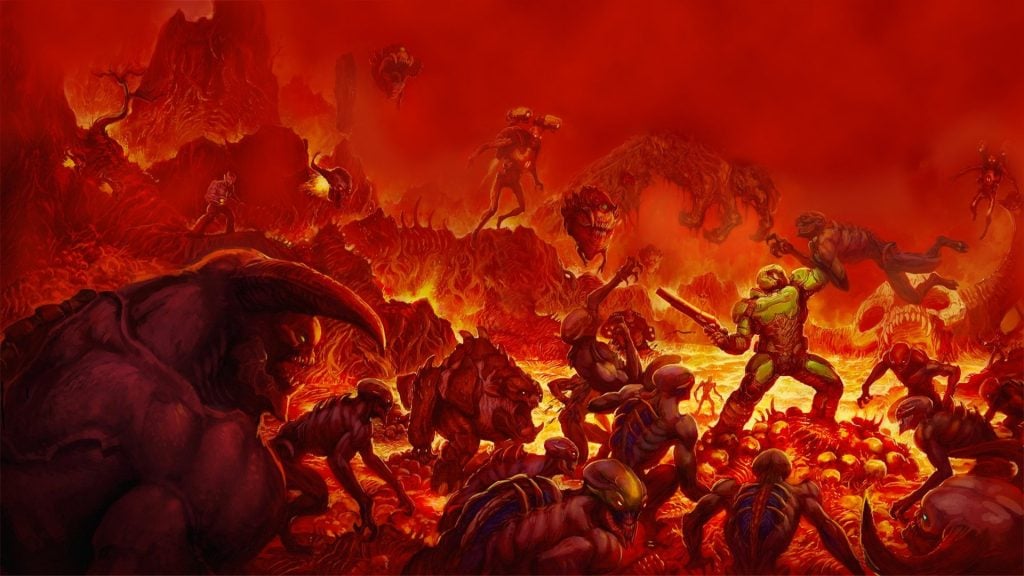
Way back, id Software (Romero’s first company) had relied on a shareware model for distributing legendary games such as Wolfenstein 3D and Doom. This was a small sample of the full game that was uploaded to various message boards and BBS setups and passed around between individual users. If you liked the game, you could either mail away for the full copy or call in to pay for and download the entire thing. Eventually, id would team up with Apogee Software to produce retail copies for its games, but without that support system, would never have had a retail presence.
“Distribution was so hard back then,” Romero recounted. “Now, it’s really easy.” He points to the deluge of titles uploaded during the latest Steam Next Fest, which saw something like 8,000 demos with many being entirely AI-generated. “More than that’s being dumped onto Android every month. Most of them are trash,” he explained. It’s really a double-edged sword, with digital distribution allowing anyone to upload anything and side stepping publishing deals, but also not providing any checks for quality.
Romero isn’t totally against this idea, though. “It’s great, that the democratization of getting your stuff out there is a reality now,” he said. “Any little kid can get their game out there, just making something and go ahead and put it up there. It’s awesome. I love that you can do that.” How do you stand out amongst a sea of garbage, though? “Now, more than ever, it’s about design,” Romero emphasized.
“The ability is there now. You have engines, you have frameworks, you have so many SDKs and ways of building games. That’s great,” Romero said. “It can make everyone creative in another way, a new way, right? But it needs to be really good before anyone’s going to care.” Discussing how people get their game noticed, the first step is quality, but the second is the tried-and-true method of networking. “My advice is to network as much as you can, get enrolled in as many indie game fests as possible… get your stuff out there…,” he said. “If it’s good and people like it, they will want to talk about it. The best promotion is when people want to talk about your game.”
Related
Leave a Comment

Written by Peter Glagowski
Peter has been a freelance gaming and film critic for over seven years. His passion for Nintendo is only matched by the size of his collection.
