

It’s only been about six months since Final Fantasy VII Remake hit the Nintendo Switch 2 and received a perfect 10 from yours truly. But despite all of its ambition, Remake was still largely confined to the game’s opening city of Midgar. Final Fantasy VII Rebirth changes that almost immediately, sending Cloud and company beyond the city walls and into a massive world filled with giant open areas and sprawling cities. I’ve already seen these amazing sites back in 2024 when the game launched on PlayStation 5, but even back in my Remake review, I asked the question: Can the Switch 2 even handle the giant open world of Rebirth? Is it even possible this can be a good translation?
So, when the review code for Rebirth on Switch 2 hit my inbox a couple of weeks ago, I told myself, “Jason, this is the third time you’re playing this game. You already 100% completed it on PS5 and played through it on Steam Deck. You do not need to do everything again. Just finish the story, observe the technical details, and write the review.”
Well, here I am 65 hours later, going for yet another 100% playthrough.
And that’s the thing about this game. It has so much to offer that it constantly pulls you back in. Whether I was tracking down monsters, playing its new card game, Queen’s Blood, for the 100th time, or simply exploring the atmosphere of towns like the beautiful Cosmo Canyon and Costa del Sol, I kept finding reasons to play a little more.
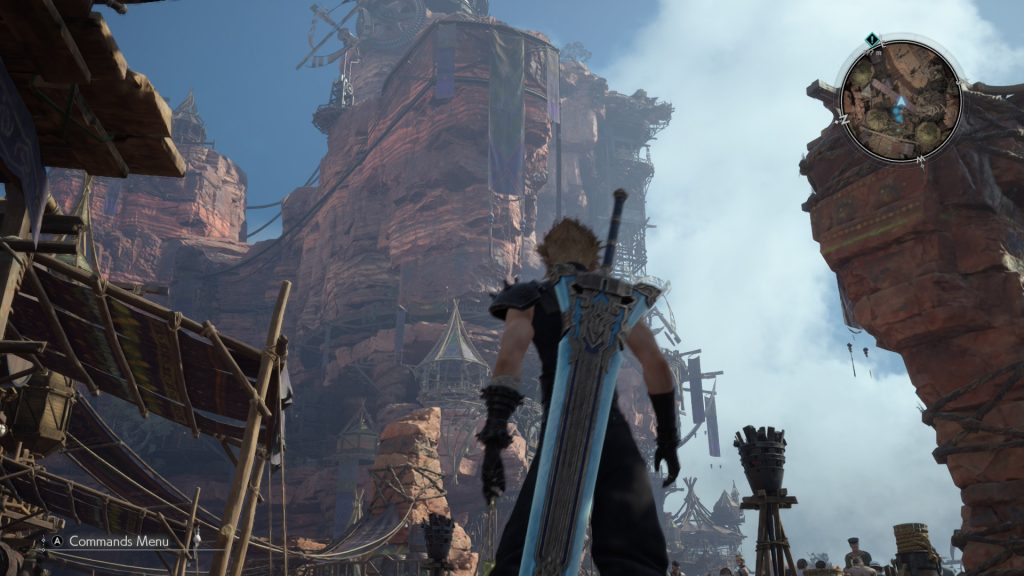
That said, with a massive open world now at Cloud and company’s disposal, some cracks begin to show on Switch 2. Performance hiccups and visual compromises are noticeable at times, especially in larger environments. Even so, Rebirth retains all of the gameplay depth, emotional impact, and sense of wonder that made the original release so special. The fact that Square Enix managed to bring an experience of this scale to Nintendo’s newest console while still delivering a fantastic handheld and docked experience is nothing short of amazing.
Presentation and Performance
Unlike Remake, which originally launched on the PlayStation 4, Rebirth was built exclusively for the PS5, pushing the envelope in nearly every area compared to its predecessor. As someone who has now experienced Rebirth across four different platforms — PS5, PS5 Pro, Steam Deck, and now Switch 2 — I’m extremely happy to report that the game looks and sounds fantastic in both handheld and docked play, albeit with a few exceptions sprinkled throughout.
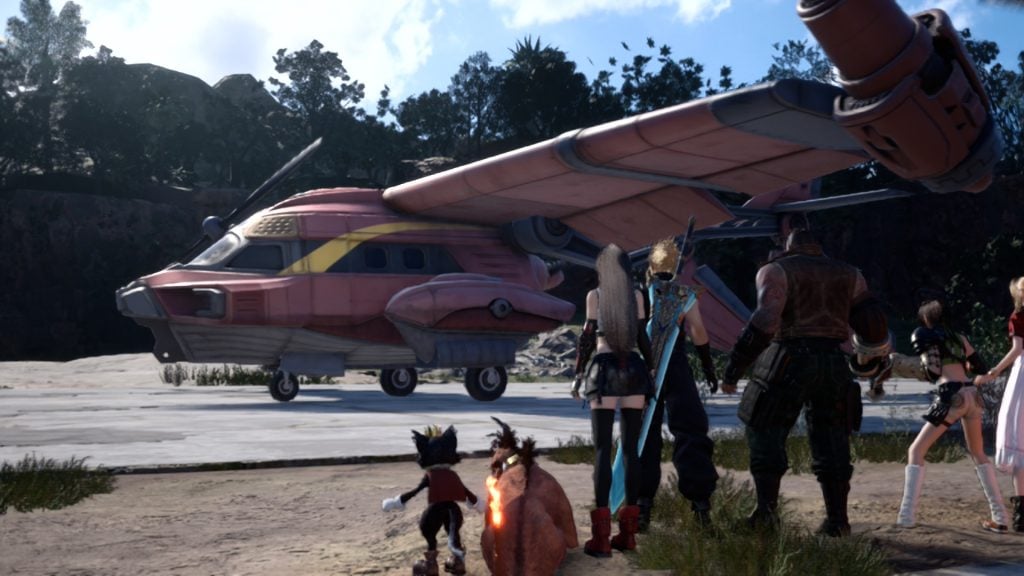
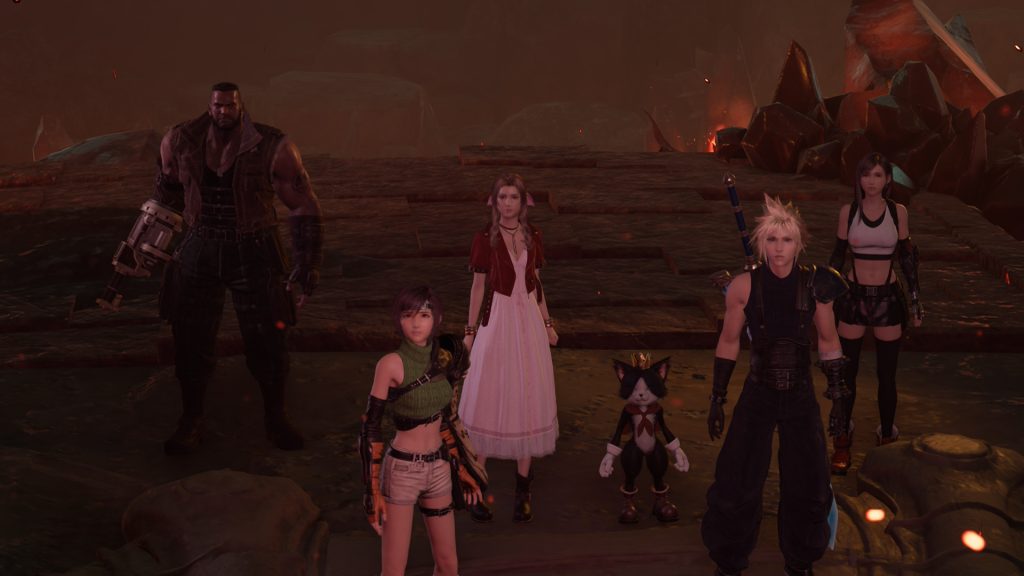
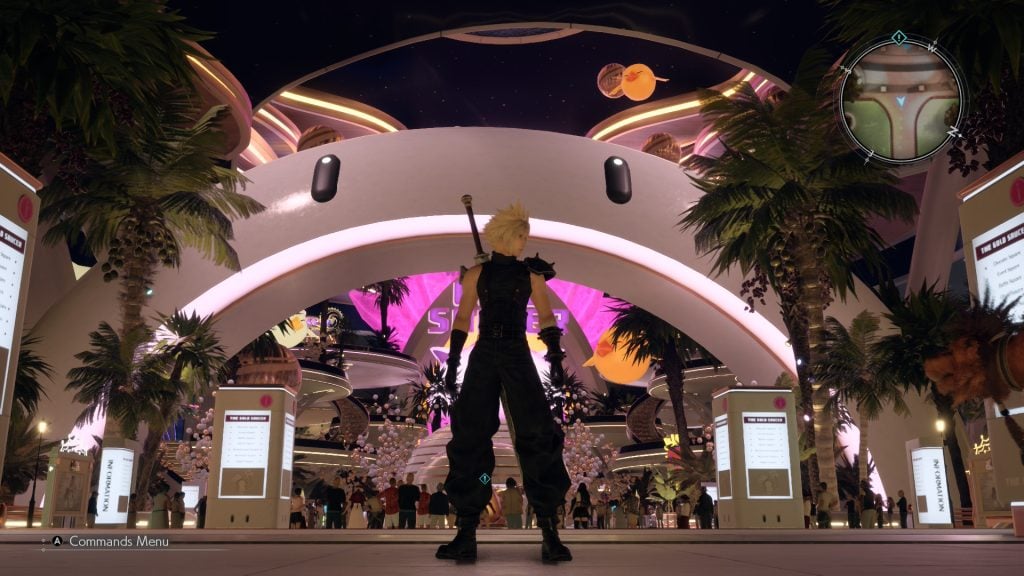
In fact, some of the smaller and more confined locations like the Gold Saucer and Mythril Mines are genuinely impressive on Nintendo’s new hardware. These areas pose little challenge for the Switch 2, allowing the game’s incredible art direction, detailed character models, and vibrant environments to shine. In fact, once I hit Cosmo Canyon, my jaw was on the floor with just how good it looked on Switch 2. Way better than I was expecting.
While some compromises in texture quality are noticeable compared to the PS5 versions, especially if you’ve played them before, the main cast and most of the world still look fantastic. In some areas, I’d even argue Rebirth looks noticeably better than Remake did on Switch 2.
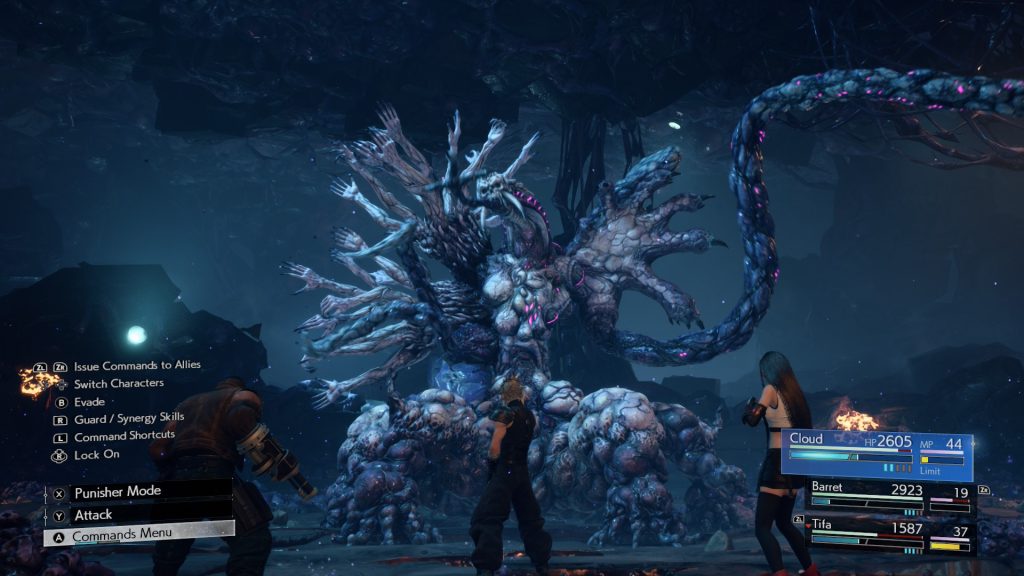
Perhaps the most impressive achievement is just how good the entire battle party looks while maintaining a consistent frame rate. Whether I was exploring towns, tackling side content, or diving into boss battles, the entire party looked amazing in both handheld and docked mode. It should be noted, however, that like its predecessor, Rebirth is capped at 30 fps on Switch 2, compared to the 60 fps available in the PS5’s Performance Mode. This may be a dealbreaker for some players, but as someone who has played Rebirth almost every way imaginable, I had no issues with this concession. It doesn’t affect the gameplay or combat experience in the slightest, but I understand that not everyone will be as accepting of that tradeoff as I am.
But as a wise man once said, it’s not all just sugar and rainbows.
Once Rebirth opens up into its massive regions like the Grasslands, Junon, and Corel, the cracks begin to show. The most common issue I encountered was fairly aggressive pop-in, especially while traveling quickly on Chocobo. This is most noticeable in greener environments like the Grasslands, where vegetation frequently appears just moments before reaching it. The issue is far less noticeable when exploring on foot, but let’s be honest, most players are going to spend a lot of time racing across these regions on Chocobo, making it difficult to ignore.
I also encountered some odd enemy behavior while riding Chocobos, with certain larger enemies occasionally freezing in place until I dismounted. My best guess is that the game is occasionally struggling to handle your full party, multiple Chocobos, and enemy AI simultaneously. It’s a minor issue overall, but one that popped up often enough for me to take notice.
The lighting engine also appears to take a hit in a few places. I occasionally noticed strange flashes of light during exploration, and in a handful of cutscenes, bright white light would suddenly spill through solid walls. Thankfully, these moments were rare. Across around 65 hours of gameplay, they probably accounted for less than a minute of my overall playtime.
Even with those quirks, I’m still genuinely floored by what Square Enix accomplished here. Rebirth is a massive open-world RPG that was originally designed around significantly more powerful hardware, yet it still manages to deliver a fantastic experience on Switch 2. In fact, nine times out of ten, the experience felt remarkably close to what I remember from my original PS5 playthrough. And honestly, that’s about the highest compliment I can give this port.
And quickly, I would be remiss if I didn’t at least touch on the soundtrack. This time around, over 400 reimagined tracks are included in Rebirth, and nearly every town, boss fight, character reveal, and region has both new and familiar tunes to listen to. Virtually every track is lovingly recreated in a way that feels both nostalgic and new at the same time.
To put it briefly, I have no notes. As a super fan of the original soundtrack, I absolutely adored how much care Square Enix put into this. Rebirth’s soundtrack is genuinely in the running for my favorite video game soundtrack of all-time.
Gameplay
Okay, now that we covered what I’m sure most of you came here for, let’s talk about the story and gameplay, shall we?
If you’ve spent any amount of time around gaming over the last couple of decades, chances are you already know the basics of Final Fantasy VII. But for the uninitiated, here’s the SUPER brief version. Cloud Strife, a disoriented former SOLDIER turned mercenary, joins the eco-terrorist group Avalanche to stop the Shinra Corporation from draining the planet’s lifeblood, known as the Lifestream, for energy. But behind Shinra lurks the legendary SOLDIER Sephiroth, whose return sends Cloud and his allies on a far more personal and emotionally charged journey. Along the way, Cloud reunites with his childhood friend Tifa and her teammate Barret (who has a gun for an arm, mind you), meets a flower girl named Aerith with mysterious powers, and becomes caught in a conflict that forces him to confront his past and question who he really is. Got it? Good!
While the original Final Fantasy VII was already legendary for its storytelling and characters, Rebirth takes nearly every emotional moment from the original game and expands upon it in meaningful ways. Conversations that were once brief are now fully realized scenes, packed with subtle character interactions and emotional weight that make the party feel more human. At its core, Final Fantasy VII has never really been about giant swords or anime boys. It’s a story about broken people struggling with grief, trauma, identity, and the fear of losing the people they care about.
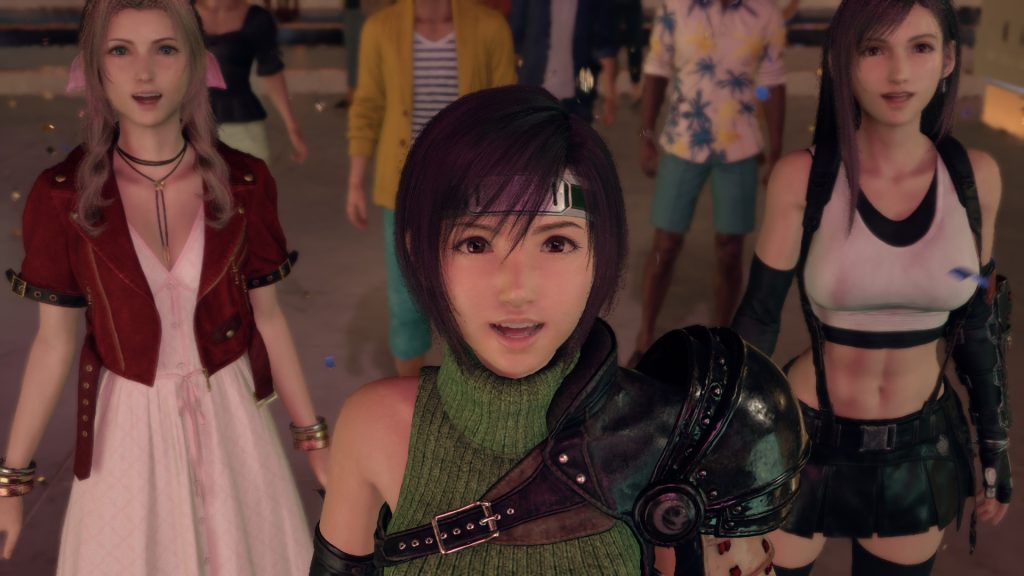
Every member of the party feels dramatically more fleshed out, even compared to Remake. Barret’s softer, fatherly side receives far more attention, Aerith struggles to balance her newfound freedom with the horrors of her upbringing, and Tifa and Cloud spend much of the story revisiting their shared past while trying to uncover the truth behind Cloud’s fractured memories.
Rebirth also introduces a new Affection System, which allows players to influence Cloud’s relationships through dialogue choices, side quests, and optional interactions. Thankfully, it never feels like a typical “dating mechanic.” Instead, it strengthens the emotional connection between the cast and helps your version of Cloud feel slightly different depending on the relationships you choose to prioritize. And these choices actually do have a pretty major consequence in the game’s third act, so play wisely.
Without diving into spoilers, there were multiple moments throughout Rebirth where I found myself far more emotionally invested than I expected, despite already knowing all of the story beats going in. It really is that good.
Combat, Materia, and Synergy
Of course, a beautiful game and story can only carry a game so far. Thankfully, Final Fantasy VII Rebirth backs up its visuals and adventure with some of the most fun combat Square Enix has ever created.
While the original Final Fantasy VII was a traditional turn-based JRPG, Remake and Rebirth take a far more action-oriented approach, putting players directly in control of every swing of Cloud’s sword. For some longtime fans, that shift may be disappointing, but Rebirth once again includes Tactical Mode, allowing players to slow combat to a crawl while selecting abilities, spells, items, and commands.
This system remains one of my favorite aspects of Rebirth’s combat. I found myself using Tactical Mode in nearly every battle, issuing commands to allies, swapping between characters, and planning my next move without worrying about getting stabbed by a Tonberry.
And, of course, no discussion of Final Fantasy VII would be complete without Materia. These magical orbs can be equipped to weapons and armor to unlock spells, passive abilities, stat boosts, and countless customization options. Rebirth expands the system even further with new Materia combinations, including dual-spell Materia that allow players to learn multiple elemental spells from a single slot and Auto Materia also make support characters far more effective, allowing them to cast spells and use abilities without constant player input.
I said it in my Remake review, and I’ll say it again: Materia is what makes Final Fantasy VII the game it is. Learn the system, experiment with different combinations, and have fun with it. With the right setup, you can create some truly ridiculous builds.
And if all of this sounds a little overwhelming, don’t worry. Square Enix has once again included a Streamlined Progression system that dramatically reduces the complexity of character building by automatically maximizing Materia, giving you max gil, boosting your HP and MP, and even allowing attacks to hit for 9,999 damage. If you’re simply looking to experience the story, it’s honestly a pretty great option. That said, I highly recommend trying the game as the developers intended before flipping on full-on god mode
The Planet is Waiting
Final Fantasy VII Rebirth technically allows players to focus almost entirely on the main story and finish the adventure in roughly 35 to 40 hours, but honestly, where’s the fun in that?
Rebirth is absolutely overflowing with side content, some fantastic and some admittedly a bit repetitive. Towns feature community boards filled with side quests that help strengthen the bonds between party members. These missions range from hunting monsters and rescuing lost chickens to literally transforming into a frog to compete in a Fall Guys-inspired minigame. Yes, really.
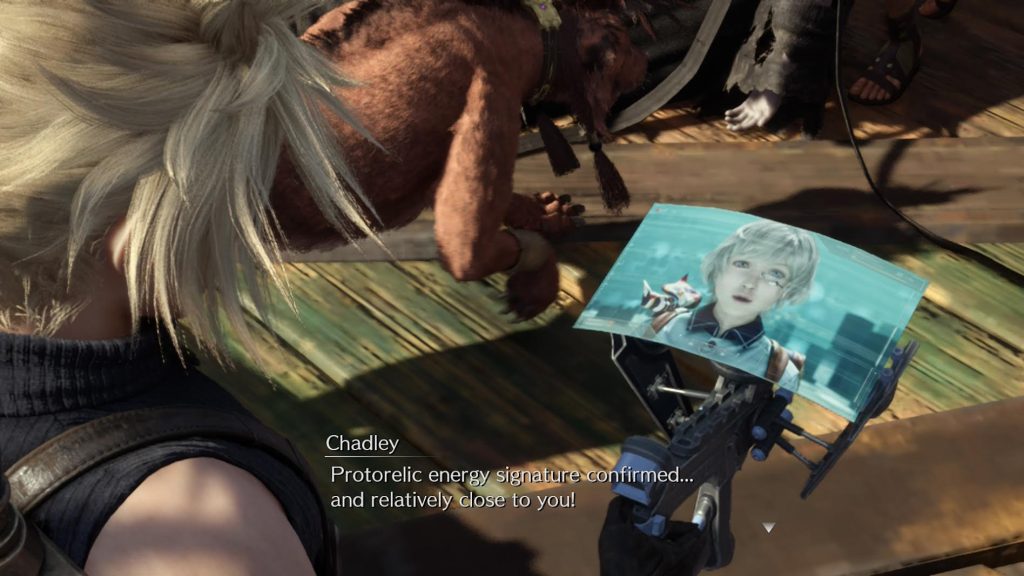
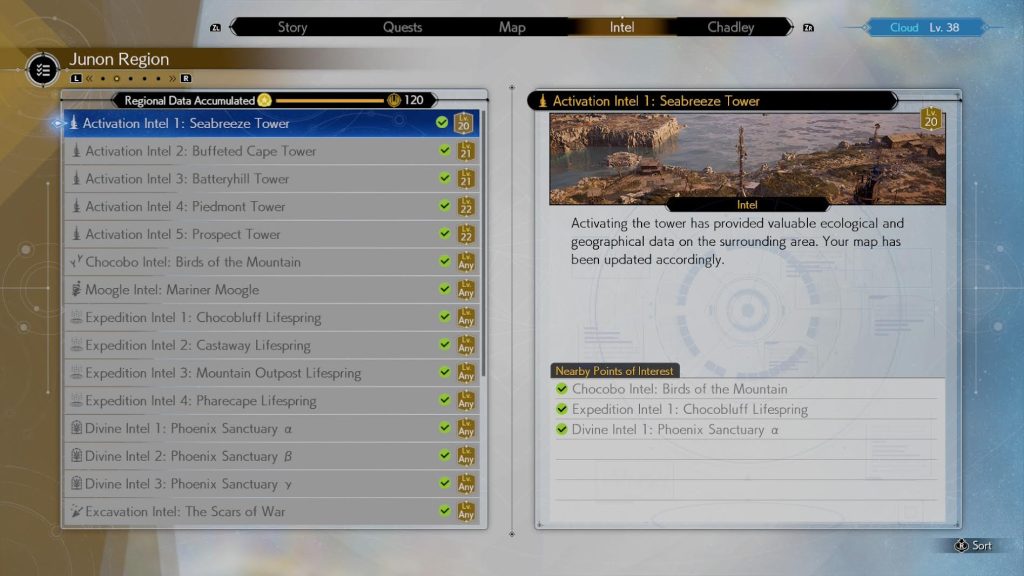
Thankfully, most of these quests are genuinely enjoyable, but the bulk of the side content comes from exploring each of Rebirth’s massive open-world regions. Chadley returns from Remake and once again tasks Cloud with surveying the world around him by activating towers, discovering hidden Materia springs, locating summon shrines, and uncovering one of the game’s best questlines surrounding something called the “Protorelic”, which I absolutely refuse to spoil here. (Seriously, seek these side quests out if you are a Final Fantasy fan!)
Each of Rebirth’s seven regions is absolutely packed with activities to complete, though one of the game’s biggest issues is that many of these objectives begin to feel a bit copy-and-pasted over time. Every area introduces another batch of towers to activate, which reveal nearby points of interest on your map, along with Materia Springs that reward resources used to strengthen and craft Materia. On top of that, there’s a massive amount of world intel to clear, ranging from combat challenges and Summon shrines to hidden discoveries, all of which can occasionally make progression feel a little… boring if you tack it all on at once. To the game’s credit, Square Enix does try to mix things up with small twists, like making towers more difficult to climb in later regions, but it’s not always enough to keep the formula feeling fresh. Still, none of this content is mandatory, but if you’re anything like me, you’ll probably have a hard time ignoring it.
There’s also a brand-new card game called Queen’s Blood that honestly became one of my favorite Final Fantasy side activities since Triple Triad in Final Fantasy VIII. Players scattered throughout the world can challenge Cloud to matches, allowing him to rank up his Queen’s Blood skills and unlock new rewards through victories. Building new decks and experimenting with different strategies ended up being far more addictive than I ever expected, and before long, I found myself actively hunting down new opponents whenever I entered a new region.
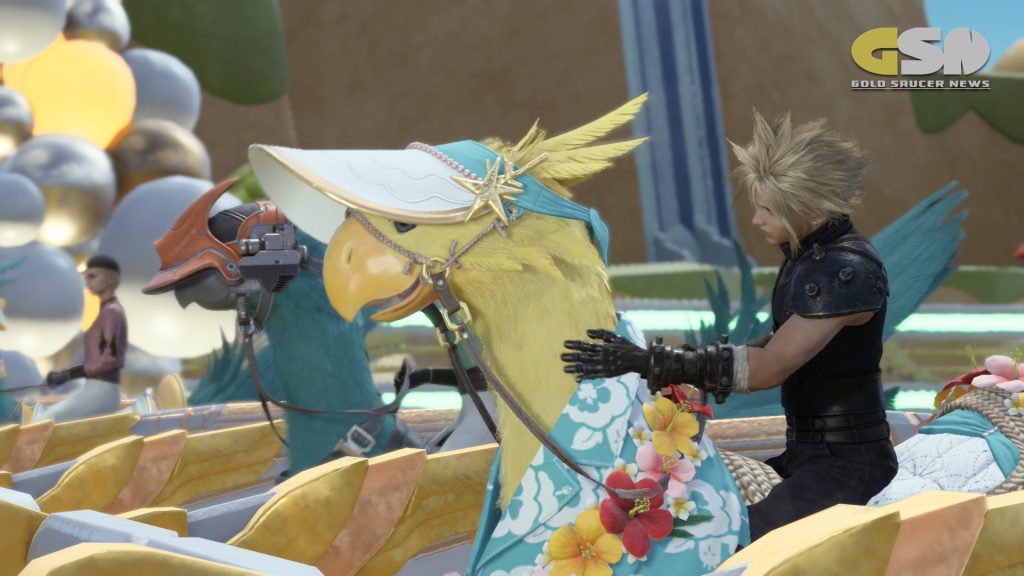
And speaking of addictive distractions, I need to give some special love to the Gold Saucer. Fans of the original FF VII already know this giant high-tech playground is absolutely loaded with minigames, and Rebirth is no exception. The Saucer features everything from a bike racing sim, space shooter,virtual fighting arenas, and, best of all, Chocobo Racing. Seriously, if you aren’t careful, you can easily spend 10-plus hours mastering that mode alone. How do I know that? Well, let’s just say I REALLY like Chocobo Racing.
And honestly, I’ve barely scratched the surface here. Between minigames, side quests, exploration, world intel, combat challenges, and countless optional activities, Rebirth is absolutely overflowing with content. Not every activity is a winner, and by the 40th tower activation you may start feeling a little burned out, but the sheer amount of care, charm, and variety packed into this world kept me exploring nearly every corner of it for well over dozens of hours.
The Reunion is Almost Complete
Final Fantasy VII Rebirth on Switch 2 was everything I hoped it would be when it was announced earlier this year. Every major piece of content from the PlayStation 5 and PC versions is here, and the visual presentation honestly goes far beyond what I expected the Switch 2 to be capable of. From its massive open regions to its emotional story moments, Square Enix somehow managed to preserve the scale and ambition of Rebirth while still delivering a fantastic handheld experience.
But it’s not just the visuals that make Rebirth special. Its incredible cast of characters, emotional storytelling, addictive combat, and overwhelming amount of content are what kept pulling me back in for yet another ridiculously long playthrough. It’s genuinely difficult not to become attached to this world and the people in it. As a longtime Final Fantasy VII fan, I’m incredibly grateful to have the chance to experience such a polished reimagining of one of my favorite games ever made in a handheld format.
With the story set to conclude next year, and a Switch 2 release already confirmed for Part 3, I think it’s safe to say that the Final Fantasy VII Remake trilogy has officially found a fantastic home on Nintendo hardware.
Leave a Comment
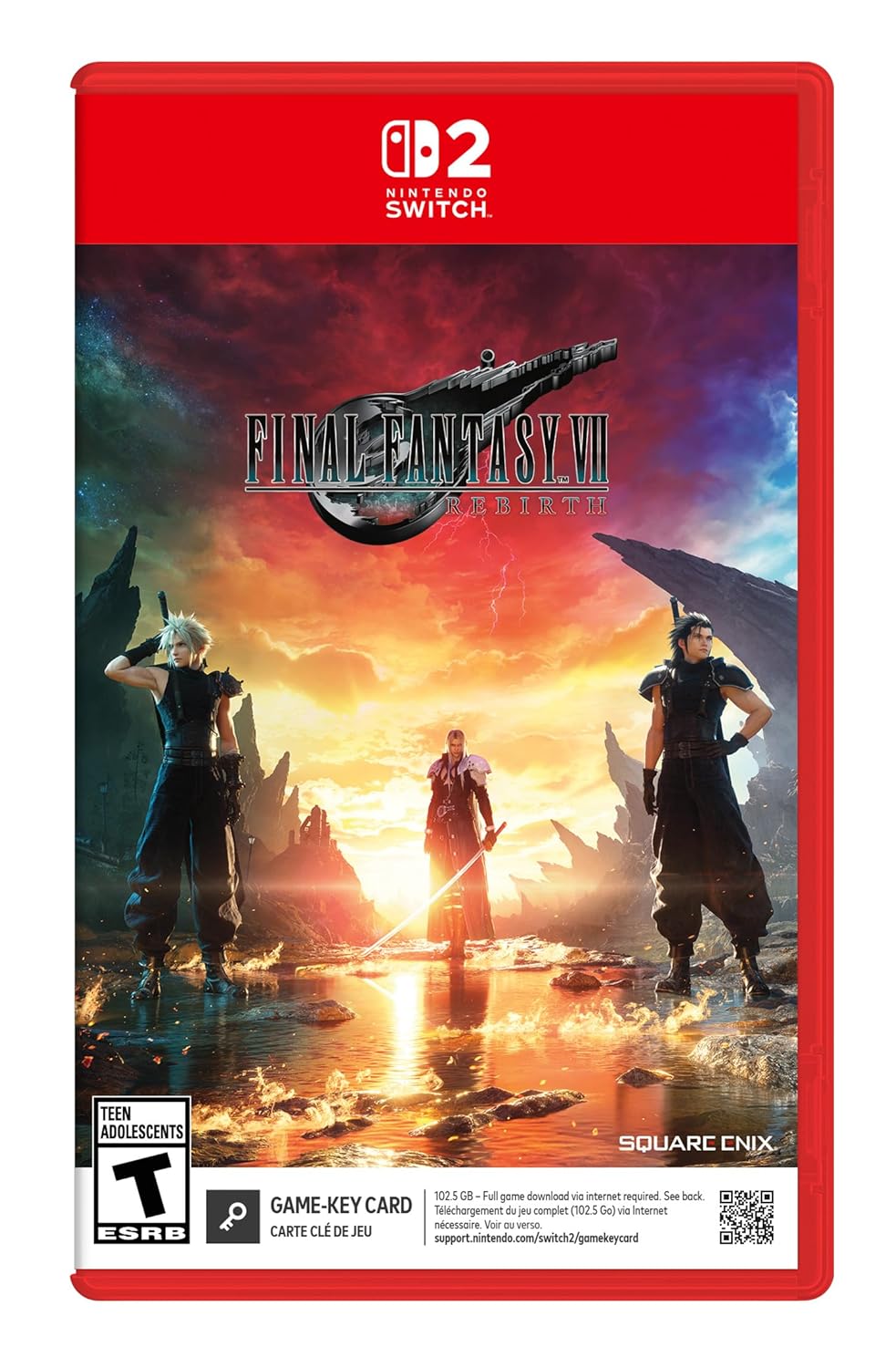
System: Nintendo Switch, Nintendo Switch 2
Release Date: June 3rd, 2026
Categories: Action, RPG
Publisher: Square Enix
Developer: Square Enix

Written by Jason Ganos
Nintendo super fan since birth, Jason is the creator of Amiibo News and editor-in-chief at Nintendo Wire. One of his life goals is to provide the latest Nintendo news to fellow gamers with his natural know-how.
