

Final Fantasy Resonance is just one month away, bringing the iconic series into the world of HD-2D for the very first time.
Ahead of its release, Nintendo Wire had the opportunity to sit down with the game’s producer, Keisuke Nakashima, and the director, Hiroto Furuya, to talk about the upcoming game, its unique visual style, their history with Final Fantasy, and much more.
Nintendo Wire: For me personally, Final Fantasy VI was my first real experience with the Final Fantasy franchise. I’m curious, for each of you, how you became accustomed to the series and what brought you to it. What was that first experience for you?
Keisuke Nakashima: For me, the first game I played was Final Fantasy V on the Super Famicom. I was very young, so the game actually belonged to my parents. At the time, it was quite difficult for me to play because I was so young. However, that’s the first recollection or memory I have with a Final Fantasy game.
Hiroto Furuya: My first experience with a Final Fantasy game was Final Fantasy VII. But the one that really left a lasting impression on me was Final Fantasy VI, particularly in the way that the pixel-based event scenes were presented and built.
For example, the opera scene, the Setzer event, or the Falcon coming out of the ocean. These are all things that really left a lasting impression on me. So much so that there was a time in my life when I played the game every holiday. That’s how much I love that game. It’s one of the most memorable Final Fantasy games for me.
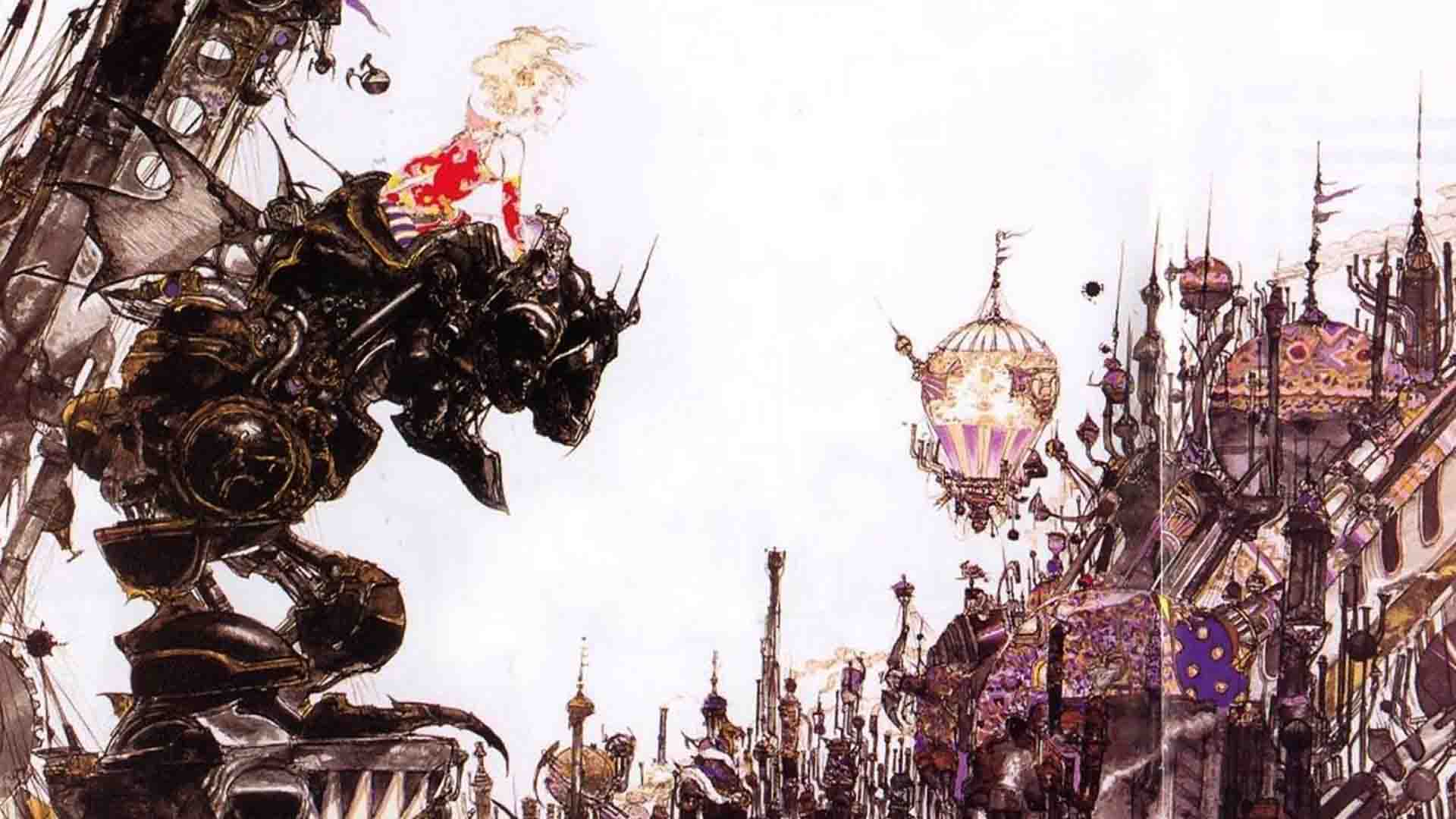
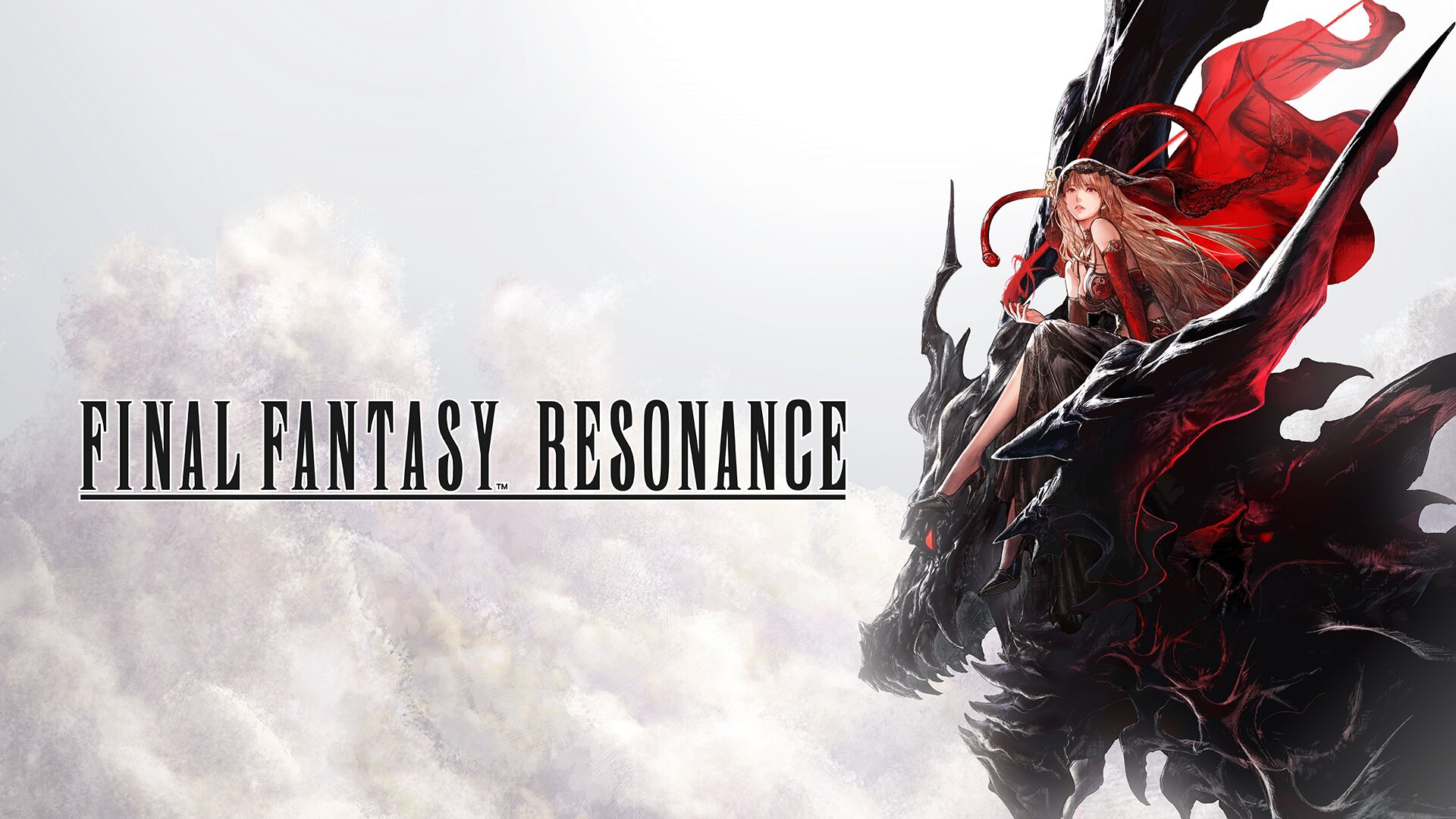
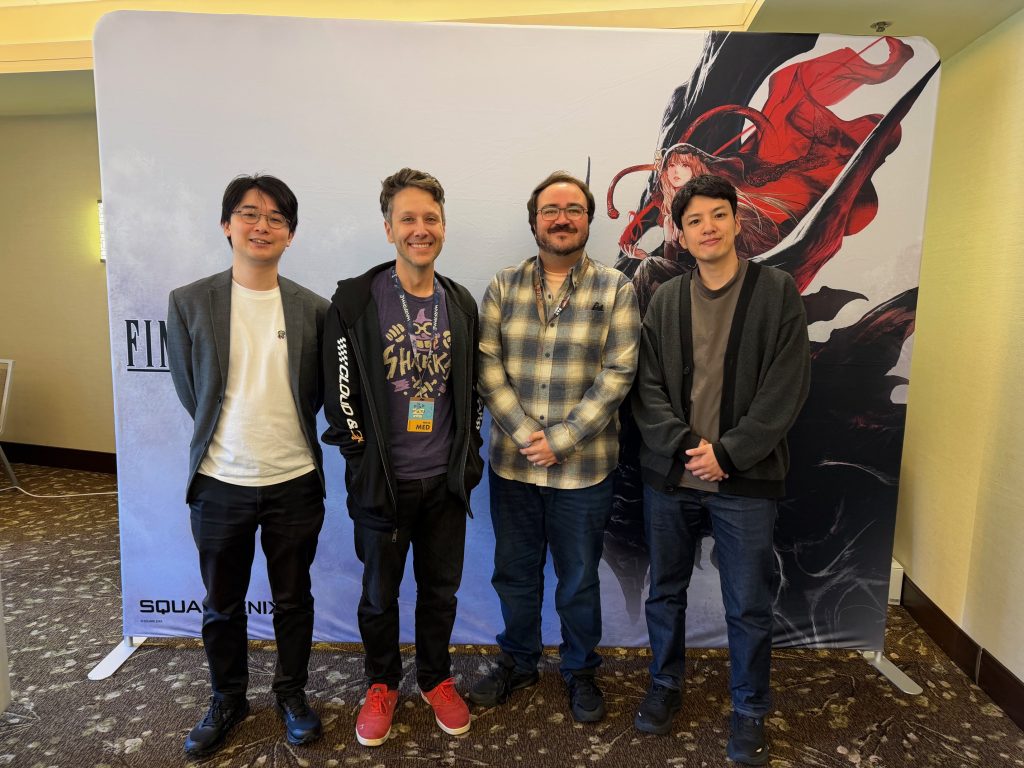
Something that struck me the second I sat down with you was the artwork behind us (pictured in the image above). To me, it immediately gives off Terra riding Magitek armor vibes. It feels very Amano, and I absolutely love that artwork. I’m curious if there’s a connection there, and what other inspirations went into creating the artwork for the game.
Keisuke Nakashima: The person who created this piece is the main illustrator for Final Fantasy Resonance.
When we initially requested to have this artwork created, there wasn’t any particular direction given to specifically recall Final Fantasy VI. However, there was a specific motif that was very Final Fantasy-like. So we asked them to draw a mysterious girl and Bahamut.
The goal was to ensure that the illustration gives off that Final Fantasy vibe immediately when you set your eyes on it. There was a hope to have the mysterious girl riding Bahamut, and that was the initial imagery we requested.
But when you really think about it, with Terra and the Magitek armor as well, there are two entities that typically wouldn’t interact or mesh. They’re opposites in a sense.
That kind of dichotomy also exists within Final Fantasy Resonance. So those are maybe the connecting tissues between the two titles.
With HD-2D and how Square Enix has utilized it in the Octopath games and now in Resonance, I’m curious if there were any challenges or anything that couldn’t be done in past titles that you were excited to bring to life in Resonance?
Keisuke Nakashima: One thing that comes to mind is really the event scenes and the way we implemented the camera work for those sequences.
Asano himself was internally referring to it as “dynamic HD-2D,” where you really see that intense, dynamic camera work incorporated into those pixel-based sequences.
Typically, I think what we’ve seen in the past for HD-2D games is that there will be an effect, then a fade to black, and then there will be a scene change.
Here, we see the characters actually acting that out through these event sequences. So that’s definitely one change that comes to mind.
Knowing that the core of this game kind of started with a mobile title with Brave Exvius, I wonder if you could elaborate more on the expansion of that into Resonance, growing from that seed and creating something that I think Final Fantasy fans can really gravitate toward and appreciate across all perspectives of the series.
Keisuke Nakashima: As a major premise, yes, the game is based on Final Fantasy Brave Exvius, but we set out to create a new console game while still retaining the appeal of Final Fantasy Brave Exvius.
That was the overarching concept behind the development.
When it came to the battle system and some of these other aspects, we really wanted to challenge ourselves so that we could optimize it for the console experience. We didn’t shy away from changing things in any way.
Through the scenario and other aspects, the game is filled with iconic Final Fantasy elements.
Hiroto Furuya: There are three major elements we considered.
The first includes things like magic and the job system.
Second, it is a story of grand scale. It’s an epic story about saving the planet and saving the world.
Third, Final Fantasy has always challenged itself to push the limits of cutscenes and graphics.
With all three of these points in mind, the development team really poured their love for the franchise into developing the game, hoping that love will come through and be communicated through the experience.
That’s what we truly believed in as we worked on developing this game.
Obviously, this game is 100% HD-2D, and I know we got our first taste of HD-2D in the mainline Final Fantasy series with the opera scene in the Pixel Remaster of Final Fantasy VI. Now that you have this amazing game under your belt, is there a game that you’re really hoping to tackle next?
Keisuke Nakashima: [Laughs] Currently, nothing is in the works, and we don’t have visibility into what projects are in the works within the broader company.
Hiroto Furuya: Personally speaking, I’d like to tackle Final Fantasy VI. [Laughs]
When I saw the wererats for the first time in the demo, I squealed. I was so excited to see a beloved little Final Fantasy VI enemy in HD-2D. It was such an amazing experience.
Keisuke Nakashima: The wererats were really tough.
In order to incorporate them into Resonance and place them on that 3D background, Asano and others had mentioned that they didn’t fully blend well with the background. So we had to rework the lighting, the pixel art, and so forth to really make it work within Resonance.
In Brave Exvius, we saw multiple collaborations, sometimes with other Square Enix titles and sometimes with things beyond that. We have to ask if there would be any potential for that within Resonance.
Hiroto Furuya: First of all, we don’t have any plans at the moment.
Keisuke Nakashima: I think it would be interesting if we could do that, but because it is a standalone console experience, we felt it was important for the worldview to be established on its own as a single game.
Hiroto Furuya: There are desires there, and we’re exploring that option, but there are no plans at the moment.
A huge thank you to Keisuke Nakashima and Hiroto Furuya for taking the time to chat with Nintendo Wire!
Final Fantasy Resonance launches on October 17th, 2026. Stay tuned to Nintendo Wire for more coverage as we get closer to release.
Check out more Final Fantasy content
We Played Final Fantasy VII: Revelation | Our First Impressions
Final Fantasy VII Revelation deep dive shows 10 minutes of combat and exploration
Final Fantasy VII Revelation to receive two story expansions focusing on Sephiroth and Vincent
Leave a Comment

Written by Jason Ganos
Nintendo super fan since birth, Jason is the creator of Amiibo News and editor-in-chief at Nintendo Wire. One of his life goals is to provide the latest Nintendo news to fellow gamers with his natural know-how.
