

When it comes to video game adaptations, there are two wolves inside each beloved animation IP that are eventually given into: a kart racer and a fighting game. Nickelodeon’s smash hit western anime Avatar: The Last Airbender has already been a small part of both. However, it’s long overdue for a great video game adaptation of its elemental sparring. Several budget 3D button mashers later, enter Gameplay Group International and Paramount Games’ Avatar Legends: The Fighting Game. This gorgeous 2D fighter is a dream come true for longtime fans, albeit in an imperfect launch state.
It turns out magic is the result of taking developers and artists behind well-liked but underrated indie fighting games like Skullgirls and Diesel Legacy: The Brazen Age and applying them to a combat-focused property like Avatar: The Last Airbender. When you first pick up a controller and play a match of Avatar Legends, you’ll realize that only fans of fighting games could have developed the fast, fluid and flowing combat. Specifically, if you’re a fan of the early Guilty Gear games or a ’90s Capcom hidden gem like the Darkstalkers series, you’ll feel at home here. High-speed, aggressive, and outlandish fighting is what’s being served up.
Avatar Legends only uses four buttons: three for light, medium, and heavy attacks — and one for Flow maneuvers. Flow is best described as being similar to Blazing Strike’s Rush system or Street Fighter 6’s Drive maneuvers. It can be used defensively to dodge attacks when in neutral or on the move. It can also send your character into a dash, back dash or even a flight or floating animation in combination with simple directional inputs. You will truly feel like the Avatar dodging fireballs, spires of water and earthquakes with the press of a button. Most importantly, using Flow can access even more of your moves and can also be used to cancel out of special moves to create devastating combos. But use Flow too freely and you’ll enter a Burnout state where every knockdown is a hard knockdown and getting hit by one Super attack can finish you off. I prefer the risk-reward here to Street Fighter’s Drive system.
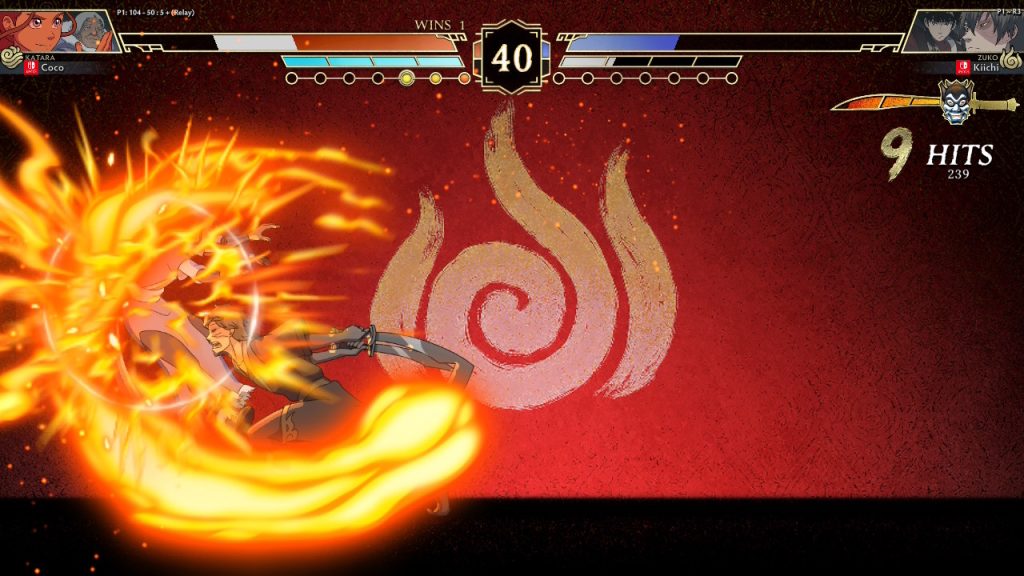
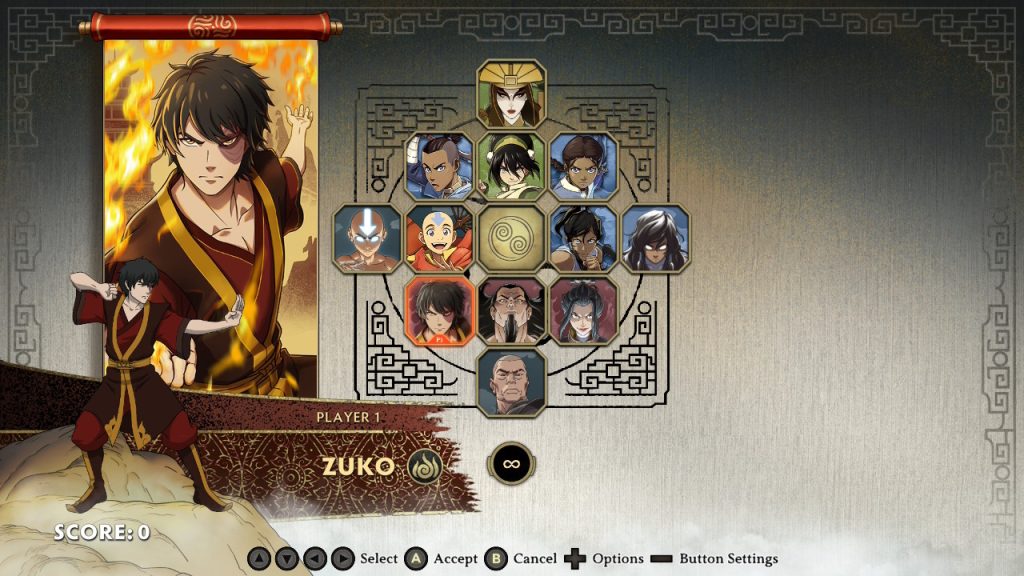
As a result of its offense-forward approach, Avatar Legends might be one of the most combo-heavy fighting games I’ve played in recent memory. With a focus on speed and maneuverability, matches can be so aggressive that they only last 30 seconds. And let me stress: No character here is slow. Kyoshi may be tall and take up a quarter of the screen, but she’s just as quick as Azula. Ozai may have some grappler attributes, but he’s also got a Raiden/Superman tackle that sends him flying across the screen. This sort of design is preferable to making certain characters slower than others. In this game, that would lead to such characters being unviable. Instead, the 12 slots on the roster are all killer, no filler. I’ve tried every single one of them and all of them, from the technicality of Aang’s long-range bowstaff swipes to Sokka’s trickster boomerang/sword combo, are a blast.
Avatar Legends’ roster is probably its biggest strength. In the hands of a less-skilled developer, there’s no way a common tribal warrior like Sokka would be able to face off against an Avatar like Kyoshi and it be a reasonable match-up. The inclusion of two Avatar State versions of Aang and Korra don’t even throw the balance out of whack. For how much the pre-match call-out likes to say “Balance must be restored,” in the game’s current state no restoration is needed for the character fairness.
The Support Character system, in which one of three “movesets” are chosen per character before a match, also helps with character versatility and flexibility per match. In the case of Zaheer, for instance, his Supports act as one of three elements and can be selected for a different special move. Ozai, on the other hand, gets different attack speed and grapples based off which Support is chosen. It’s also a nice touch that you and your opponent’s Support Character can be seen in the background during matches. Avatar really brings its own flavor to tried and true fighting mechanics. Truly, this is such a perfect property for a fighting game. It’s so cool to see Earth, Fire, Water, and Air benders with Avatar characters being able to wield all four types of elements in their movesets.
In terms of presentation, the hand-drawn 2D sprites and backgrounds look pulled right from the beloved, action-packed show. Impressively, it’s not just the look of the characters that is smooth but the animation is too. Numerous short-sighted internet comments in pre-release comments attempted to write Avatar Legends off as a Flash game. The differences are definitely seen in motion. Avatar Legends is a slick looking game. However, where the colorful visuals and mystical soundtrack are fitting, the overall package is not quite there yet.
Thankfully, most of the issues I have with Avatar Legends at launch are small in hindsight. The fighting itself is so good that it carries the game in spite of its lack of features and polish elsewhere. First off, the lack of Ranked Mode, player lobbies and Spectator Mode at launch isn’t great. The fighting game community is filled with games that have cohesive online modes and can accommodate players both casual and hardcore. In its current state, Avatar Legends has fantastic rollback netcode but no filter between fighting game pros and newcomers. All player types are going through the same queue so it’s just not beginner-friendly nor is it inviting to pros expecting a fluid online setup to challenge other skilled players. This certainly needs to be addressed and the developers have stated their intention of getting these features patched in post-launch.
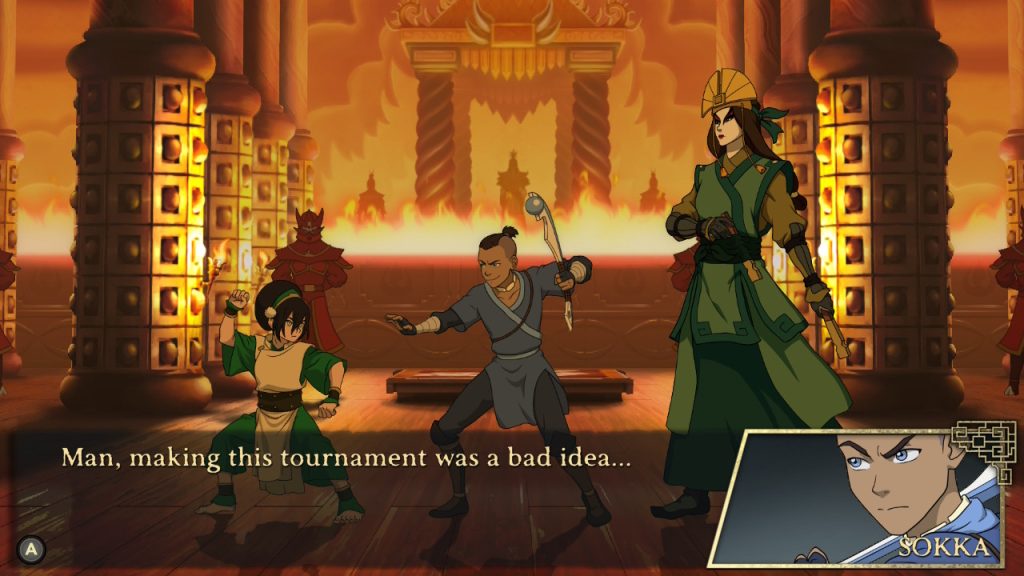
While the online mode otherwise plays great, I can’t say the same for Story, Arcade, or Training Mode thus far. Story Mode is a whopping 27 chapters of voiced text boxes (with none of the original voice cast and instead some solid stand-in’s), stiff animations in cutscenes, leveling up characters for minimal reason other than to pad the length of the mode out and purchasing upgrades to make the fights a little more manageable. SoulCalibur’s Weapon Master mode this is not, though the detailed world map was a nice touch. The characters do get some fun interactions as well in a what-if style scenario where they’ve essentially forgotten who they are individually. Story Mode also doesn’t have a selectable difficulty meaning it often spikes up in intensity out with no telegraphing, something that Arcade Mode also suffers from. Arcade Mode only features six fights per character anyway, but the featured dialogue to present each character’s story specific to the mode is currently unvoiced. It’s jarring going from Story Mode where every word is voiced to Arcade Mode where every word is text only. A small gripe, but it would be nice if the additional match call-out voices heard via the arcade cabinet would cycle through or at least be optional. Using only Toph’s voice is an odd decision and can be grating after awhile.
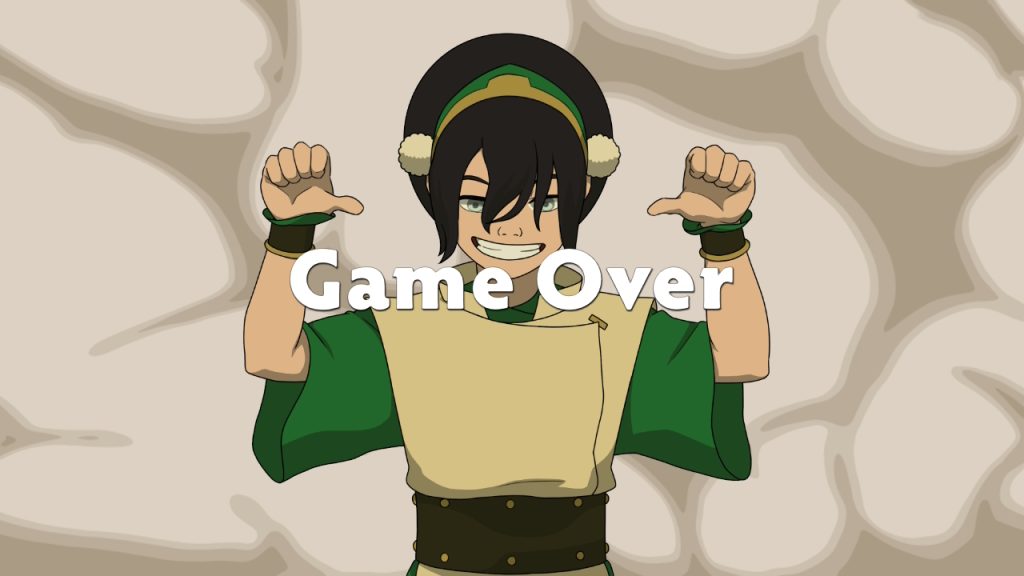
Training Mode gets its own paragraph. It actually does a lot right and is quite progressive in terms of its offerings. Not only does each character have their own training mode explaining their unique moves, but every combo in the game has a breakdown feature where the game tasks you with performing each button in a freeze frame on time and giving you a score for your execution. To my knowledge, this is a first in any fighting game and so welcome. There are also a standard Training Mode with optional hit boxes and frame data as well as Combo Trials. Unfortunately, all of it is quite bugged at the moment. Sometimes characters won’t go from neutral to standing block or crouching block when selected in the menu which makes practicing your entire situational move set impossible at the moment. Occasionally, character sprites and backgrounds decide to disappear as well. Not sure why any of these issues are exclusive to the Training Mode but it just needs some work.
All of this is to say, that Avatar Legends feels quite scrappy. It punches well above its weight when it comes to its fighting, but its trappings aren’t yet polished to a high degree. Couple this with the Nintendo Switch version being the only Nintendo console version of the game currently available and you’re left with some unwelcome nostalgia of other Switch fighting game ports. While not nearly as disastrous as Mortal Kombat 1’s launch state with its unlocked frame rate or as sluggish as Dragon Ball FighterZ long loading screens, Avatar Legends is capped at 30 FPS with numerous drops and lower resolution on Switch 1. It is unfortunately also inconsistent on Switch 2, with the potential to temporarily drop from 30 fps to 15 fps in matches but with better resolution. I didn’t experience anything worse than that personally, but the imperfection of the Switch 1 performance specifically is well-documented thus far.
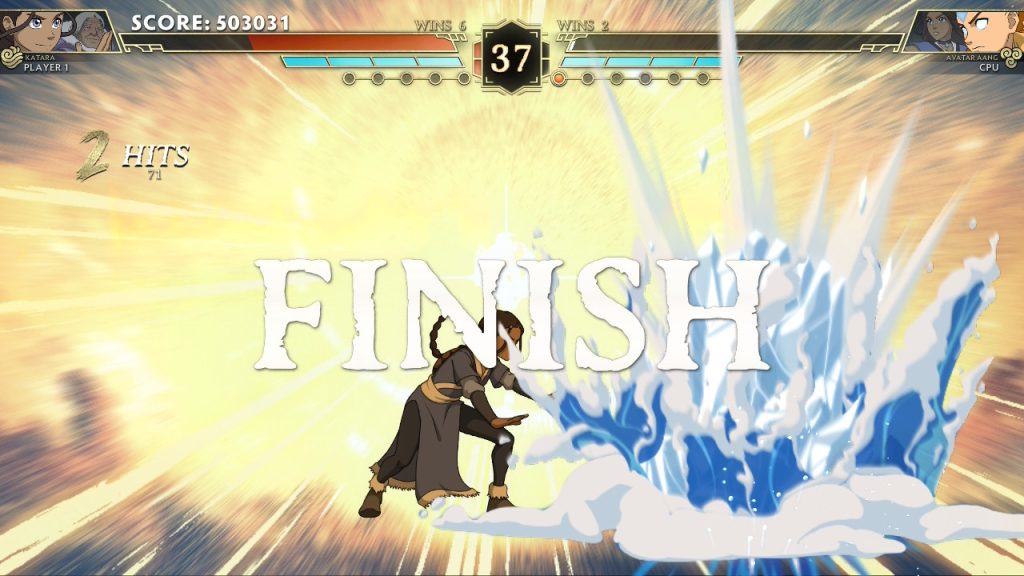
Okay, look. I know Avatar Legends: The Fighting Game at launch is imperfect, but I can fix it. Joking aside, I haven’t loved a 2D fighting game this much since Dragon Ball FighterZ. What this game lacks in features and completion, it makes up for in pure fun. Matches are fast, exhilarating pick-up-and-play bursts of energy. But I have a problem: I don’t want to put this game down. I want to keep playing until I am the Avatar and have mastered all four elements. 2026’s couch multiplayer trash-talking game is here and it will only get better with time.
Leave a Comment
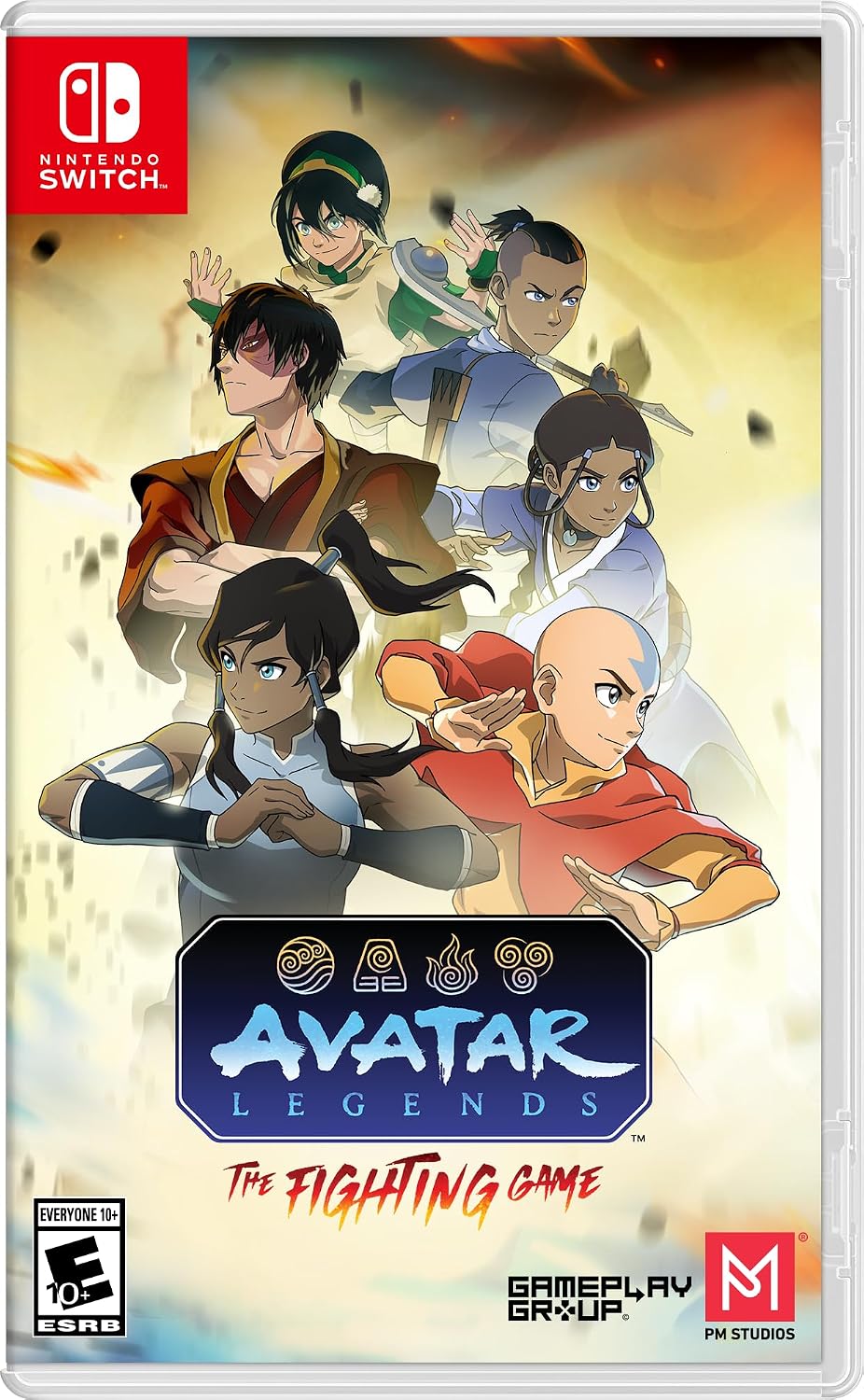
System: Nintendo Switch 2
Release Date: July 23, 2026
Categories: Fighting, Action, Arcade
Publisher: PM Studios
Developer: Gameplay Group International

Written by Matthew Powers
Nintendo has been Matthew’s preference for fun video gaming since 2004. In addition to his love for all things Mario, Metroid and beyond, Matthew also enjoys heavy metal, roller coasters, pinball machines, and being a proud cat dad.
