


One day while playing through The Adventures of Elliot: The Millennium Tales for review, I was chatting with my friend about why I felt that retro throwback games weren’t hitting the same as they did years ago. While his initial response was a glib, “Because they’re made by nerds,” it spoke to a broader point he was trying to convey. A lot of these newer, nostalgia-fueled endeavors are being developed by creators hoping to recapture the same magic they felt as children, though who were only exposed to video games growing up.
While that sounds admirable when taken in isolation, the very trend has resulted in games which aren’t pushing the medium forward in any interesting manner. I remember being amazed by games like Braid in 2010 because they called back to an era when I was still young and still wowed by the mere existence of video games. While that felt refreshing in the absence of any true video game preservation, those retro throwbacks didn’t stop at the mere idea of being “classic.” They also innovated on certain aspects that older games couldn’t due to technology. The Adventures of Elliot, conversely, merely wants to be an older game and I feel that I’m simply tired of staring into the past.
More than anything else I will say about The Adventures of Elliot, the lack of anything truly innovative or unique is what stops me from loving it. I think what developers Team Asano and Claytechwork have made is well-produced on a technical level, but by being so beholden to the past, it never forges its own identity amidst a sea of similar games.
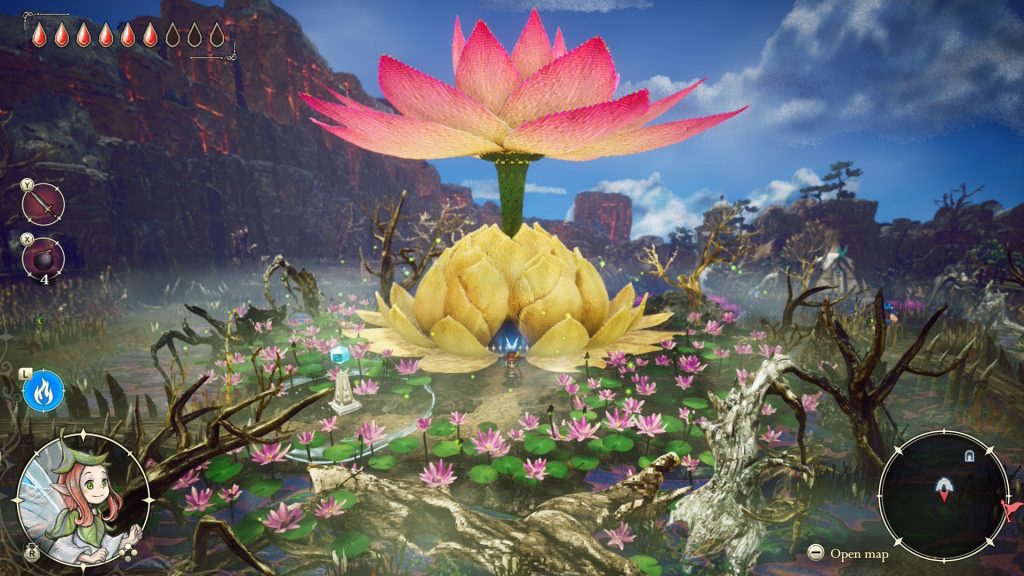
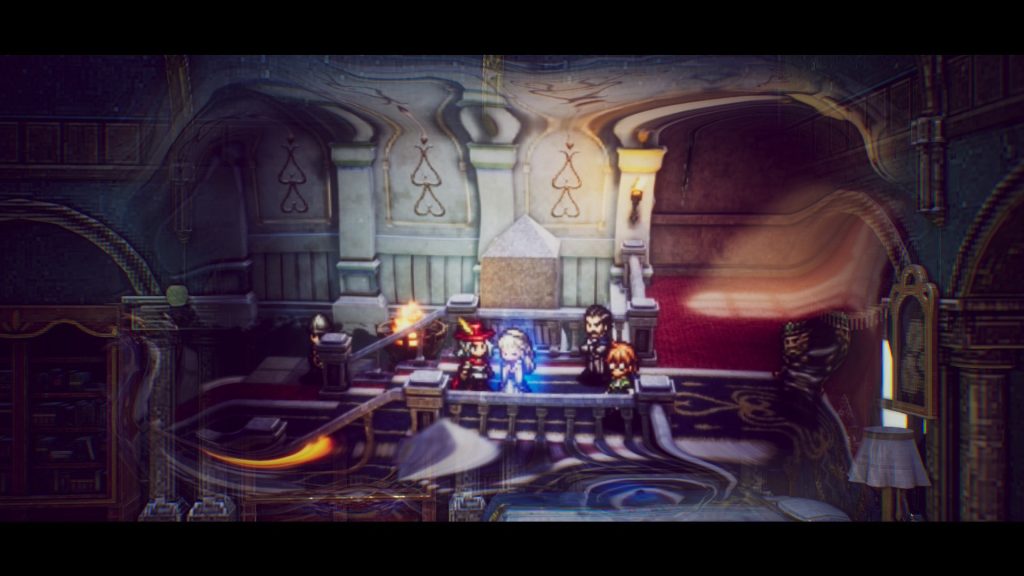
Set in the fictional land of Philabieldia, The Adventures of Elliot casts players in the role of the titular hero as he travels across various different ages to stop the machinations of the kingdom’s power-hungry minister, Kaifried. Along the way, the princess, Hueria, becomes stricken with a curse that requires Elliot to travel many centuries into the past to find an answer. It’s not all too dissimilar to Chrono Trigger, though where that game used its time hopping settings to truly mix up general gameplay, The Adventures of Elliot is very content to repeat the same trick for the 20 or so hours it takes to complete.
The immediate first impression one will get when playing is The Legend of Zelda: A Link to the Past. Team Asano claims that this game was inspired by Final Fantasy Adventure, itself a Zelda-like, but the general progression through the story mimics that of any number of Zelda games. Combat is similarly limited like the classic 2D Zeldas, giving you a basic swing or charge attack and allowing you to equip different items to one of two buttons. The game eventually introduces a fairy companion who can utilize spells in combat, but she’s never required for dealing with enemies and butts in so often that you’ll wish she didn’t exist.
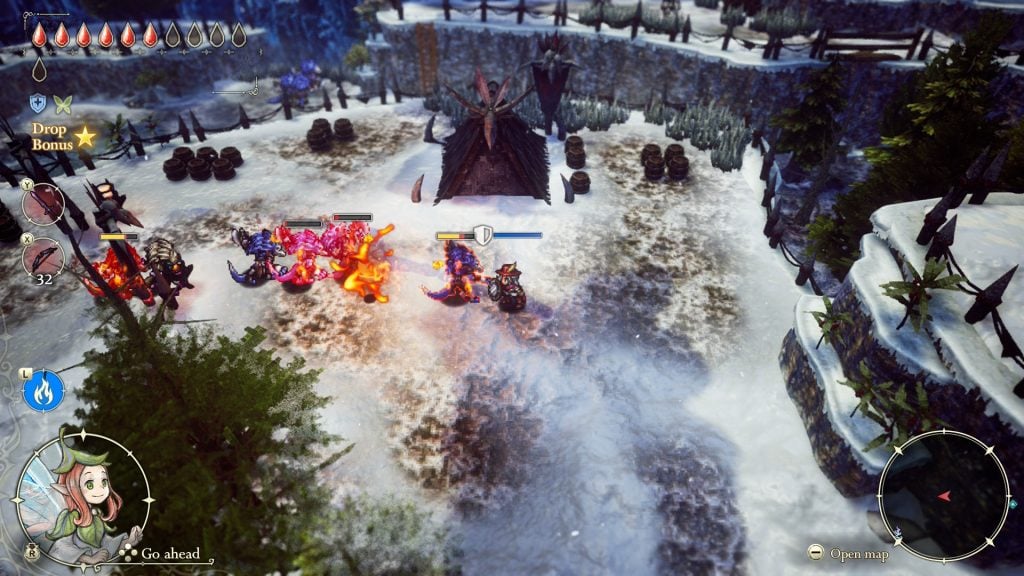
Navigation through the game world is, once again, similar to older Zelda games. Players will be able to technically go in whichever direction they like, but certain areas will require items or spells from earlier dungeons before they can make headway. A very convenient fast travel system is in place, where players can walk by a goalpost and have access to that warp point from anywhere in the world (save for when inside dungeons). The same thing exists within the game’s dungeons, which are disconnected temples that serve as combat and puzzles challenges and typically culminate in a boss fight.
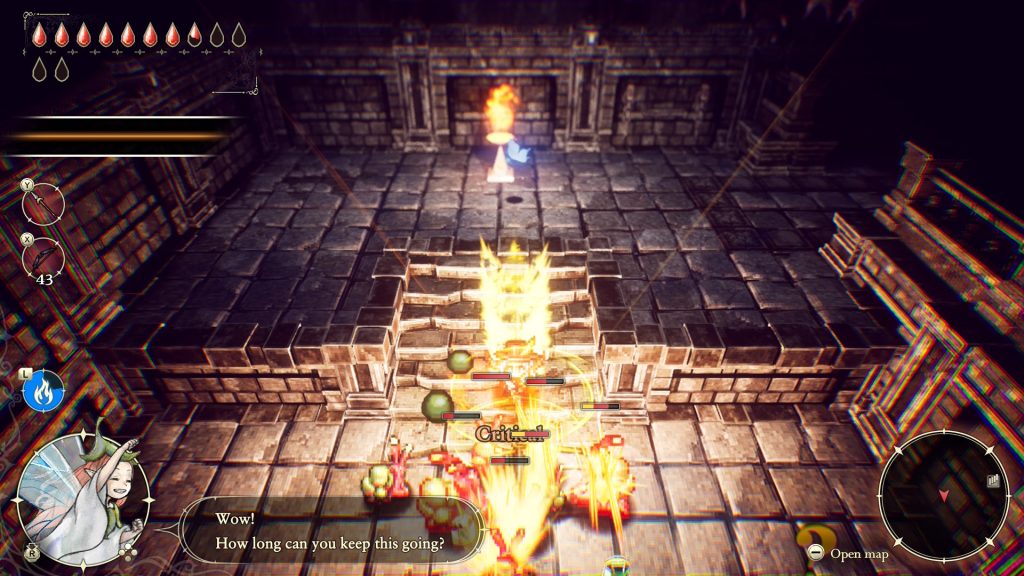
As a big fan of Zelda, the dungeons are what I was initially very interested in when starting The Adventures of Elliot. To go on a tangent a little, the newer open-world Zelda games have mostly ditched dungeons in favor of pure exploration and smaller shrines. Some people prefer that approach, but I love the tightly constructed puzzles boxes Nintendo came up with over the years. Similar to escape rooms, Zelda dungeons are a true test of the player’s mental abilities alongside offering unique rewards which reshape the way Link gets to interact with the world around him. In The Adventures of Elliot, dungeons are mostly a series of rooms where you sometimes push a block or step on a switch, but mostly just swing your sword at enemies until they explode and then proceed on.
This is maybe the most damning thing I will say about The Adventures of Elliot: everything you do in the prologue demo is the exact same thing you’ll be doing for the remainder of the game. Sure, new boss enemies are introduced and there are some additional elements thrown in that attempt to spice up general gameplay, but this is a very static action RPG. The enemy roster is super limited, and even on the absurd “Very Hard” difficulty setting, you can typically stunlock enemies until they die by mashing attack (“Very Hard” is only difficult because small mistakes cost you 50-75% of your health). Different weapons can change up how you approach foes, but since the enemy AI is lackluster and the weapons are mostly a feel thing, it doesn’t aid in truly changing encounters.
One system that I think is very cool on paper is the magicite mechanic. The Adventures of Elliot doesn’t feature stat increases or experience points, but does allow players to customize how their weapon functionality by equipping magicite stones to them. You are initially limited by your magicite box, but by upgrading its capacity after finding new stones, you can eventually give your hammer the ability to explode enemies on hit or make your bow shoot three arrows at once. Again, on paper, this is very cool, but it can’t overcome how devoid of strategy combat is.
To give a great example, one of the weapons you acquire is a blade on a chain. When charged, Elliot will swing it over his head until you let go of the attack button, after which he throws it at foes. It has a specific range, so you can’t be too close or else it will miss enemies. That’s an awful lot of things to keep in mind when it’s far easier to take your initial sword, bum rush an enemy against a wall, and just mash attack at them. Maybe the chain blade deals more damage, but it’s not consistent enough nor does it stunlock enemies as well as the sword.
The way that your fairy companion attacks is also cumbersome. She can only have one spell equipped at a time, and changing it requires you to open a radial menu and swap it out. A menu option lets you cycle through this with a button press, but it only goes in one direction. While I like that the right stick controls her movement and gives you some extra agency in combat, attempting to set a foe on fire, then teleport away is such a pain in the ass that I often just left it on the fire spell. For that matter, the other spells she eventually acquires are so seldomly called for that it makes you wonder why they are even included. Even puzzles don’t make great use of abilities such as sprint or copy.
That’s a lot of complaining, but I’m actually okay with a relatively simple combat system if everything else in the game accounts for it. Another comparable title, Ys, has two games where combat is merely walking into enemies with even less thought. What kind of sinks The Adventures of Elliot is that its overall dungeon design is simply weak. Team Asano has always suffered from weak overworld and dungeon layouts, but the combat in games such as Octopath Traveler and Triangle Strategy made up for it. The Adventures of Elliot doesn’t have that convenience.
I would estimate around 70% of the dungeon designs here are the same thing. Most rooms are just full of enemies or contain a simple switch Elliot will need to step on. The other 30% might have water to swim through, platforms to ride, or a block to push. Boss arenas rarely offer any kind of environmental peril, and while something like the lava dungeon at least offers blocks that sink into the lava, they come so late in the main quest that they don’t elicit much excitement. This issue becomes compounded when you dig into side quests, which take Elliot across all the various ages and often into the same dungeons he visited in the past or future. Those dungeon layouts are identical despite hundreds of years between them in-universe.
Not to continuously invoke The Legend of Zelda, but during Ocarina of Time, one of the final dungeon’s players will tackle is the Spirit Temple. Set across both Young and Adult Link’s timelines, the dungeon has players interact with objects in the past that then affect rooms in the future. The Adventures of Elliot never does this save for a few side quests which make passing reference to past events. The best of these is a quest where a bartender asks Elliot to find an object for him while then yelling at an employee for not treating objects with respect. Once you go to the past and alter events a little, you return, and he then is imparting wisdom to the very same employee that humans are more precious than mere objects. I wish the game did that more often, or at least didn’t reserve it for a final ending “twist” that drags the conclusion out to absurd proportions.
This isn’t even talking about the general story, which I feel is simply too wordy and drawn out to remain engaging for long. There is something to be said for the level of polish that full voice acting brings, but general dialogue in The Adventures of Elliot never gets to the point and will have characters repeating basic ideas so many times that you’ll wonder if all of those time travel shenanigans are damaging people’s brains. More so than that, there isn’t anything approaching character growth on the part of its main characters. I suppose one could point to the time loop nature of the plot as a source of development, but it would have been nice to see some kind of dynamism to its hero strewn throughout. As it stands, he’s mostly an empty vessel, but not in a way that allows other characters to bounce off of him.
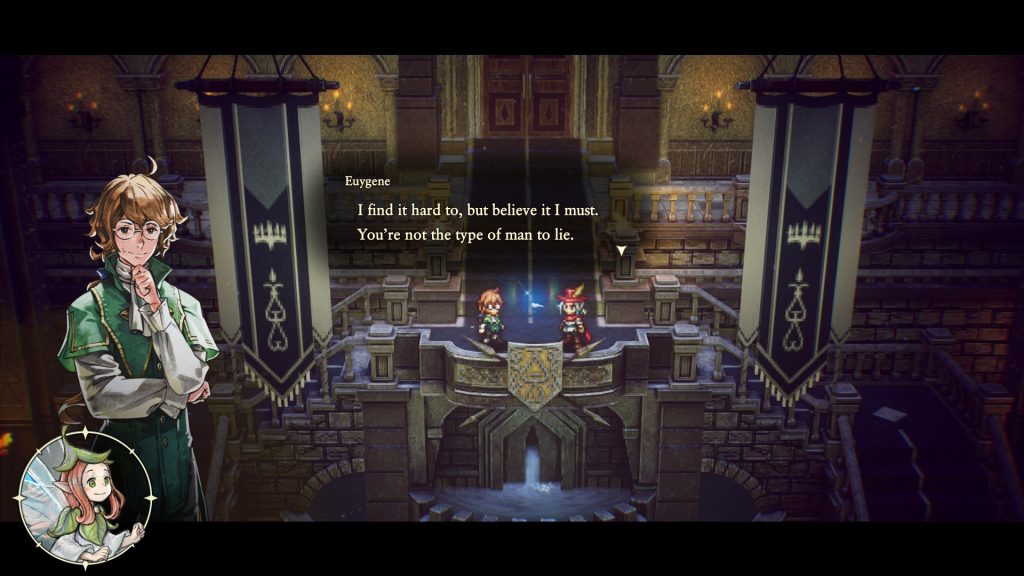
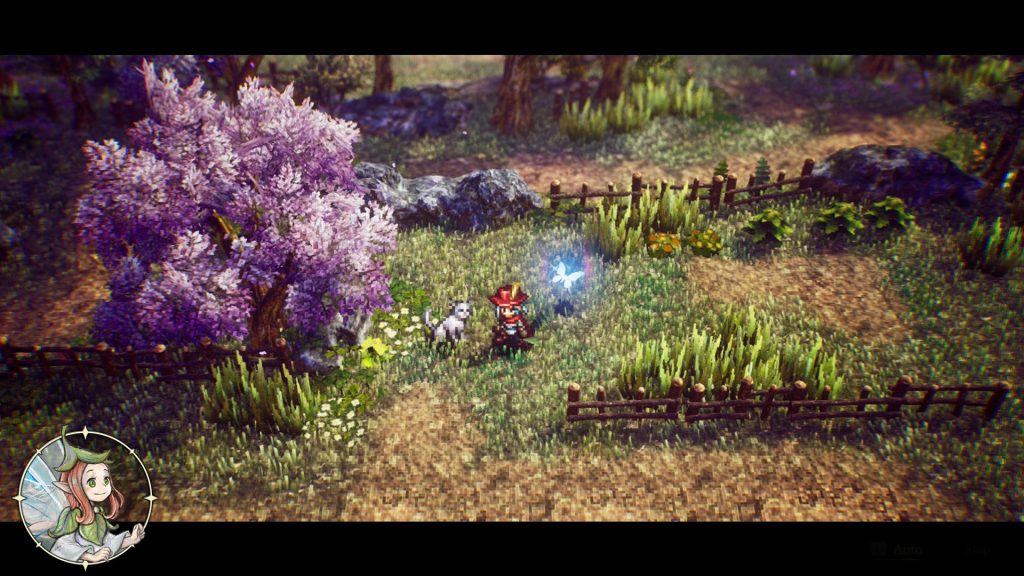
As far as the technical makeup of The Adventures of Elliot is concerned, that is a resounding success. The game looks beautiful with a nostalgic art style which blends anime influence with 16-bit charm. Character sprites are expressive, and the use of modern lighting against simplistic environments produce captivating scenery. I especially love the little touch of grass swaying as if it’s being blown by wind, which makes the world feel more lively than older games could. It even runs at a mostly locked 60 fps in docked mode while outputting what seems to be a 1440p image. Handheld mode can be spotty, but never to the point where it is detrimental to gameplay.
I can’t rate a game based on how well it performs, though. As a piece of entertainment that aims to invoke the past, The Adventures of Elliot: The Millennium Tales certainly achieves its goal. By sticking so rigidly to the past, however, it repeats most of the same mistakes while never daring to innovate in any fashion. Some people will love the nostalgic feeling this game can elicit, but I think I’m over looking backward in my life. If I wanted to replay The Secret of Mana for the umpteenth time, I’d just do that instead.
Leave a Comment
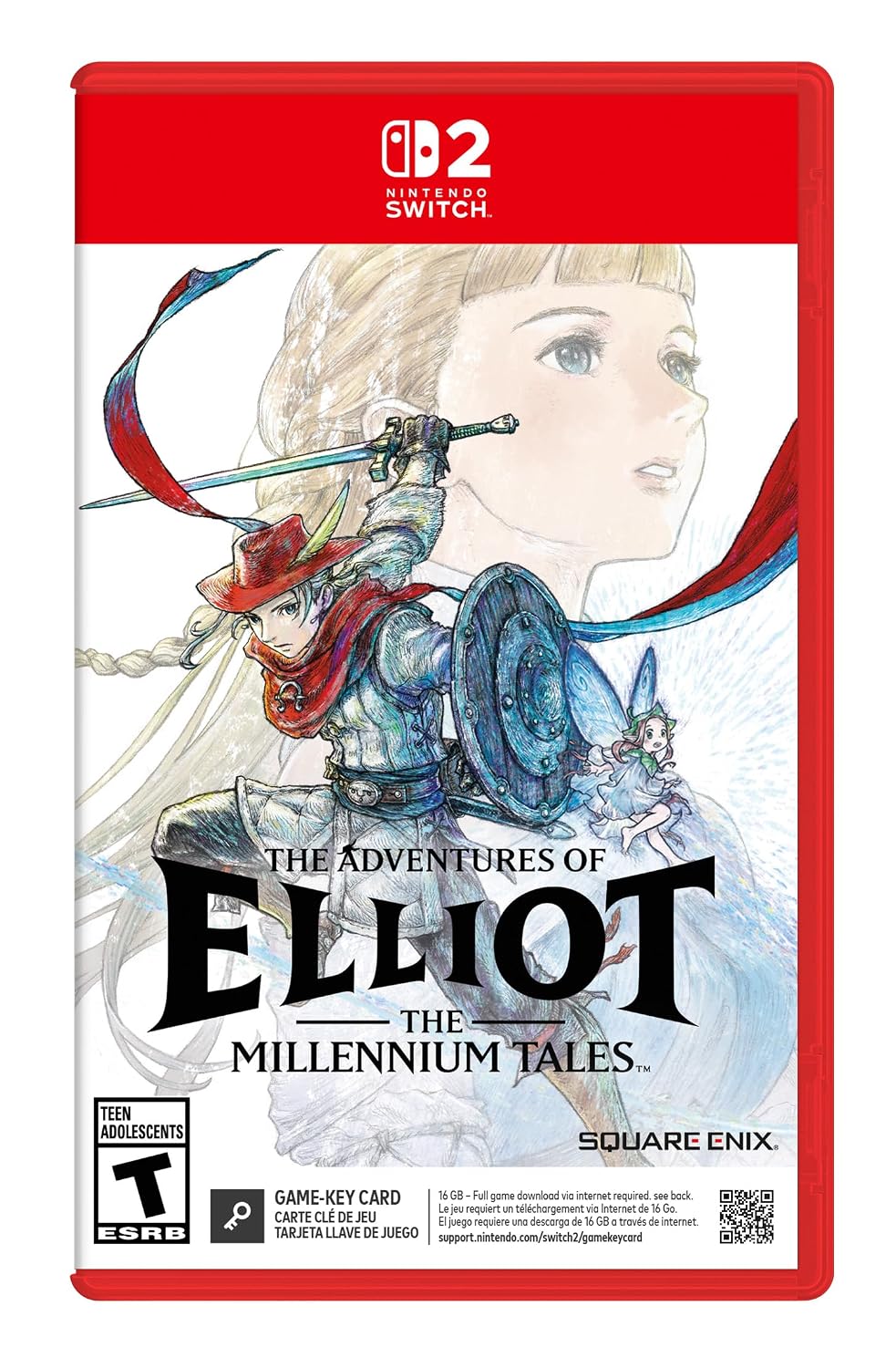
System: Nintendo Switch 2
Release Date: June 18, 2026
Categories: Action, Role-playing
Publisher: Square Enix
Developer: Square Enix, Claytechworks CO. Ltd.

Written by Peter Glagowski
Peter has been a freelance gaming and film critic for over seven years. His passion for Nintendo is only matched by the size of his collection.
