


I’ve made no secret of my fondness for Bandai Namco’s Tales series of RPGs. Ever since my GameCube-era intro via Tales of Symphonia they’ve been a comfort food of engaging battle systems, subversive storylines, fleshed out parties and… well, comfort food.
Though the Switch saw no unique entry in the franchise, it did end up hosting several ports and Remasters. Welcome as they were, they had a tendency to feel a bit dated, the latest of them still being ten years old. For Nintendo Switch 2 owners at least, something a little fresher is now on the menu, and it’s thankfully one of the series’ best adventures.
Tales of Arise, originally released in 2021, gets high praise for elevating much of what so often makes these games great and streamlining the elements that can hold them back. The Switch 2 is a fantastic home for this port, maintaining its world, characters, and combat in handheld. It does take some hits when it comes to frame rate and overall luster, but if you’ve picked up Nintendo’s newest console it’s a modern gem you won’t want to miss.
Tales of Arise Switch 2 Performance
Before diving into the fun stuff, let’s talk performance. In both docked and handheld, Tales of Arise on Switch 2 targets 30 fps for its gameplay and 60 fps for cutscenes, all in 1080p no matter which config you’re in. This puts the game on par with the PlayStation 4, which was one of its original target platforms and likely what it was primarily developed for. Managing that in handheld makes for a serviceable experience, though I did experience some slowdown in environments with heavy particle effects and sometimes when triggering optional, visual novel-esque cutscenes (Arise’s version of the series’ trademark skits).
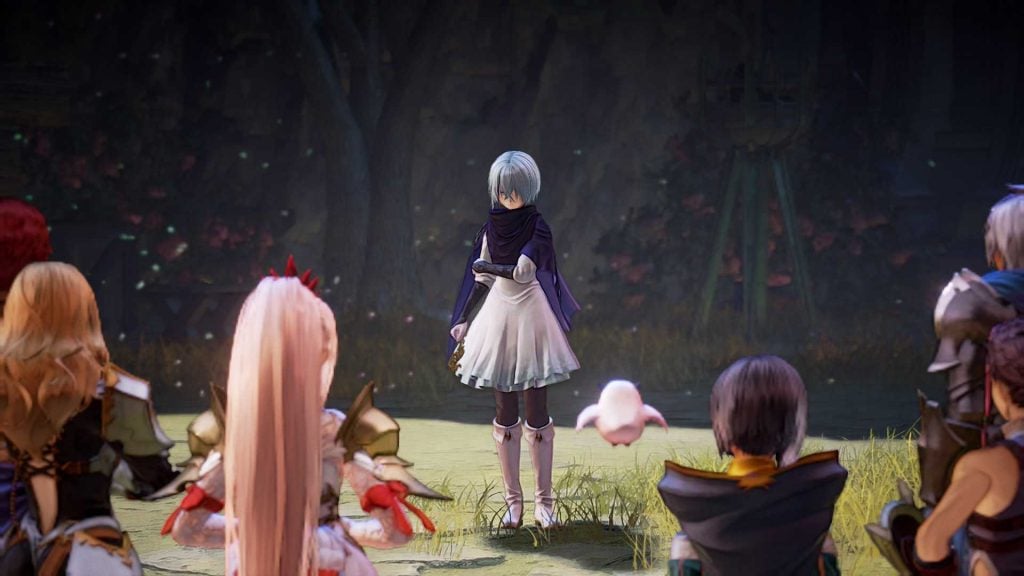
It’s important to note that Tales of Arise also launched on the PlayStation 5, where the game targeted a consistent 60 fps and had dedicated performance and graphics settings. I did a full playthrough on PS5 when Arise first released and took a look after spending plenty of time on Switch 2. While I’d argue the frame rate isn’t really a factor for overworld exploration, the art direction benefitted from greater lighting and particle effects on PS5, making the Switch 2 port seem duller, but only by direct comparison.
The buttery smooth gameplay during combat on PS5 is what’s really missed here though. Switch 2 also has a quirk of (apparently) classifying animations for more cinematic attacks as cutscenes, so they get a sudden bump in quality before snapping back to the targeted 30. You get used to it, and I’m glad these well done displays of your party’s most powerful artes are largely intact here, but it’s still an oddity.
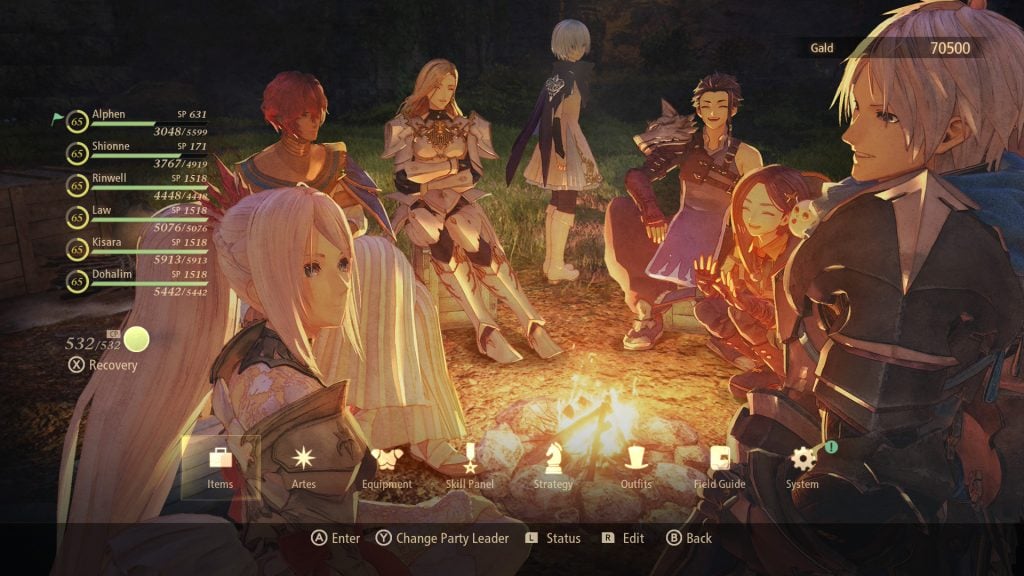
As is recurring for Switch 2 versions of games on ninth generation consoles, you’re making a choice between the prettiest version or one that runs alright even in handheld. I’m all for the latter, and Nintendo fans of a similar disposition or those without a more powerful option are still in for a consistently performing treat with some minor hiccups that’s on par with the game’s original vision.
Another Tale of Two Worlds
Like so many Tales of titles, Arise is about two worlds in conflict. Here it’s two planets: the suffering and stuck in antiquity Dahna and the more futuristic oppression of Rena. The contrast between medieval and technological isn’t new, but it’s done well here, with the nuances of the world unfolding thanks to our amnesia-stricken protagonist Alphen. A Dahnan slave unable to feel pain, Alphen has only about a year’s worth of memories (remembering his name by the end of the game’s opening portion) and begins the story with an all-obscuring iron mask robbing him of even his face.
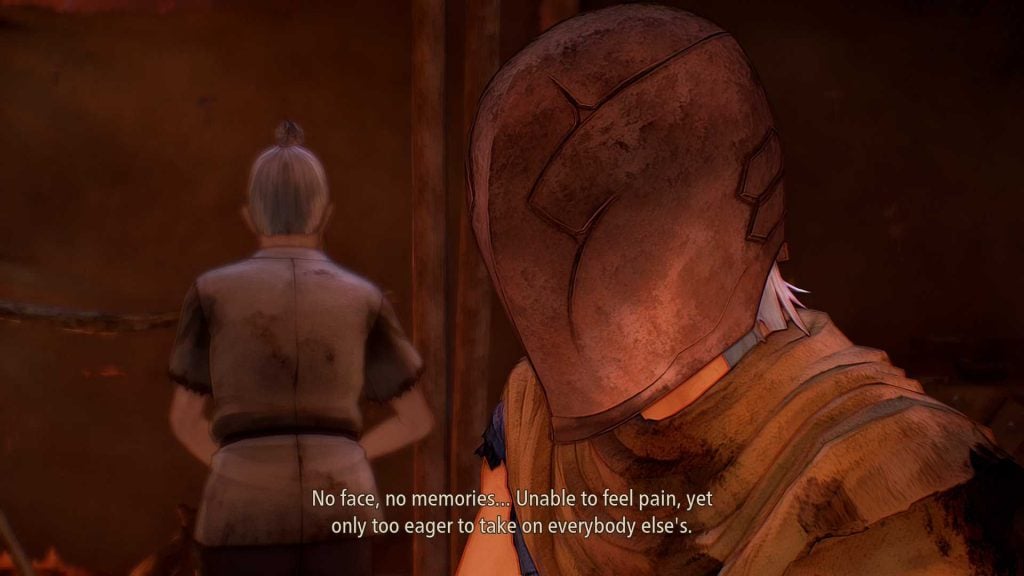
Quickly he’s pulled into a revolution and crosses paths with a Renan maiden named Shionne, cursed to inadvertently harming anyone who touches her with lightning-like thorns. Her own motivations and a mysterious blazing sword come to light, setting them on a joint path that will change their worlds Their contrasting afflictions lay the foundation for a bond that grows over the course of the game and serves as one of many devices that explores the divides of classism, personal inhibition, finding one’s purpose over the game’s 50 or so hours.
Again, a lot of that foundation is “typical” for Tales of games. What elevates Arise in particular is its wholly likable cast and some of the best RPG combat ever made.
Along with Alphen and Shionne, you’ll recruit four other characters, each offering their own unique perspective on the Dahna/Rena conflict. The six of them are all fully playable and wholly distinct from one another. My favorite of these ended up being Rinwell, a Dahnan who can somehow use magic (a skill otherwise exclusive to Renans) that travels around with an adorable owl named Hootle by her side. Where Alphen is a frontline fighter liable to take plenty of damage, Rinwell rewards understanding timing when it comes to charging and casting screen-filling spells and shooting stars.
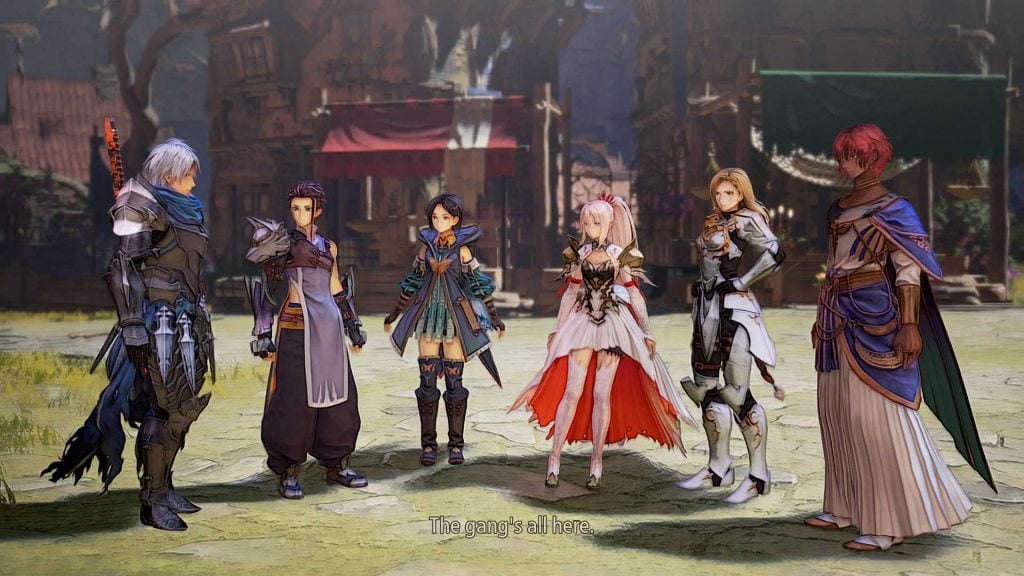
Each of the playable characters gets a chance to shine and develop, both throughout the main story and across sidequests and cutscenes. Arise does a service to longtime fans by making that optional content much harder to miss out on (if anything is permanently missable at all) and simplifying certain mainstays, like cooking. About the only aspect I found a bit too granular for my taste was accessory crafting, which is fairly optional in the grand scheme of things.
Combat as an Arteform
Arise’s combat is where the game really comes alive. It’s easy to grasp out the gate, where you’ll be performing satisfying combos pretty quickly, but it’s once you have a larger selection of artes that things open up. Soon you’ll realize you’ve got multiple tools to chain together seemingly neverending strings of hits while your party calls out anime-esque attack names the whole way through.
There are attacks that launch enemies skyward, letting you continue your assault in the air before dunking them back to the ground to keep it going further. Each party member has a technique they can perform on command when a meter is full, instantly bringing them to your side to (ideally) extend your combo and take advantage of an enemy weakness. Your artes will get more powerful and additional properties the more you use them, making focusing on some favorites a different kind of viable compared to trying everything out as you unlock new skills. It all comes together in such a satisfying way that I felt compelled to keep experimenting and refining, but is never so overwhelming that it stops being fun to execute.
The whole structure almost evokes fighting game sensibilities at times. You have your normals, your specials, meter management, tag-in assists, and eventually even supers in the form of burst artes and mystic artes. Best of all is that it’s as deep as you’d like it to be; you can certainly mash your way to victory if you’re so inclined.
My only real criticism of the combat here is that everything I just described doesn’t always apply to boss fights. Those foes prove themselves much more resistant, not letting you break their guard and put them into a comboable juggle state and oftentimes having entirely too much HP. I’ll concede that I shouldn’t be stunlocking these encounters, especially the ones serving as narrative beats, but that it ultimately takes away an aspect of what makes fights in this game so enjoyable and replaces it with spongier health bars is a detriment to the experience.
Beyond the Dawn
Another point of contention I have with Arise is that its narrative becomes less compelling in its second half. There’s a firm turning point where the focus shifts from the driving narrative force that is the conflict between worlds in the present day towards what led to that divide in the past. For the benefit of first time players I won’t spoil things, but there were some times in the late game that felt more of a grind towards the credits rather than the stronger pacing before that aforementioned turning point.
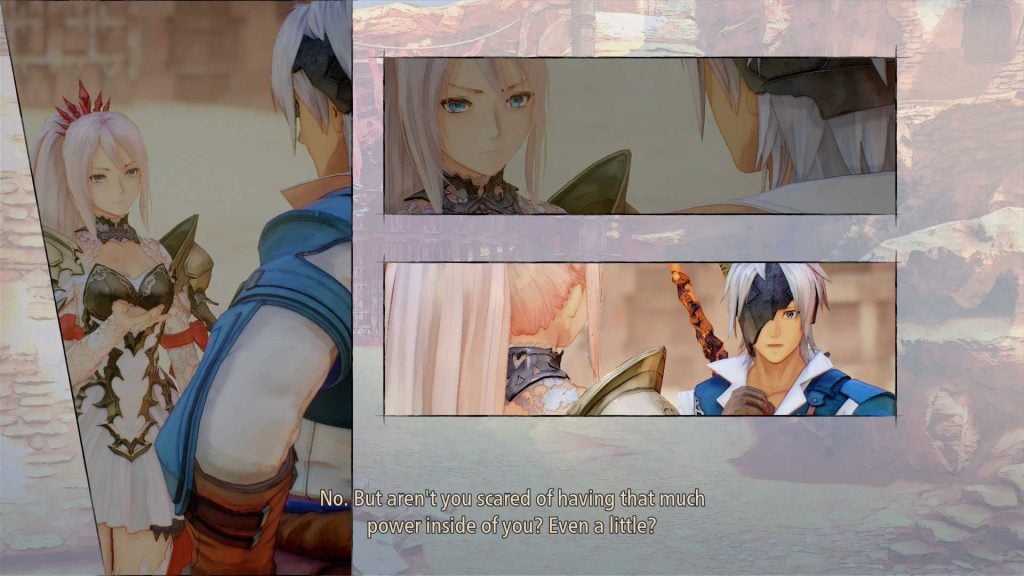
There’s some solace on that front though. By default on Switch 2, Tales of Arise comes with its Beyond the Dawn content. This was previously a post-launch DLC storyline that checks back in on the party a year after the base game’s story conclusion. They’re introduced to a mysterious girl named Nazamil. Her father was a Renan lord while her mother was a Dahnan slave. A child of two worlds but welcome in neither, she provides a lens for a different exploration of the game’s built out world.
Interestingly, Beyond the Dawn doesn’t interact with your base game save file at all to the point of existing as a separate title screen in-game. I was able to jump right in despite only dabbling in the main story of Arise for a few hours, with the party at a preset level and with skill loadouts independent of progress or preference. It definitely assumes you’ve completed the story while still bombarding you with exposition in case you forgot. I hadn’t played the DLC on PS5 previously, but I found it a great way to jump back into the world with all of the tools that make its gameplay engaging.
If you’re in a similar position, I will say that Beyond the Dawn doesn’t really “add” anything to the formula. It’s simply more of it, boasting “20+ hours of content” across the main storyline, dungeons, battles, and its own exclusive sidequests. How much that appeals to you will come down to your enjoyment of the base game, which I’d say really is the main attraction here.
This also isn’t a “Remaster” à la other recent Tales of releases, such as Tales of Graces. There isn’t anything new or altered in the experience, and it’s instead a straight port for Switch 2 owners. It doesn’t include the game’s other DLC, such as costumes, by default outside of deluxe and premium editions.
Still Phantastic
When I first played it five years ago, Tales of Arise became one of my favorite RPGs and a great step forward for the series. I’m pleased to say that revisiting it on Switch 2 hasn’t lessened or shifted that opinion. Even with gameplay locked to 30 fps, the combat holds up as exciting, dynamic, and rewarding. The story, cast, and art direction draw you in and bring confidence to the future of the series as its 30th anniversary winds down.
More than anything, I hope the Switch 2 and Nintendo fans have a place in that future. We’re almost certainly going to see more Remaster project titles down the line, but there’s not been a hint of a followup to Arise. At least that makes this port the perfect chance to catch up and get on board with an often unsung genre icon.
Leave a Comment
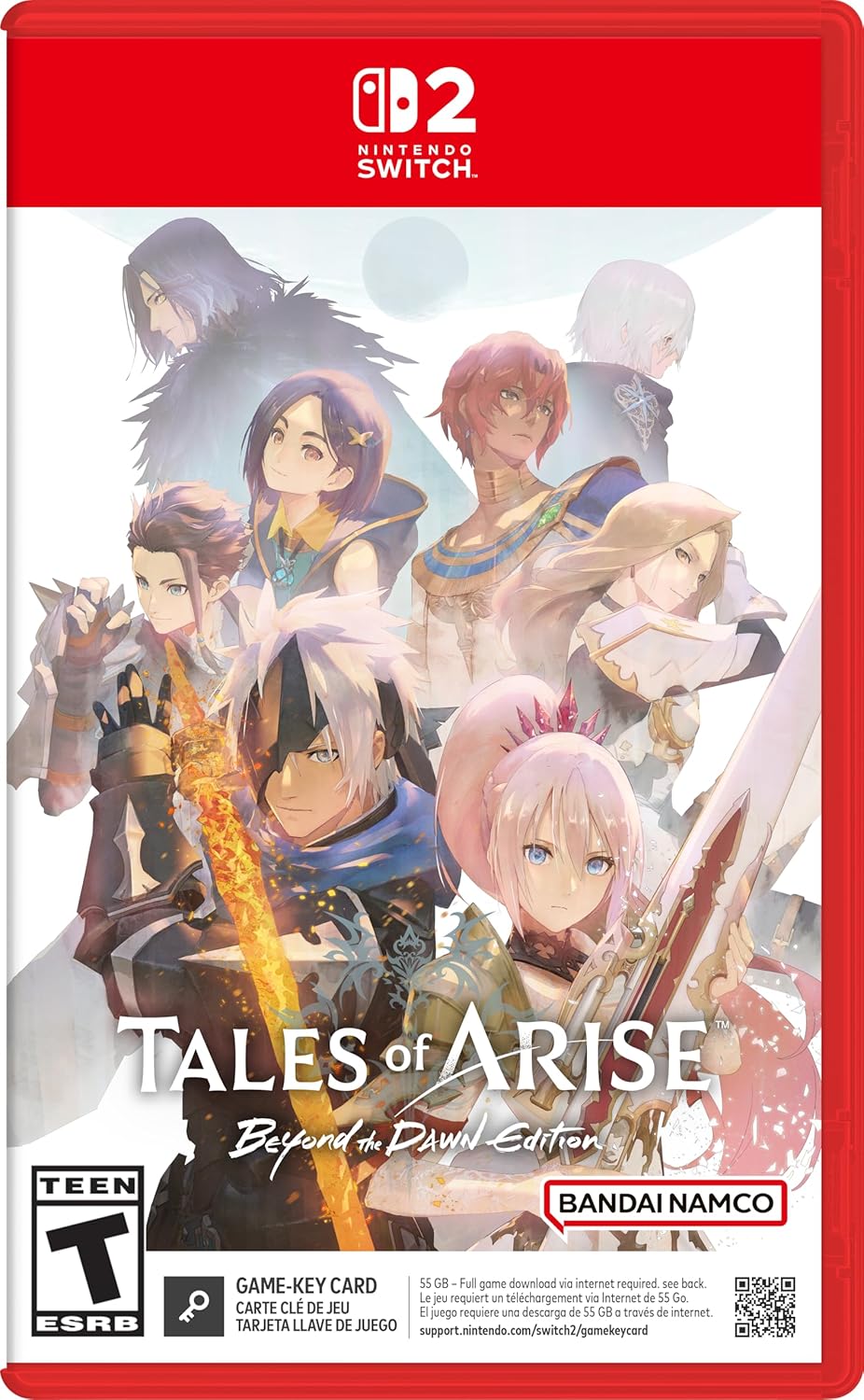
System: Nintendo Switch 2
Release Date: May 22, 2026
Categories: Action, Role-playing
Publisher: Bandai Namco
Developer: Bandai Namco

Written by Ricky Berg
When he isn’t writing for Nintendo Wire, Ricky’s anticipating the next Kirby, Fire Emblem, or if the stars ever align, Mother 3 to be released. Till then he’ll have the warm comfort of Super Smash Bros. to keep him going.
