


Super Meat Boy 3D’s title takes me back to the ’90s when modernizing the platformer genre meant making it 3D instead of 2D. It’s not just the title that takes me back though. The game’s concept revolves around you, a tiny block of meat with arms & legs, navigating gigantic death traps. A little guy jumping over saw blades and lasers in woodland and industrial settings in order to rescue his girlfriend. That’s a concept as old as time (or at least as old as 1996 judging by the first Crash Bandicoot game). How does Super Meat Boy fare in 3D though?
I’d register that this is one of the simpler game concepts we’ll see in 2026. Take a 2D precision platformer and make it 3D. Easy peasy, right? Well, a different team is behind Meat Boy 3D than the original Team Meat that made the first Meat Boy game. This time around there is no Edmund McMillen and a new team of devs, Sluggerfly, have joined development. The reason this is a caveat is because the level design is quite different from Super Meat Boy the original. While the general ideas are the same (just survive being chopped to death using your platforming skillz), the level pathing is what has suffered in the move to 3D. Across the game’s five worlds of 75 levels total, there were numerous times where the barrier for execution was the execution itself. Verticality was present in the OG Meat Boy with no issues, but here it’s not always clear what parts of a level can be used to platform — wall jump, wall run, or be broken through.
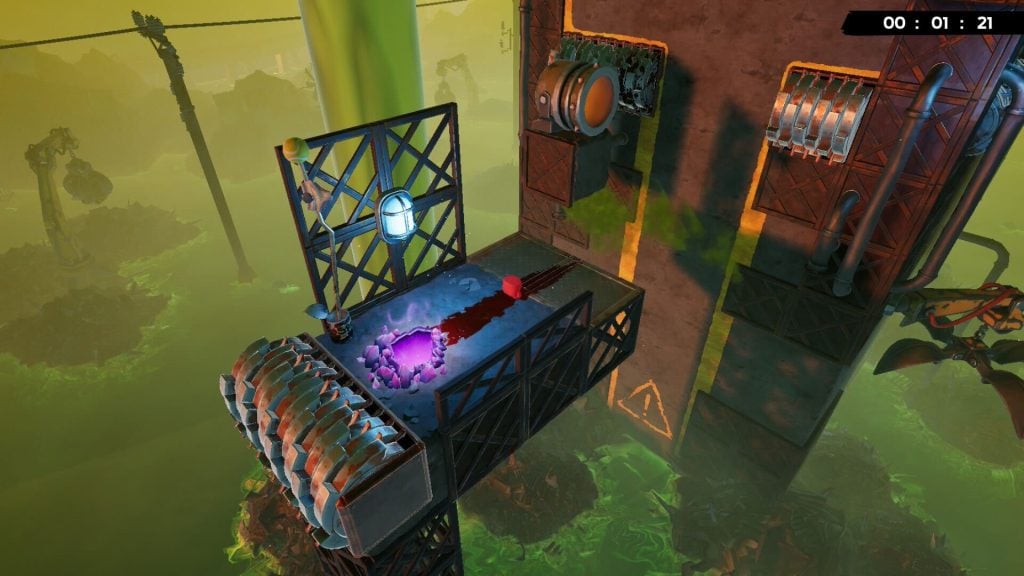
It doesn’t exactly help that the character model for Meat Boy is so small while the camera is zoomed out to emphasize the scope of the level environments. This is a great idea on paper with a wide FOV, but it can be rather frustrating in motion. The camera angles don’t help this, sometimes going for an isometric perspective similar to Super Mario 3D World instead of behind the back. This especially does not help in making tricky jumps. Coming at these levels from multiple angles, none of which tend to be consistent level by level, can be unnecessarily challenging. I suffered most in the third world’s industrial levels, which are a cold, gray mess of towering machinery, conveyor belts and barrels of molten lava. There is, thankfully, a default ring marker under Meat Boy at all times to show where he is and where he’ll land while making jumps. After dying hundreds of times, I’ll take all of the help I can get.
You’re greeted with a world map upon setting out to rescue Bandage Girl from Doctor Fetus. This should be familiar to any Super Meat Boy purist. From here, you can access each world’s 15 levels as they are cleared or you can continue straight through to the next level without having to exit back out to the map. Realistically, each level is no longer than 30 seconds but the excessive amount of deaths you’ll incur from spikes, buzz saws, falling platforms and plummeting to your doom pad out the completion time pretty effectively. In addition to the game’s five main worlds, there’s a Dark World with five more worlds that can each be accessed by beating each main level’s A+ clear time. I enjoyed the setup and general flow of Meat Boy 3D except the boss levels. The problem is that they’re hardly even boss fights — they’re really just another version of a typical level with the added pressure of being chased, the level crumbling or being locked in an arena with only a few platforms to avoid attacks. I guess I prefer this approach if boss fights had to be present. At least clunky combat wasn’t added to the already existing demand for precise platforming the game throws your way.

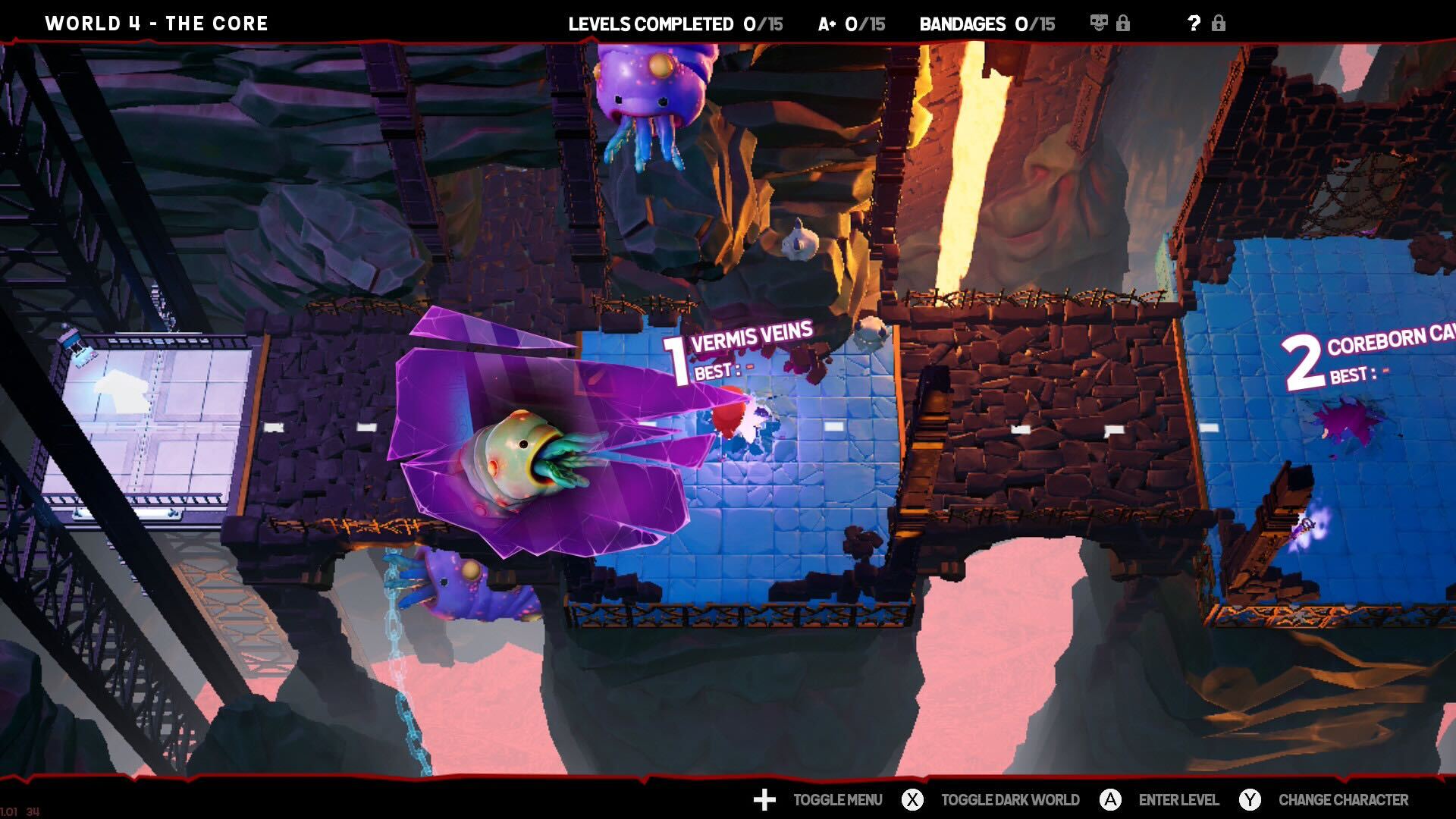
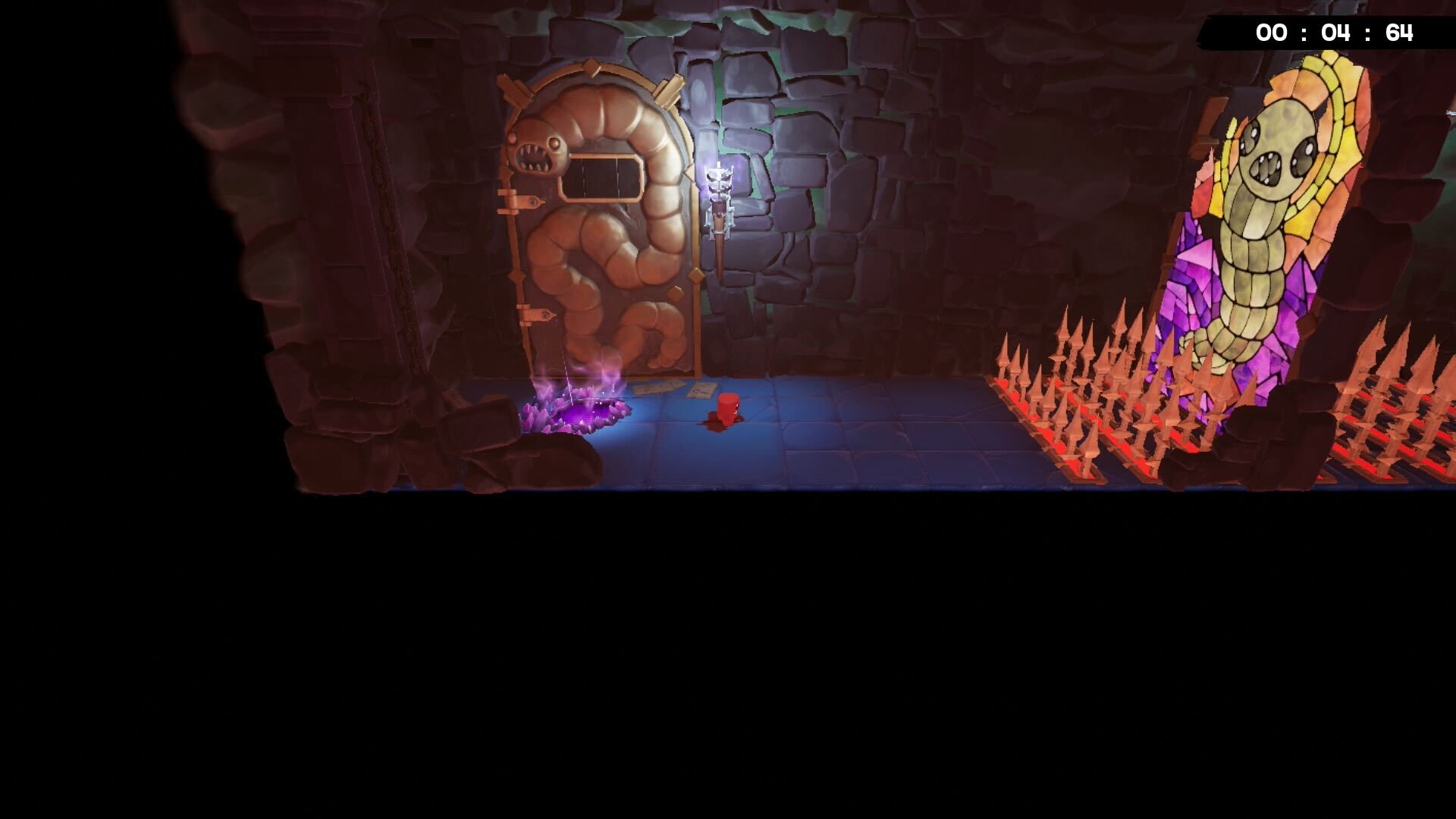
Speaking of, I was quick to get used to the controls. They’re easy to understand. You have a run, a faster run by holding down the ZR button, the ever important jump button and the welcome addition of an air dash. I never felt that the controls were fighting me but the collision detection and camera angles absolutely were. Even as early as the first world, the forest, I was missing simple jumps due to depth perception. I’ve never been a fan of an isometric platformer. It’s simply not intuitive to hold a diagonal direction on the analog stick to move forward or backward. However, what Super Meat Boy 3D nailed is the platforming. Running, jumping, and dashing just feels good. It’s fast and good thing too because you need to be fast in this game. Not only are you timed, but most obstacles (like giant caterpillars that move through neighboring tunnels or spiked walls) require you to time your jumps and wall runs in order to pass through. The frantic nature can be stressful, but there’s a great pick-up-and-play aspect to clearing a few levels then taking a breather. If you really want to put yourself to the test, each level has a bandage that unlocks new costumes for your meat cube. And every last one of them are as ugly as you’d hope.
Ugly is also unfortunately how I’d describe Super Meat Boy 3D’s usage of Unreal Engine 5, especially on Switch 2. I commend Team Meat and Sluggerfly for focusing on hitting a solid 60 fps with no frame drops, but the blurry, drab colors and textures aren’t pretty. It has to be said that this truly does resemble one of those “What if so and so video game character you grew up with was rendered in Unreal Engine 5?” scenarios. And the art style reflects this. While it fits Super Meat Boy fine, it could also fit just about any other game that would appear cartoony with a realistic flatness to the approach. Compared to other versions of the game, the Switch 2 is probably the worst looking of them but even then the biggest offense is that Super Meat Boy 3D just doesn’t resemble its predecessors. Even Super Meat Boy Forever’s hand-drawn flashiness, for how weak that game ended up being, was more fitting of the franchise than this take on it.
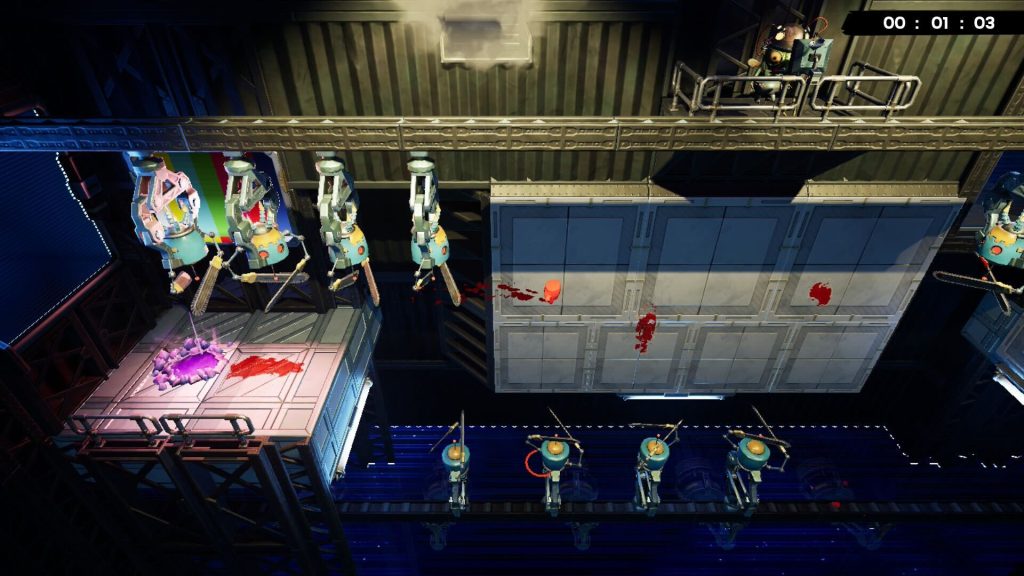
Ultimately, what you get from Super Meat Boy 3D is at the least a fun but frustrating few days of challenging speedrun-fueled platforming. There aren’t many precision platformers that have attempted 3D and this is a fine execution. I think if the art style, camera, environmental clutter, and zoomed-out perspective can be tweaked, this will have ended up being a solid blueprint for how Super Meat Boy can continue forward. As it stands, Super Meat Boy 3D is maybe a little underdone and needs some seasoning.
Leave a Comment

System: Nintendo Switch 2
Release Date: March 31, 2026
Categories: Action
Publisher: Headup Games
Developer: Team Meat, Slugger Fly

Written by Matthew Powers
Nintendo has been Matthew’s preference for fun video gaming since 2004. In addition to his love for all things Mario, Metroid and beyond, Matthew also enjoys heavy metal, roller coasters, pinball machines, and being a proud cat dad.
