The Fire Emblem is no stranger to massive stories and expansive casts. As early as the Super Nintendo, with Genealogy of the Holy War, it was playing with multiple generations and political intrigue. It and others would spread their lore across multiple games, multiple protagonists, and multiple storylines. It’s an impressive scale for a strategy RPG genre, and one that would’ve been unimaginable way back when the series came to the West in 2003.
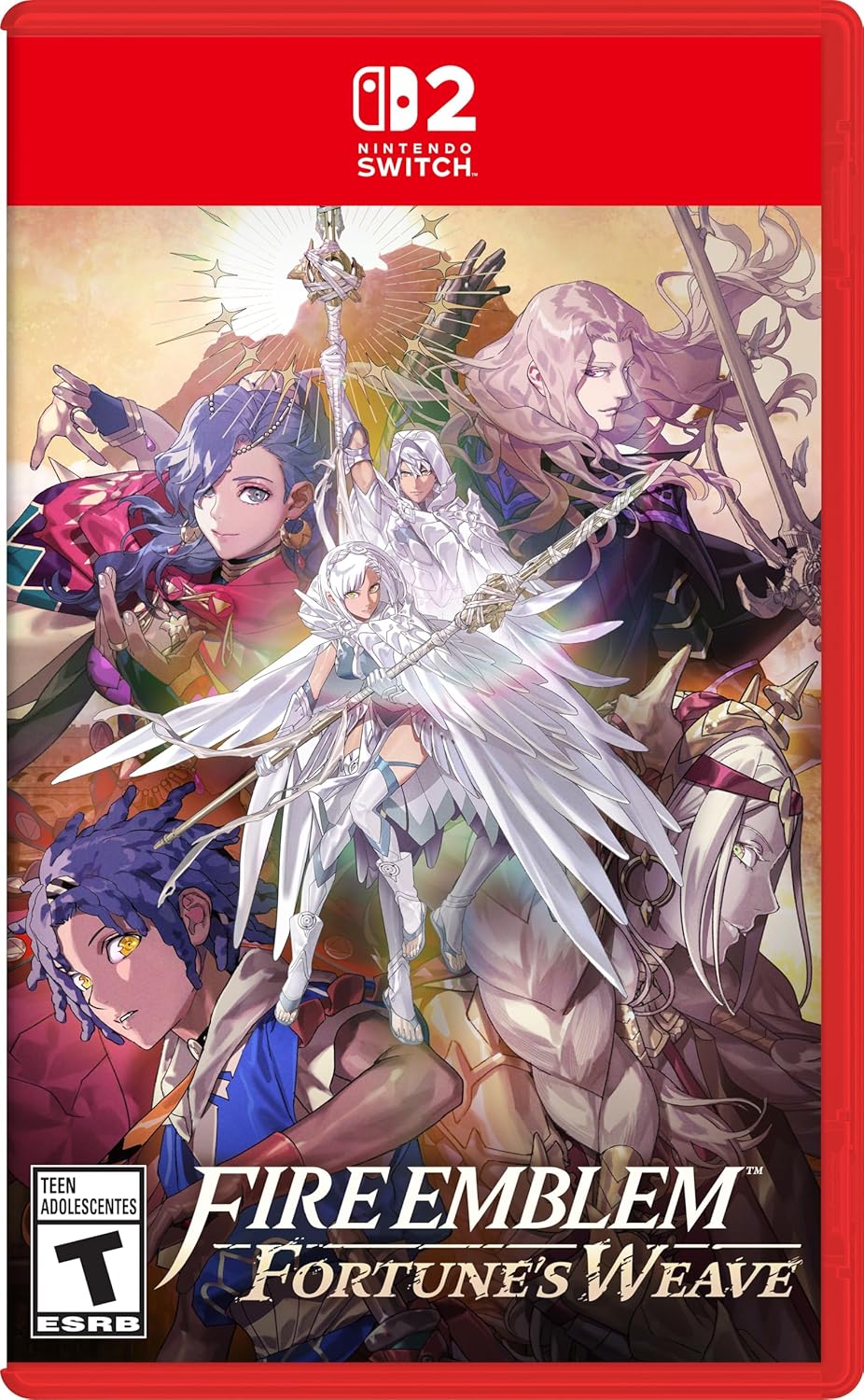
Now it’s 2026 and Fire Emblem: Fortune’s Weave is the latest and most expansive of them all. Having spent a month with the game now, it’s been a roller coaster of overwhelming intros and multilayered storylines. If someone had told me the best way to properly Three Houses was to go from a trio of main characters to a quartet, I’d have laughed. Yet here we are with exactly that and so much more.
I’ve been thoroughly impressed by the ambition on display here and how comfortably it stands above past entries. Some aspects suffer in the face of how strongly it uplifts its leads and the gameplay loop it establishes early on. That said, after dozens of hours in Dagsion, I feel confident calling this a pinnacle of the genre and a fantastic, familiar step forward for Fire Emblem as a series.
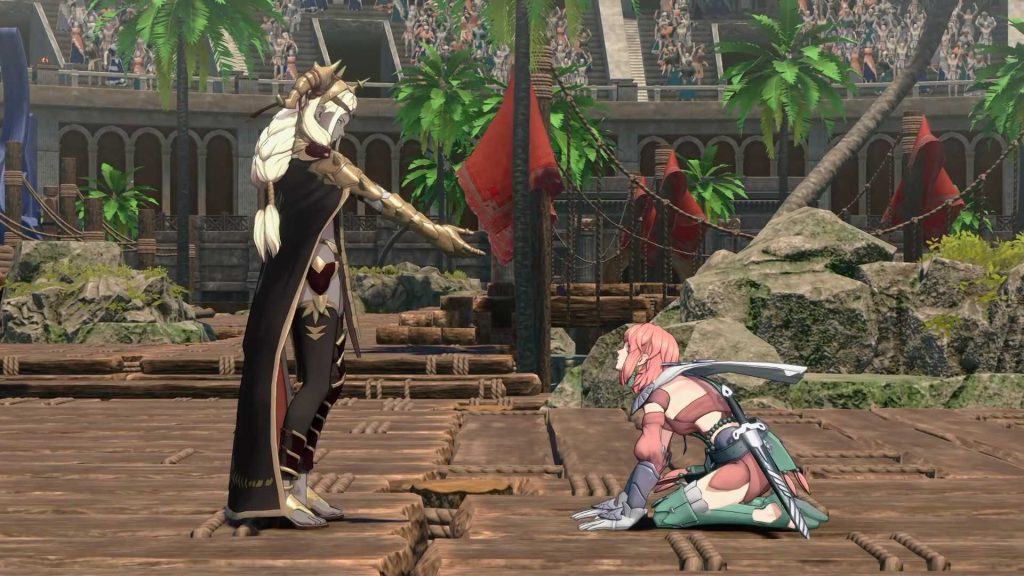
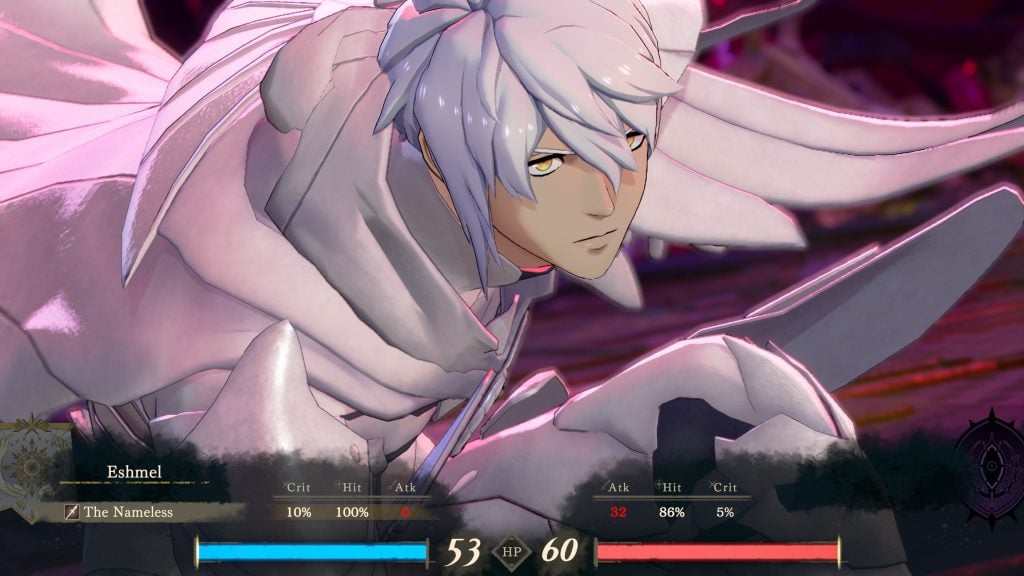
The most notable elements of Fortune’s Weave are structural. Much of its pre-release marketing leaned on its four leads (Flame Lords), and they truly carry the hundred-plus hour experience. Similar to Three Houses, you’ll pick one of them to be your main character, but it’s hard to overstate how much better the narrative threads connect and intersect this time around. That’s largely thanks to its true framing device concerning Eshmel, the white-robed figure that’s your true avatar in this expansive tale.
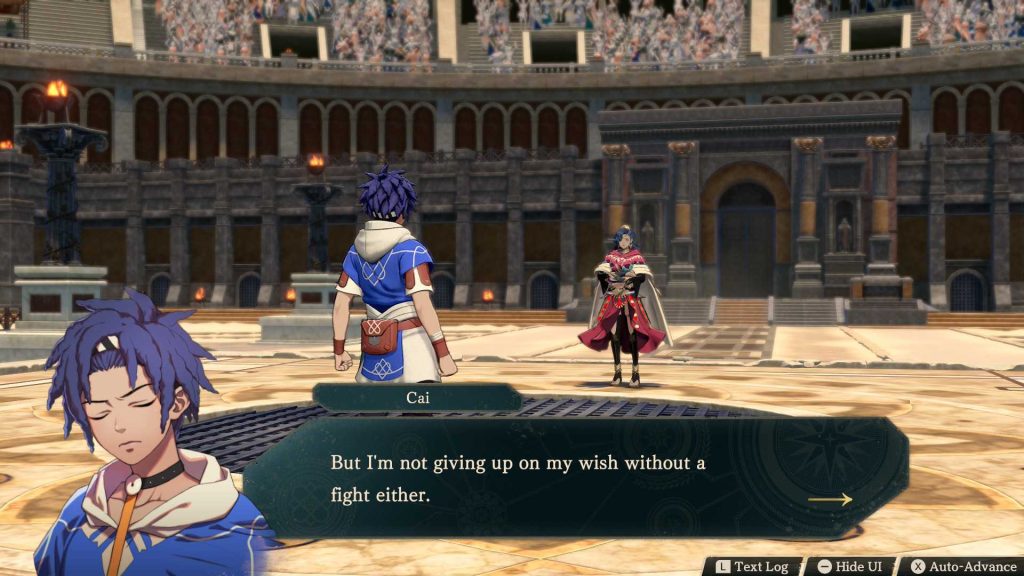
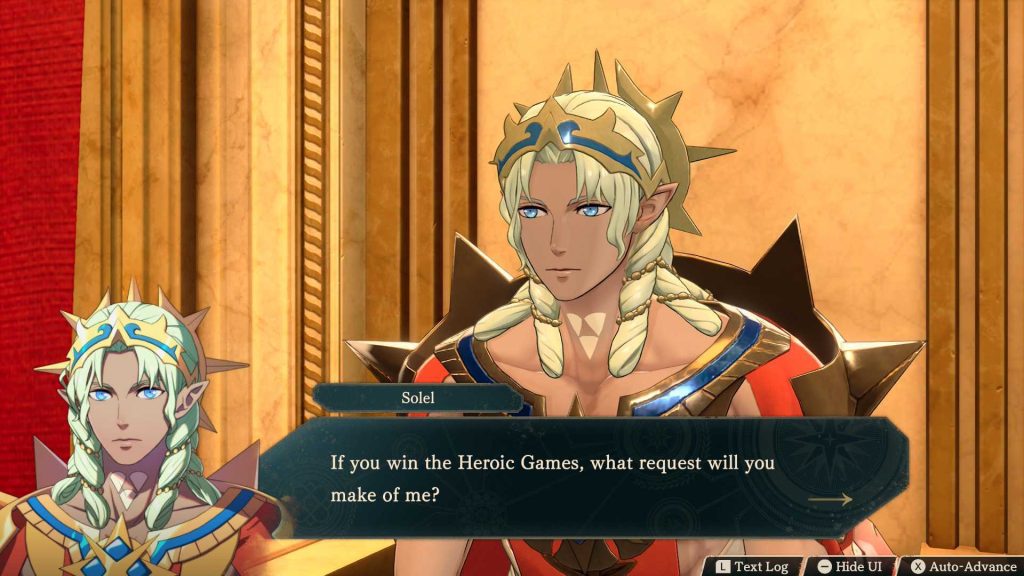
It’s established (in a sci-fi heavy prologue) that the world is on the brink due to a demonic threat. The only way to overcome it is to have Eshmel project themself back in time in order to oversee the Flame Lords at a critical juncture in time where fate brought them to Dagsion, a capitol city hosting a gladiatorial contest known as the Heroic Games. Whoever wins will be granted a single wish, which is great for whichever Flame Lord you select, but the larger success comes from the strength your Lord accumulates in pursuit of their victory, which will allow Eshmel to recruit them to their cause in the future timeline.
It can be a bit confusing on paper, but Fortune’s Weave does an admirable job of easing you in. I could do without multiple hours of cutscenes at the start, and there’s even greater depth and density if you’re interested in unifying lore, but it’s enough to get you moving into more typical Fire Emblem fare.
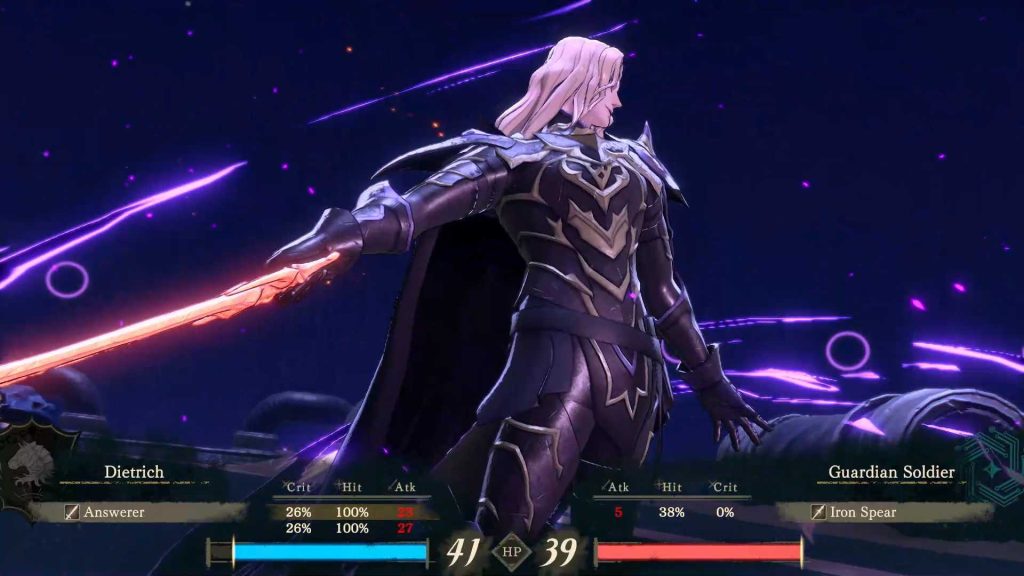
Don’t mistake familiar for weak, though. Cai, Dietrich, Theodora, and Leda are collectively some of the best leads Fire Emblem has had in a long time. Segmenting their storylines might make you think you’re only getting a fourth of the story, but these are effectively full-scale Fire Emblem games nested within a single, larger Emblem. Its ambition is as admirable as it is overwhelming at times, and will only increase now that we know a whole other quartet will get storylines thanks to DLC.
To go into greater, specific detail would overtake this whole review, but I’ll spare a few thoughts for one Lord in particular. Leda was my first playthrough, and I don’t regret it one bit. What’s introduced as a revenge plot gives way to a larger conspiracy to unravel, but it’s the character focus on her that was always more compelling, even if at times it devolved into her reminding everyone in earshot that they don’t know what real loss is and she has to do more murders. It’s unique and refreshing for a FE lead to be motivated to those extremes, and having a Dancer as a focal point is something I appreciated as a longtime fan.
The other three are similarly rounded, and each offers a unique perspective on the world and ongoing events. That includes background societal structures involving gods and even some lingering elements from Three Houses — more specifically in regards to its setting of Fodlan, which Dietrich hails from. There’s no wrong answer, but if you’re struggling with who to go with first I’d suggest Cai or Leda, with Cai perhaps being the most straightforward and accessible.
After a first playthrough things become quicker and more streamlined thanks to boons you can unlock to get more experience or discounts at shops. There are also smart choices, like sidequests you might’ve cleared on one route auto-clearing on others once you reach them so you don’t have to do basic fetch quests or optional fights over and over again. The game encourages multiple playthroughs but not being restrictive about them. You can swap routes midway through if you want to change things up, or if you feel so inclined you can ignore the Flame Lord storylines entirely and put Eshmel and his few allies up against the endgame — I would not recommend this unless you’re into challenge runs, but it being here as an option is great.
Where Fortune’s Weave nearly lost me was its time management and world map. While I’ll heap praise on the narrative pacing, it throws an overwhelming amount of minutiae at you once you’re in Dagsion. Suddenly you have to think about things like gift giving, arena training, sharing meals, performing services at temples, keeping your army well equipped, and making sure you’re properly leveled for your next main story fight.
None of these things are really “new” for Fire Emblem, but the learning curve to optimize time management is. Chapters have a finite number of “turns” that each represent six hours of an in-game day. While utilizing services in Dagsion typically doesn’t eat up time, traversing the world map does. Certain services are only available once a week, which creates this flow of picking out an objective to accomplish but having enough time to make it back to Dagsion for what becomes a chore routine.
You’ll do this cycle again and again, but alongside time you’re also managing money, inventory, and relationships. Depending on how much you care about the latter two, the former can become your biggest barrier to a smooth experience. It varies from route to route, but if you’re overdoing it on gifts or weapons and neglecting side missions, it’s easy to end up broke in the early to mid-game.
I overdid it on gifts, which are essential for building up relationships with the dozens of optional recruits hanging around Dagsion. Passing out alcohol and sweets again and again ended up one of the more repetitive aspects of the entire experience, and while it gets easier as a route goes on there’s no denying the drag of this cycle, especially when the payoff ended up fairly minimal.
I’m still working through how I feel about the extended cast of Fortune’s Weave. There’s a clear structure in place — each Lord accumulates about five close allies who’ll stick with them for the whole Heroic Games. Dedicating experience and resources to these allies always felt more worthwhile than building up a more random recruit, particularly because the “forced” characters are well balanced as a group and get way more screentime to let them grow on you.
Some of this will be mitigated via DLC in the future, letting completionists really get to know everyone across every route, but when most maps have a hard cap of six characters it’s hard to justify going out of your way beyond favoritism. For the bulk of the experience it keeps your force from feeling like a growing army and more like a dedicated squad with a pretty big pool of reserves.
I haven’t really spoken about the actual grid-based gameplay much, and that’s largely because it’s more of the same for longtime Fire Emblem fans. Taking the most inspiration from Three Houses, there’s no weapon triangle in place and special techniques are the only thing that eats up weapon durability. I appreciate this as it lets you use who you want and what you want freely and rewards thoughtful weapon purchases to cover map objectives.
And that’s really where things shine. While the vast majority of encounters (thanks to side quests and foes you’ll face on the world map) are pretty standard fare, the Heroic Game matches and Paralogues get more unique. Sometimes it means timing the activation of mechanisms to block massive projectiles, while another tasks you with guiding NPCs to an exit in a giant sandworm den. The post-route maps take things even further, thoroughly rewarding players who made the most of the four storylines with fitting challenges for your amassed might.
The interplay of the management aspect and the actual combat comes together really well so long as you have the patience to learn and adapt. The feeling of being overwhelmed came on most strongly in the early game, and I imagine most players’ first routes will be the roughest.
Admittedly some of that probably came down to personal preferences, because it’s entirely possible to be a bit more reckless with your time and still succeed. It’s just that Fortune’s Weave always feels its best when you’re pursuing a larger gameplay goal alongside the characters’ narrative progression. For me that was largely recruiting as many people as possible on any route and going to as many map nodes as possible. Even with that as a goal, I couldn’t pull it off cleanly. In a more curated Fire Emblem I’d be carrying that disappointment and considering restarting; in Fortune’s Weave you can make what you missed a priority on the next route.
Spending a month now with this game, I feel comfortable calling it both a fuller realization of what Three Houses tried to do and the pinnacle of the series from a gameplay and narrative perspective. That doesn’t mean it has the best story (I appreciate how it delivers it and makes it integral to a player’s experience, not necessarily all the plots and supports at work) or cast though. Call it nostalgia, call it bias; but even after dozens of hours with Fortune’s Weave it isn’t hitting for me the way Awakening, the Telius games, or even Blazing Blade did.
As a complete package I’d call it a major improvement over Engage, though. While I’d welcome something new in the future, a game like this makes me feel like the direction of the overall series is in good hands.
This being the first Fire Emblem on Switch 2, I was impressed with its visual direction. Characters, whether on the battlefield or in the middle of a bird date, look fantastic. There’s added animated flourishes here and there as well, such as expression changes in character portraits or even attack animations (I really like how some of the hand-to-hand attacks are animated once you promote into higher classes). The music is also a strong suit, and the vast majority of characters are voice acted well, with special praise once again going to the Flame Lords.
The narrative variety and how it ingrains it to your gameplay experience is so much more impactful and rewarding than just having different routes available, and even at its lowest points I always felt like I was moving towards something greater. Fire Emblem: Fortune’s Weave is more than just an exceptionally long game and it’s more than just an exceptionally good game. It’s perhaps the first Fire Emblem that could be called an epic in terms of scale and tone, a feat it accomplishes without losing more contemporary sensibilities. You can lose yourself in this game, but you’ll be glad you did.
Leave a Comment
System: Nintendo Switch 2
Release Date: September 17, 2026
Categories: Role-playing, Strategy, Adventure
Publisher: Nintendo
Developer: Nintendo, Intelligent Systems

Written by Ricky Berg
When he isn’t writing for Nintendo Wire, Ricky’s anticipating the next Kirby, Fire Emblem, or if the stars ever align, Mother 3 to be released. Till then he’ll have the warm comfort of Super Smash Bros. to keep him going.
