


There was a time when the idea of remaking Resident Evil 4 seemed preposterous. The preceding remakes replaced the original fixed-camera scenes with an over-the-shoulder perspective to bring a significantly new experience, but the fourth iteration in Capcom’s flagship horror series was the game that redefined third-person shooters in the first place. The original is perfect, timeless, and available on modern systems, so what could a reimagining offer besides prettier graphics?
As it turns out, quite a lot. What seemed to be a cash-in and a surefire disappointment to its ardent fanbase turned out to be Capcom’s second helping of bottled lightning, and now two of the greatest games ever made are called Resident Evil 4. Better still, the remake’s arrival on Switch 2 means Nintendo fans can take both all-timers on the go — that is, assuming the console can handle Capcom’s most ambitious, frantic, and visually stunning remake so far.

Six years after the Raccoon City Incident, Leon Kennedy has gone from rookie cop to US government agent, and is tasked with investigating a remote mountainous village in Spain to rescue the president’s daughter. He’s undergone intense training with firearms and close-quarters combat since his last nightmarish ordeal, and he’s going to need those fancy new skills, too, because he’s no longer up against shambling corpses.
A cult known as Los Illuminados has spread the mind-controlling Las Plagas parasite to the local townsfolk, turning them into clever, conniving killing machines armed with axes, pitchforks, sickles, and most worryingly, chainsaws. Unlike zombies, the Ganados retain their human agility and intelligence, and can communicate, co-operate, and confine their prey — so admiring the historical architecture and enjoying the vibrant cuisine probably isn’t on the cards for our floppy-haired American visitor.
Cutting-edge combat
As was the case in 2005, players have many options in dispatching the crazed villagers. Shooting a Ganado in the arm will make them drop their weapon, while a shot to the face or leg will stun them and provide a brief window to initiate a melee attack. You’ll want to do this as much as possible, too, as performing a suplex and roundhousing a large group is not only highly satisfying, but saves ammo. While the basics will feel familiar to returning players, enemies are much faster and more erratic in this new version. Bringing balance against the increased frenzy is Leon’s snappy new ability to block incoming attacks from any direction with a knife.
Parry mechanics can often be a hurdle for players, but RE4 typically offers a generously large window in which to initiate a block, and with the sheer number of enemies to overcome across the campaign, it won’t be long before you memorize each of the uniquely choreographed attacks. A “Perfect Parry” can also be achieved with precise timing, which not only shields Leon from damage but also staggers the attacker.
The ability to parry one-hit kills can sometimes make particular enemies feel less scary than before, but your blades, like your ammunition, are now a limited resource. As with the RE2 remake, Leon’s knives can be used as defensive items when grabbed, but more importantly, will eventually break from repeated use. This means parrying should be a last resort for avoiding incoming damage, for when it’s too late to make distance or kill enemies quickly. A crouch button can also be used to dodge certain attacks and hide behind cover, and Leon can now engage in stealth attacks if players are sneaky enough. As simple as these additional mechanics may seem, it all comes together to help give the remake’s gameplay its own identity.
“’Gun’ rhymes with ‘fun’ for a reason, stranger”
Shivs and fisticuffs are all well and good, but it’s firepower that’s really going to keep Leon alive. Every weapon type has its use: the handgun is your go-to, the shotgun clears space in close encounters, rifles can take out far-away enemies, grenades are great for crowd control, and so on. Variants of each type, with differing stats and perks, gradually become available as the story progresses. These are obtained from the mysterious Merchant character, a conversational Cockney who can also upgrade the firepower, ammo capacity, reload speed, and firing rate of your favorite firearms. In exchange for his services, you’ll need pesetas, which can be collected from fallen foes or by selling acquired treasure. It’s the same gameplay loop as before, and it’s still as engaging and addictive as it ever was.
The original Resident Evil 4 abandoned the basic inventory screens of its predecessors in favor of the unique attaché case, where all weapons and resources snap neatly into a grid. Those who adored obsessively moving and rotating weapons and resources to maximize its limited space may be disappointed to hear that there is much less item organization required in the remake, as there is no longer a constant abundance of ammo filling up your case. The positive trade-off, however, is that the comparatively higher scarcity of bullets brings the game closer to a survival-horror experience, reining in the action-focused departure of the original title and bringing more tension as players take more care in making every pull of the trigger count.
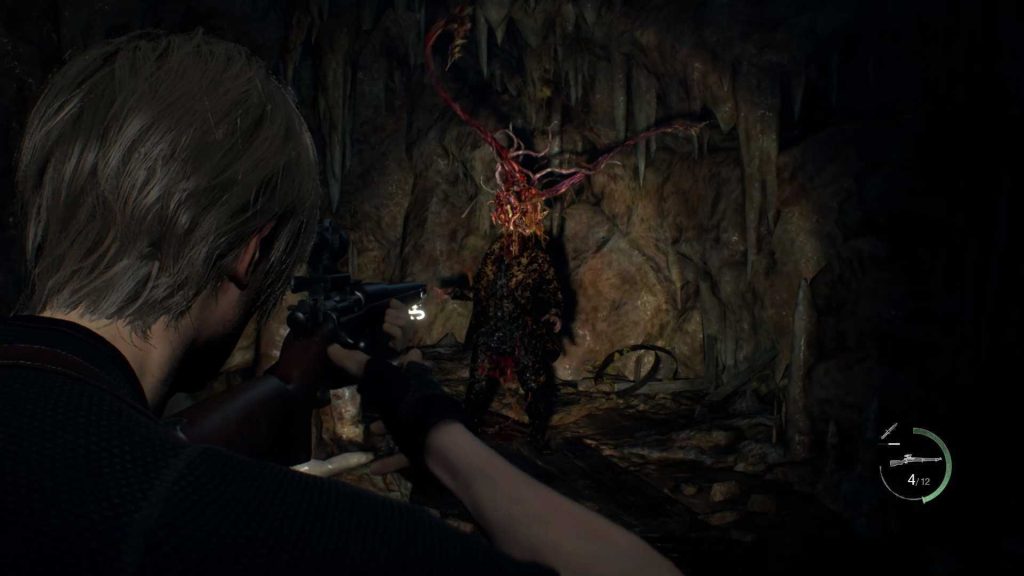
One solution to the ever-dwindling ammo count is the Bolt Thrower, a new addition that replaces the original Mine Thrower. It fires arrows that can be retrieved and reused, with its silent shooting making it useful in stealth situations and around enemies that are sensitive to noise. Like its ancestor, it can also strategically place attachable mines on the ground or on surfaces. The remake’s new crafting system allows players to combine scraps and gunpowder to create the ammunition they need, and there are enjoyable side quests throughout the campaign that lead to additional rewards.
Gloria a las Plagas
Among the hordes of Ganados are some more formidable subtypes, including the now-iconic chainsaw-wielding variety. Knowing that no herb will bring Leon back to business if he comes into contact with those revving metal teeth, there is always tension whenever one of these sack-faced lunatics runs towards you while you’re in the middle of reloading a shotgun. Then there are the Brutes, big lads with masks made from farm animals, who wield sledgehammers and automatic crossbows. These variants take considerably more damage to put down, and when mixed with a large group of regular Ganados, always bring a sense of dread and chaos to the fight.
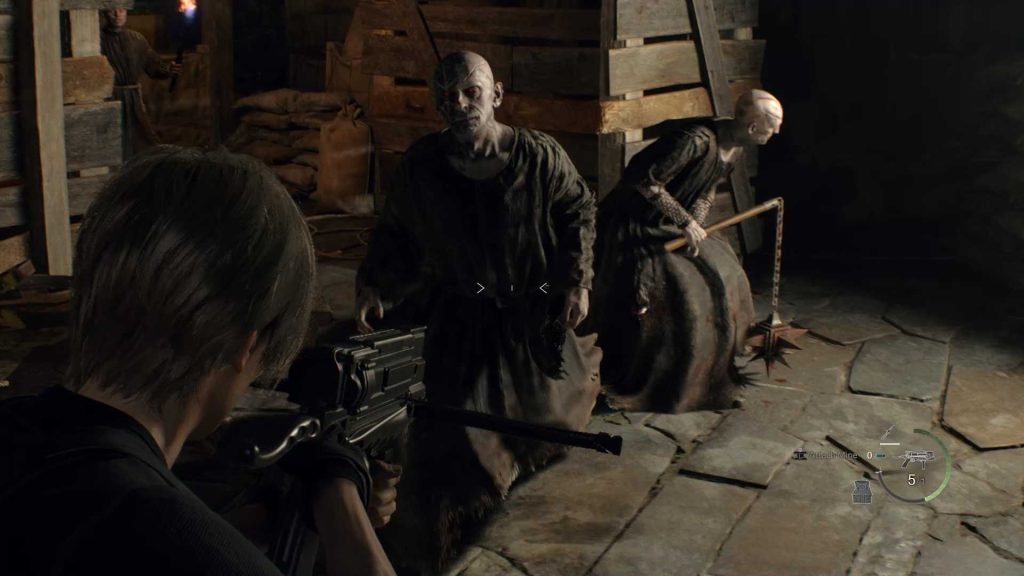
After some time has passed and dusk looms over the village, defeated Ganados can evolve, sprouting lashing tentacles with scythe-like ends, preventing you from getting too comfortable around the regular fodder. Also hunting at night are the Colmillos, agile, Plagas-infested wolves with fangs the size of kitchen knives. Garradors are blind, but are highly sensitive to sound and will thrash their razor-sharp, arm-length metal claws in your direction if you run or shoot carelessly. Novistadors are oversized bugs that can camouflage themselves and get the jump on those who aren’t observant enough. The most frightening of all, however, are the Regeneradors, deadly bioweapons that can rapidly regenerate any destroyed body parts, and can only be defeated with very precise aiming at their weak points. The sheer variety of monsters perfectly matches the absurd range of weapons at Leon’s disposal, and makes it impossible for combat to grow stale even after several playthroughs of the lengthy campaign.
Boss fights remain a consistent highlight, even if many of them are perhaps a little too faithful to the original battles in terms of strategy, environments, and set pieces. It makes sense not to mess with perfection, though it does mean there will be few surprises for returning fans when up against the big bads. There are two notable exceptions in the latter half of the game; Salazar’s mutated form is now aggressively mobile instead of a glorified shooting gallery, and the improved knife mechanics and larger arenas make dueling with Krauser a genuine thrill.
Allies, spies, and bad guys
Leon becoming a Bond-style, one-liner-spouting superhero in classic RE4 always felt a bit jarring, clashing with the naïve and idealistic rookie of RE2. In the remake continuity, Mr Kennedy’s progression across both games feels much more natural, with the protagonist still recognizable from his Raccoon City chapter while having developed a subtly harder, more cynical edge after years spent cheating death. He’s more grounded when interacting with his human allies, but still has those beloved barbed quips whenever confronted by danger. Ashley, the president’s daughter, is more lovable this time, feeling less like a burden and having a pleasant arc wherein she becomes braver and more capable. Another improved character is the endlessly charming Luis, a local Spaniard and traitor of the Los Illuminados cult who Leon reluctantly partners with to survive.
The villains, who were once delightfully camp, charismatic, and creepy, are far less memorable this time, their former, highly theatrical performances heavily subdued to match the darker tone of the remake. Capcom aiming for a somber tone in line with the previous remakes is understandable, but given how bonkers their motivations are and how (endearingly) silly RE4’s plot is, it’s hard to take them as seriously as the game wants you to. As for enigmatic spy Ada, who skirts the line between good and bad as always, her original portrayal is hard to top, but this version is at least far more likable than her awful RE2 remake adaptation.
The Gold Edition’s golden additions
It’s a good thing, too, because after the main story is cleared, the Gold Edition invites you to spend more time with the hookshotting heroine in the Separate Ways expansion. Originally, this was a campaign added to later versions of classic RE4 to entice early adopters to double-dip. It was by no means a mere phoned-in bonus, but its lower budget and detachment from the primary development period meant it reused many assets and lacked returning voice actors. For the remake, of course, Separate Ways was always part of the plan, and it shows. It’s a far superior package now, giving Ada more of her own distinct weapons, areas, and bosses in a sizable six-hour campaign that’s every bit as fun as Leon’s 20-hour adventure.
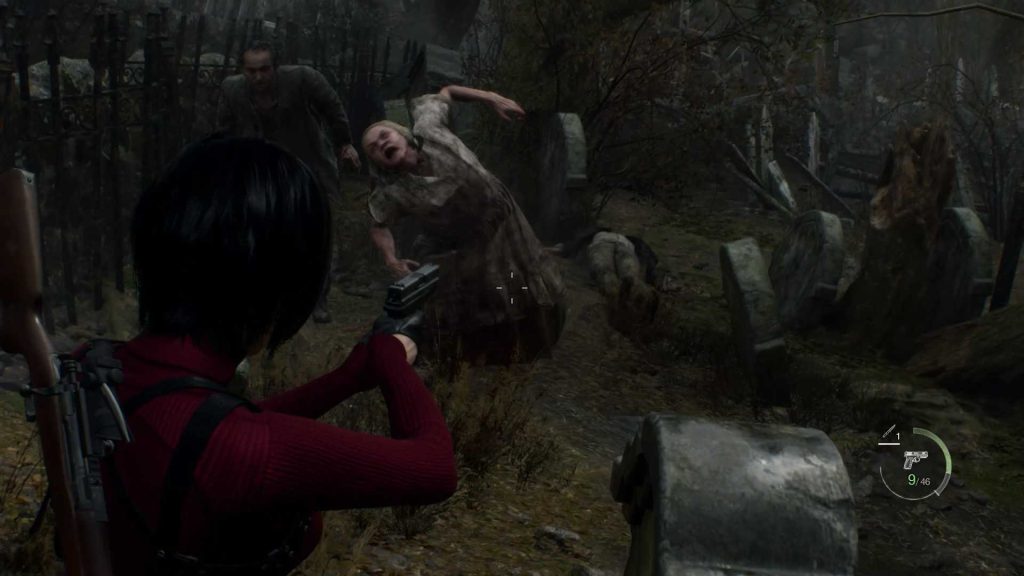
Speaking of fun, there isn’t a better word to summarize the arcade-like Mercenaries minigame. Players are challenged to rack up high scores by surviving a 150-enemy gauntlet across various maps, using characters — from the campaign and the broader Resident Evil lore —with unique loadouts and Mayhem abilities. Unlocking everything and collecting S+ ranks is a bit too easy, but insanely addictive all the same, with the silky flow of the game’s combat truly at its peak. As expected from a modern RE release, completing challenges in the main campaign will earn more weapons, costumes, and accessories that give Leon bonus effects.
Gracias, Capcom
The music is immersive, with the boss themes, in particular, enriching the grandiosity of each fight. The original 2005 soundtrack, which is even better, is also an option in the settings. The sound design, from the eerie chanting of the Illuminados cult to the deranged wheezing of the Regeneradors, effectively deepens the horrific atmosphere. As for visuals, Resident Evil has been ahead of the curve in this department for a long time, and despite the high bar Capcom has set for itself, RE4 may be its finest visual showcase to date.
Impressively, that remains the case even after squeezing the high-end experience onto the Nintendo Switch 2. There are compromises, with missing shadows and lower-quality textures compared to the PC and PlayStation 5 versions, though these are imperceptible for the most part without a side-by-side comparison. More obvious is the graphical pop-in, which is most problematic in areas with lots of cliffside and mountainous scenery, and it can sometimes affect cutscenes. As was the case with the RE2 and RE3 ports, enemy animations occasionally get choppy when far away, though given RE4’s increased scale, graphical improvements, and drastic increase in foes, it remains impressively minimal. The game never strays far from its 60 fps target, and playing portably is as smooth as you could hope for.
It’s easy to become cynical at the growing trend of remakes in an industry where innovation and risk-taking sometimes seem increasingly rare. It’s very difficult to criticize Capcom for a lack of originality, however, when it somehow managed to reshape its critical darling into a whole new modern classic. Resident Evil 4 began on a Nintendo system 20 years ago, and despite some minimal performance drawbacks, it feels great to finally have its modern counterpart return home.
Leave a Comment
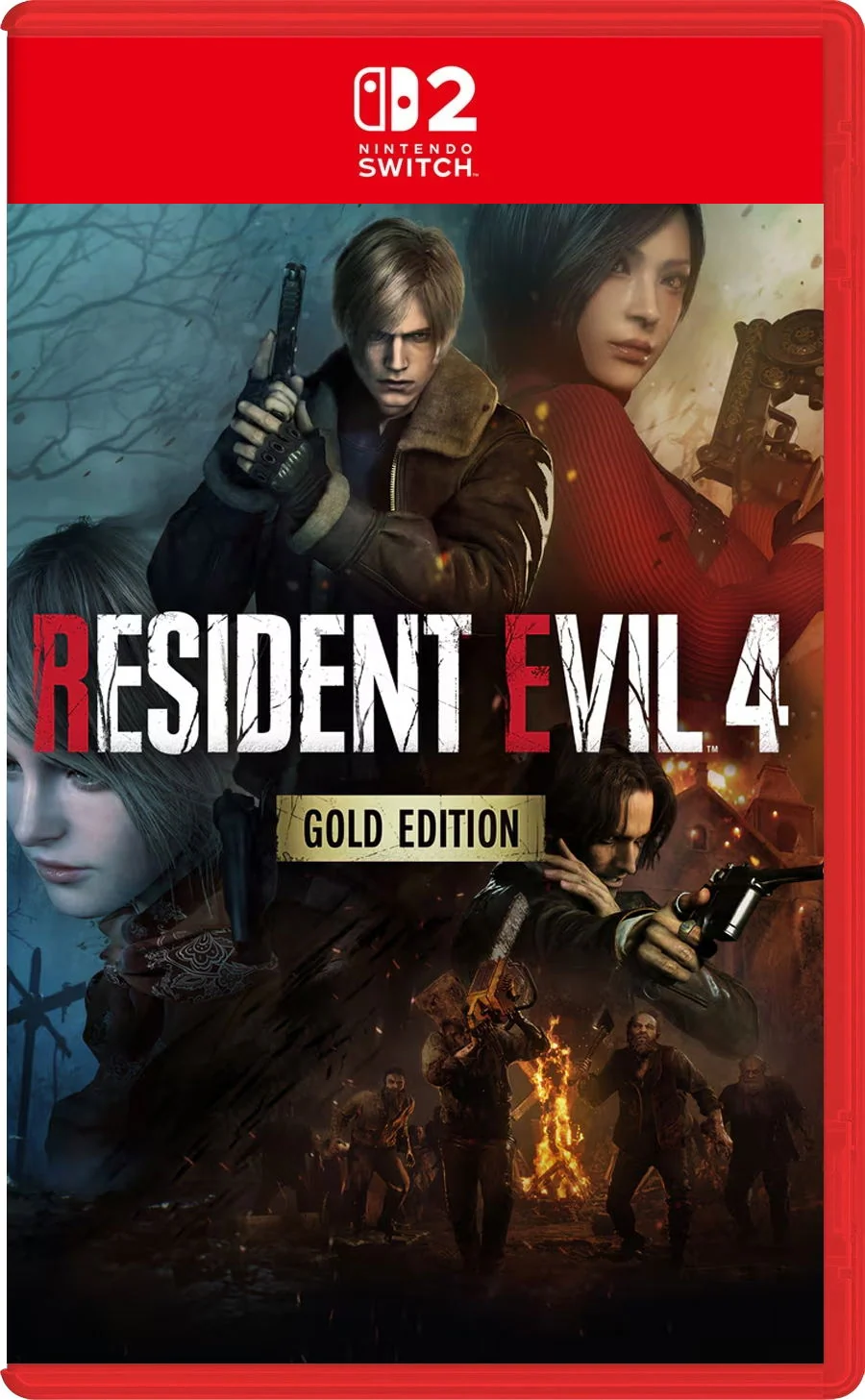
System: Nintendo Switch 2
Release Date: October 16, 2026
Categories: Horror, Action, Adventure, Shooter, Puzzle
Publisher: Capcom
Developer: Developer

Written by Reece Heather
A veteran Zelda Universe editor and First-class journalism graduate, Reece emerged with a Nintendo 64 and a lifelong obsession after a narrow escape from Santa’s Naughty List in 1998. Outside of games, he’s reading Punisher comics, being bossed around by his cocker spaniel, and cornering innocent bystanders to rant about the importance of game preservation.
