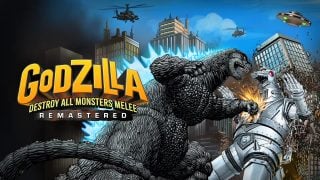

Fighting games are a lot like reaching into your toybox (or up to your shelf if you’re an adult) and smashing together whatever action figures you may find. Few fighters demonstrate this better than Pipeworks’ Godzilla trilogy. In particular, Godzilla Destroy All Monsters Melee excelled back in 2002 by pitting your favorite kaiju against each other in 3D city environments that may as well have been wrestling rings. Here in 2026, a remaster of that very title, Godzilla Destroy All Monsters Melee Remastered (lovingly referred to in short form as DAMMR from here on out), is a welcome dose of early 2000s arena fighting and a little prettier than you remember.
This Godzilla remaster takes the skeleton of the original game and its physics while rebuilding all of the assets in Unreal Engine 5. Pipeworks and Atari have done a great job of ensuring DAMMR looks and feels how you remember, and even a little better than that. Kaiju like Gigan, King Ghidorah, Kiryu, and Destroyah run around big 3D city battlegrounds, picking buildings up to use as weapons, getting attacked by random military strikes, and beating the production budget out of each other. Destruction and rampaging is at the core of Destroy All Monsters Melee. And now with improved lighting, new scaly textures on Godzilla and his frenemies, added online capabilities, and a new progression system it’s really no contest. This is a better game than the original.
The original Destroy All Monsters Melee was named after and based on the 1968 Showa era Godzilla film Destroy All Monsters. Long story short, an alien race implements mind control devices, deploying them on the large assortment of kaiju, and getting them to attack various cities around the world as a distraction so that the aliens can swoop in and conquer Earth. This was the background for the original game’s story mode and DAMMR’s follows suit. However, where the original game had one story mode, the remaster technically has 3: Adventure Classic, Adventure Gauntlet, and Adventure Challenge. That is to say, DAMMR is quite generous with its added content.
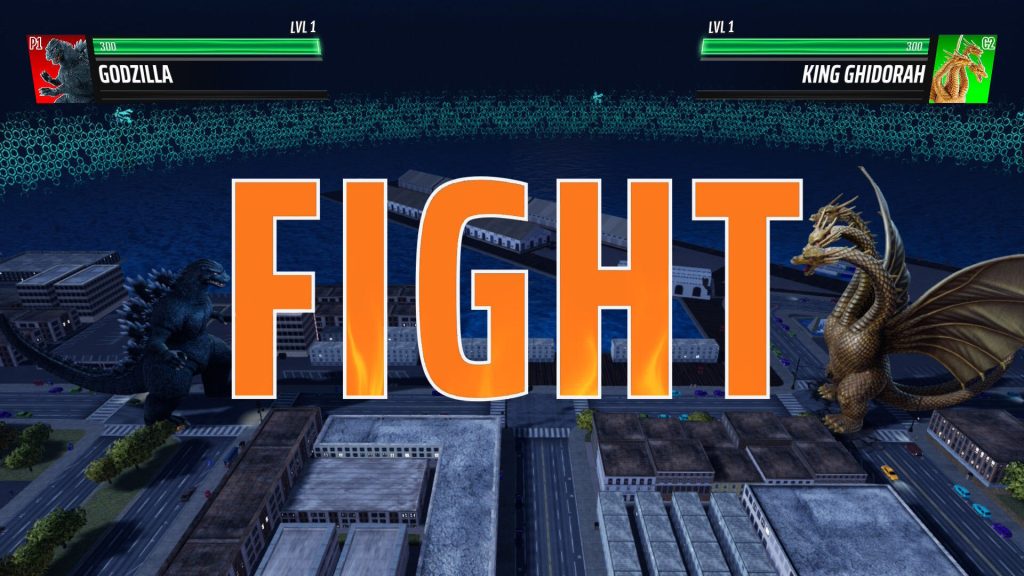
The Adventure Mode is the meat of the single-player game. Classic is the original eight stage arcade-type mode with eight consecutive 1v1 fights that increase in difficulty. More on that in a minute. Adventure Gauntlet is a six stage 1v2 and occasionally 2v1 Arcade mode. Adventure Challenge is a random event-type mode with differing objectives for each Kaiju. Classic allows continues and save points. Gauntlet disables continues. Challenge disables continues AND doesn’t save your progress. Destruction, Survival, and Practice return from the original game while the custom matches are all under one Custom Battle mode now instead of being split up between 1v1, team battles, and four player melee matches.
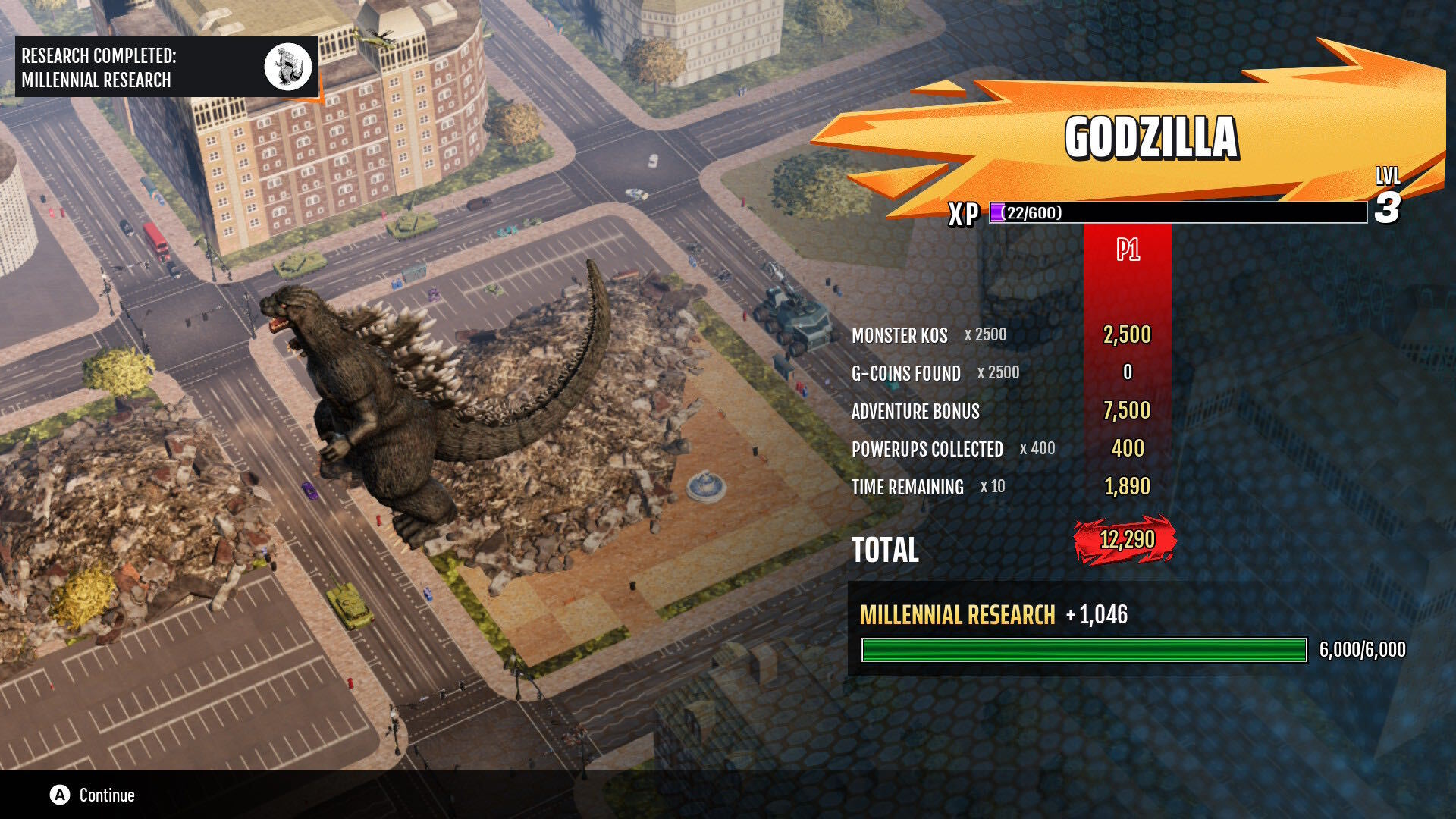
Now about that difficulty. The remaster of DAMM revamps the unlock and progression systems. It’s actually quite slick how they work in tandem. You see, each Kaiju starts at Level 1 and their leveling is universal across all modes in the game. Any Kaiju can jump into Adventure Classic, but in order to participate in Adventure Gauntlet you must be Level 4. Meanwhile, Adventure Challenge requires you be Level 7. Now the original DAMM was known for its difficulty curve. This leveling system attempts to provide a clear indicator for difficulty. However, getting a kaiju to Level 10 requires grinding. In fact, later fights in Classic will see you being a Level 2 and facing a level or a Level 3 facing a Level 5. What the game wants you to do is play all of its single player modes to progress levels faster. For instance, Destruction Mode provides both XP and Research Points while Survival provides no XP but double Research Points. But that brings me to the difference between character XP and Research Points.
I never thought I’d be going into such detail about the progression in a Godzilla game but I’m actually delighted. A lot of thought was put into giving you reason to actually engage with all of DAMMR’s modes. So, all of the Adventure modes provide both XP and Research Points. The easiest way to explain Research Points is that they gate unlockables. The G-Force Lab allows you to see Rumors, which are new cities and characters that can be Projects you’ll work towards. Once Rumors are fully uncovered, either by fighting in certain cities or clearing various objectives as specific kaiju, those Rumors become Projects (which are the actual unlocks). This is where Research Points come in. Fill the Research Point bar for a Project and you get an unlockable such as a new kaiju or battleground. The third and last tier of unlocks isn’t tied to either XP or Research Points and are instead Sightings (gallery art and movies) that can be unlocked by finding Gallery Coins in Adventure Mode.
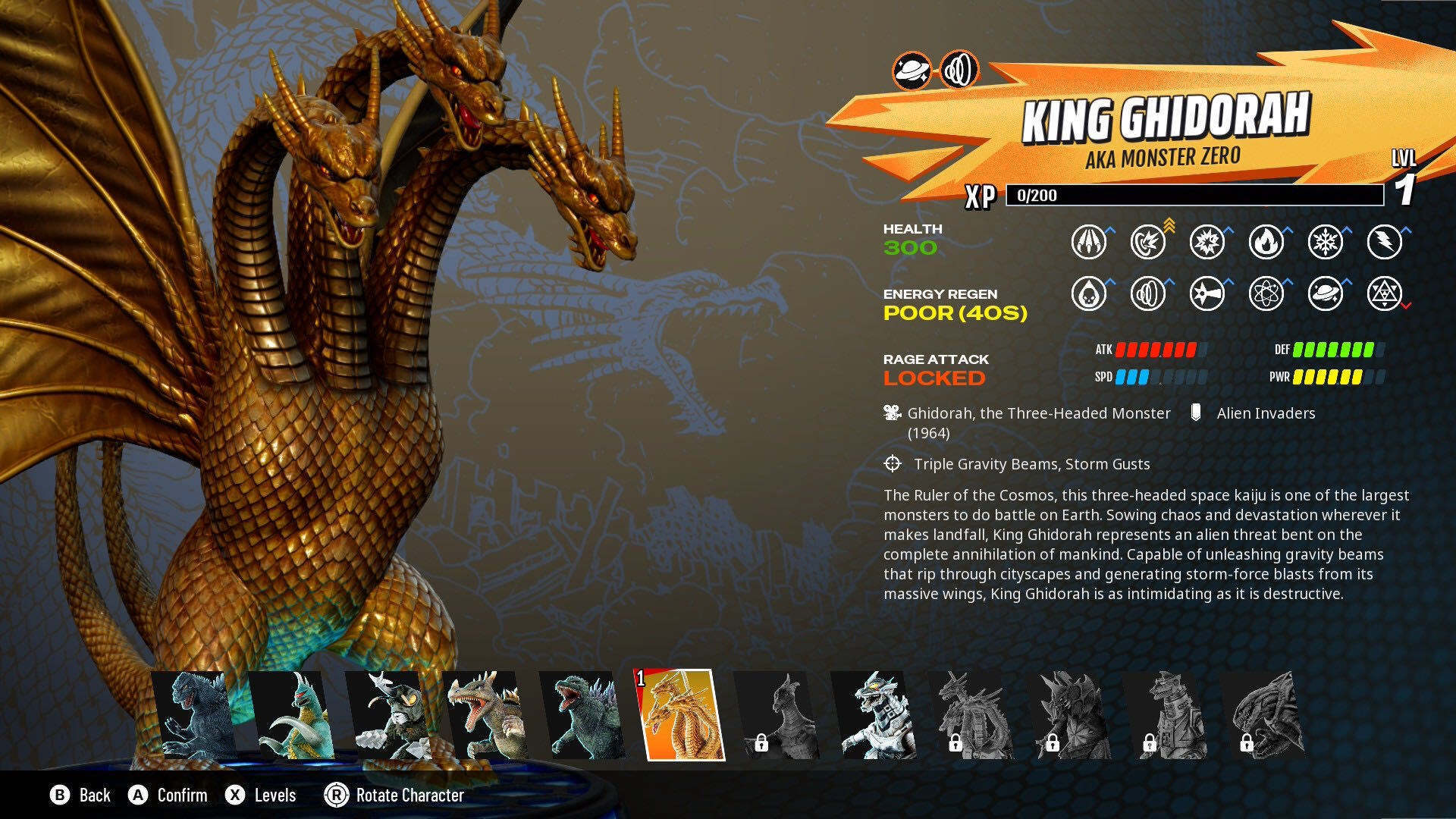
All of this is to say that I found the single-player portion of the game surprisingly engrossing and fulfilling. Though getting all 12 playable kaiju to level 10 is a time sink, it is fun to do so. And that’s down to the gameplay. Punches, kicks, beams, jumps and grabs all feel impactful but easy to execute. The weighty brawling still feels great and is just the right kind of PlayStation 2/GameCube era jank. Godzilla still spins around like an oversized cartoon gorilla on a merry-go-round when Megalon grapples him with its drill. It’s still a hilarious visual. If King Ghidorah is hit into the outer edge of a battleground, he bounces off it like a ping pong ball and gets sent across the map. This game, at its core, is the best kind of dumb fun. Why yes, the giant nuclear lizard is grabbing the spiky turtle and slamming him into a skyscraper like it’s a ladder at Wrestlemania. While I do wish beam clashes were added in, it’s still way too fun to charge up a beam attack from a distance and aim it like a cannon.
Online Play is a welcome addition to a 2002 game, but is limited to 1v1 Quickplay matches. I didn’t get to test how Random matches played and how matchmaking worked, but this option will surely make fans of the original happy. Given the unbalanced, pure fun nature of the game I’m not sure if a large competitive scene will form. And that’s okay. Above all, this is a fun fighter. Rodan can fly, Megalon can drill underground, Anguirus can stun by blocking with his shell, and Mechagodzilla can shoot missiles. Guess who can’t do any of that? Either of the featured Godzillas. Still, such moves are tied to an energy bar and that same energy bar is also used for beam attacks. So there is tact and thought behind how matchups between all 12 characters could possibly go and that actually makes for a very satisfying, individualized fighting game overall. Best of all, the game’s disrespect command (AKA stomping on another kaiju’s toes), which causes them to hop in place, is still here in all its glory.
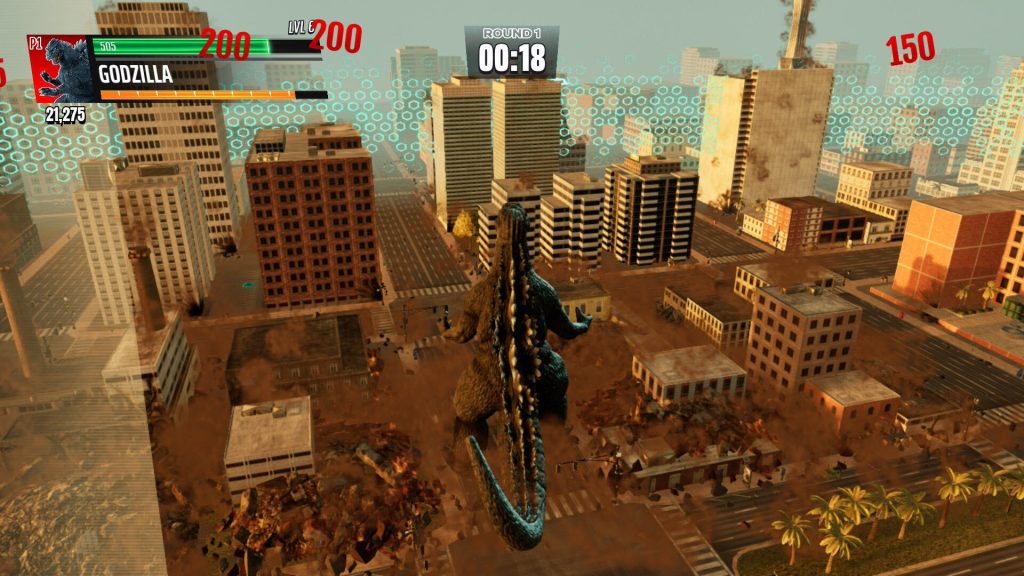
I’m thrilled to say that the Nintendo Switch 2 version of DAMMR plays like a dream. This may be the best optimized Unreal Engine 5 game on the platform. You will get 60 fps with no stuttering or hitches in handheld mode and docked, no problem. This game doesn’t struggle whatsoever with technical issues. I commend the developers at Pipeworks for achieving this with all of the moving parts still kept in tact. I noticed no decrease in cars, pedestrians or military craft compared to the Steam demo or trailers. The action is smooth and fluid. When a Mothra air strike is called in or a Rage attack (Super move) is triggered with a quick camera angle change, no slowdown occurs. To say that I was pleasantly surprised is an understatement. In fact, Switch 2 is the preferred place to play this, especially with single Joy-Con supported. Destroy All Monsters is still a perfect couch multiplayer game, probably much more than it is a decent online option for a competitive arena fighter.
This November, you have plenty of gaming options. And still, I’m telling you that if you want fun, Godzilla is still the same guy he was in 2002. Destroy All Monsters Melee Remastered brings out his best qualities: Destruction, proportion, and many Japanese wrestling moves. With the Switch 2 allowing for a portable four-player brawl wherever you may be, I can’t recommend this game enough for some holiday fisticuffs.
Leave a Comment
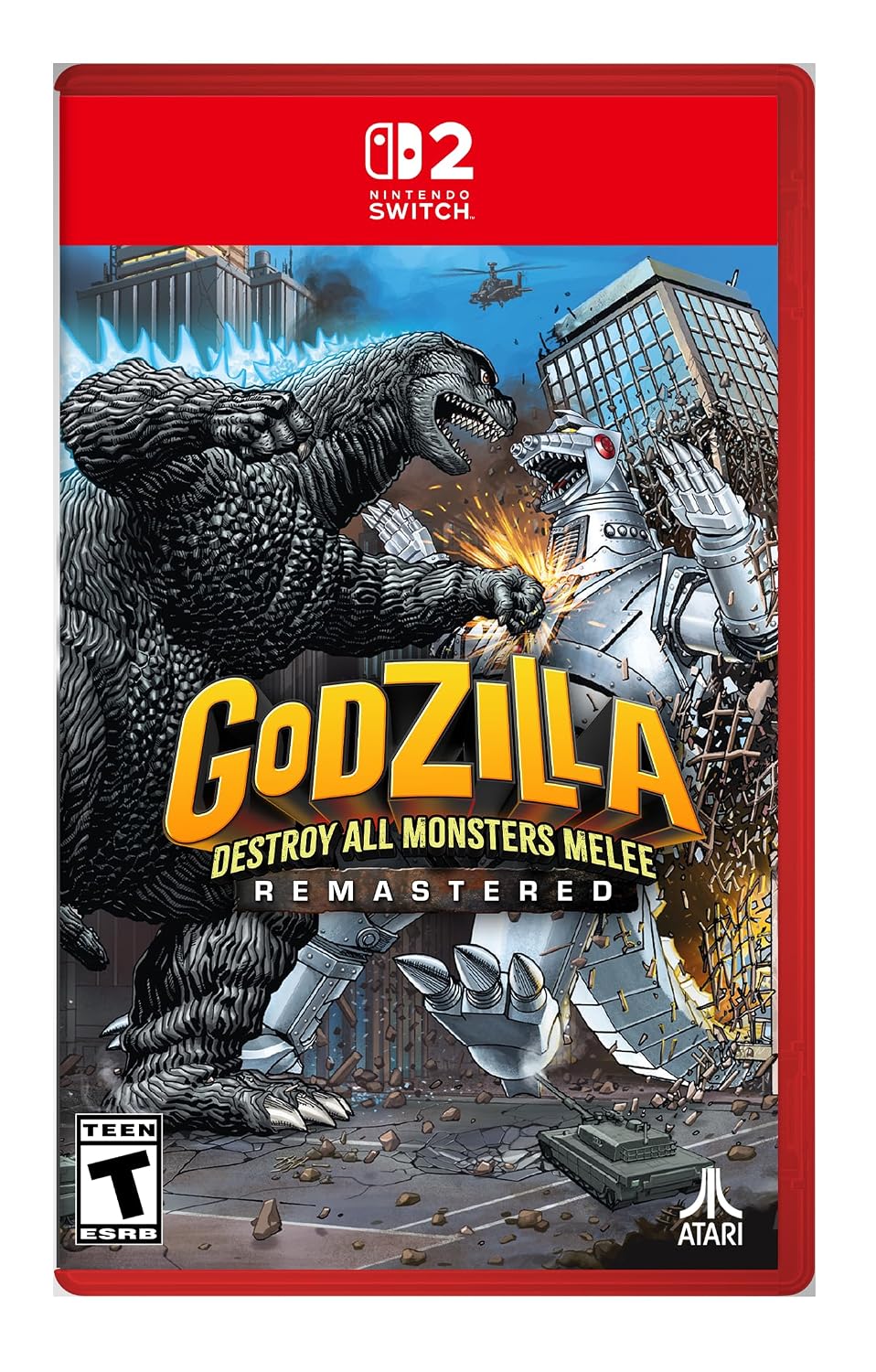
System: Nintendo Switch 2
Release Date: November 3, 2026
Categories: Fighting, Action, Party
Publisher: Atari
Developer: Pipeworks Studios

Written by Matthew Powers
Nintendo has been Matthew’s preference for fun video gaming since 2004. In addition to his love for all things Mario, Metroid and beyond, Matthew also enjoys heavy metal, roller coasters, pinball machines, and being a proud cat dad.
