


With the Nintendo Switch 2, we’re starting to see the gap between PC games and console games close considerably. I don’t mean this in terms of raw hardware power, as PC will always be the top of the pack there. What I mean is Nintendo launched a console with native mouse support seamlessly integrated into its controllers, allowing for vastly different experiences to feel right at home on its platform. The PlayStation 5 and Xbox Series consoles may allow for mouse in certain games, but it’s never a guarantee that players will have the appropriate setup.
Why bring that up? As I entered into my playthrough of Nightdive’s 2023 remake of System Shock, my goal was clear: I wanted to compare this against the PC version. Having been a PC player for 20+ years now, I’ve found that shooters and first-person games simply feel better with a mouse and keyboard. I accepted console shooters for a period as the Xbox 360 was pretty ahead of the curve (not to mention I was broke back then), but nothing tops the raw precision you get with an optical mouse when aiming a pointer. With the Switch 2, we’re finally on the cusp of console shooters being comparable to PC versions.
Let me wind this back a little to explain what System Shock is for anyone unfamiliar. A long-gestating project for Nightdive Studios, the masters of remasters, System Shock finally released in 2023 after what felt like a decade of development time. As the first fully original project for the developer (i.e. not a remaster), the idea was that the team would modernize and remix what the original System Shock was for a new generation of players. System Shock is a classic, but it released in 1994 and can be unintuitive to anyone not familiar with rocket science. That’s only partially a joke because the controls on that PC original are… let’s say thorough.

For full transparency, I didn’t back the Kickstarter campaign to fund System Shock’s remake, but I did pay for one of the later crowdfunding options that let me purchase the soundtrack. I was greatly looking forward to the remake as immersive sims have become one of my favorite sub-genres in recent years. With a focus almost entirely on gameplay, they allow for outside-the-box thinking when tackling problems, not to mention put a big emphasis on exploration and learning the ins and outs of locations.
That rings true for System Shock, a game that sees players stranded on a remote space station that has been taken over by a rogue AI named SHODAN. The remake kicks things off in the player’s apartment after they’ve been identified hacking into Citadel Station, the remote space station owned by the TriOptimum Corporation. Initially brought before TriOptimum’s CEO, the player is told all charges will be dropped against them if they board the station and hack the AI that has seized control of it. It’s not really a choice, so the player abides and are sent off.
The rest of the story, which mostly concerns what happened on the space station, how it fell into disrepair, and what SHODAN initially was, is told through a series of audio logs and environmental storytelling. If you don’t care about this, you can safely ignore it and focus on gameplay, which System Shock has in spades. The main goal is to lower the overall security level on each floor and travel to these floors to complete tasks that result in dismantling SHODAN once and for all. Along the way, you’ll encounter hostile robots, mutated humans, strange space creatures, and environmental puzzles that will test your mettle. There’s a deeper plot hidden in here, but I’ll let you discover what is really going on.

When the game finally released, I was overall pleased with it. While I don’t believe it betters its source material, Nightdive took the foundation of what System Shock was and created a mostly brand-new experience on top of that. The level design starts off almost identically to the original game, but it does eventually morph into its own thing with a different aesthetic and floor layout that plays better with how modern games control. There’s also an integration of elements from the sequel that expands lacking mechanics from the original masterpiece, but Nightdive otherwise remains faithful to the idea of System Shock rather than slavishly repeating the exact design and calling it a day.
To single out the aesthetic for a moment, I love that Nightdive hasn’t gone in the direction of “hyper realism” here. Similar to a lot of retro throwback shooters, System Shock is rendered with a purposely chunky and pixelated style that marries the old with the new. It’s not an exact match for the 1994 original, but the higher polygon count character and gun models are given textures that are specifically less detailed. It creates a vibe that feels like the retro-futurist style that Blade Runner introduced, just with more modern rendering techniques in tow. The cyberspace segments even look like the renderings of ’90s hacker movies.

Some of the faults with that original release were a lackluster final boss, some awkward navigation problems with the cyberspace segments, and occasionally a lack of ammo and resources that didn’t feel intentional. Not content to wash their hands of the game, Nightdive would release an update in 2024 when System Shock was ported to PS5 and Xbox Series X|S that reworked the final boss, gave some extra navigation options as an accessibility toggle, and even let players choose a female avatar for their character. It wasn’t a complete reworking of the main game, but it added some extra polish that made the journey feel more complete.
Now with the Switch 2 release (and technically Switch 1, which I haven’t played), Nightdive is getting a third stab at things by introducing a couple of extra quality-of-life improvements, not to mention native mouse support for the console version. That’s really the golden ticket here as I don’t believe System Shock feels all that great when using a gamepad. This new port does rework how gamepad controls function, but when you have the option to use a mouse, the game opens up dramatically. No longer is aiming a crapshoot or is inventory a gigantic pain to sift through: you can simply drag your cursor where you need it, click to pick something up, and be done with it.
I’m not a fan of how the joysticks feel on Nintendo’s consoles, so getting to forgo that in favor of extra precision is fantastic. System Shock also features gyro control support, but since I can’t quite get used to how that feels, I’m pleased the mouse controls work so well. There’s a toggle in the menu to exclusively use mouse controls or take a hybrid approach similar to what Capcom did with Kunitsu-Gami: Path of the Goddess. For that, you just tilt the Joy-Con on its side for mouse and lift it up when you want traditional gamepad controls. It’s pretty seamless, but there is currently an issue here.

One of the reasons this review is a little late is that Nightdive sent out a warning to reviewers that a day-one patch would fix some apparent issues with the game. When I started my review playthrough, I noticed the game’s frame rate was uncapped and fluctuating a bit. There were also some odd issues with the button prompts not reflecting mouse mode and the right joystick being active while using the mouse. Some of that was addressed in a hot fix, but the day-one patch has been delayed and other issues remain.
For starters, the performance isn’t quite up to snuff. System Shock targets 60 fps on Switch 2 and even utilizes DLSS to upscale its output, but it feels very unstable at the moment. It was actually running better before the hotfix, with the game often sitting above 50 fps, but now resting closer to 30. It can make the mouse controls feel sluggish, which isn’t helped by the in-game sensitivity options not being separated by joystick or mouse. To get close to what the game feels like on PC, I have to put the sensitivity to 100, but then it makes the joystick movement way too loose.
There are also odd menu navigation problems with the current build. In the pre-patch version, you could switch tabs in your inventory by hitting L or R. Used in conjunction with the mouse, it felt snappy and was a breeze to flip from the map to your comms tab to figure out a code. For some reason now, if you’re playing with mouse-only controls, L and R do not function in the menu. It wouldn’t be a deal breaker as you can click the specific tabs to enter them, but clicking on the map then locks you to the map until you switch back to regular gamepad controls, hit L or R to change the tab, and then switch back (which can be done with the hybrid option). Reloading is also broken in the new update as there simply isn’t a button to do it in mouse mode. In an ideal scenario, everything would be fine with System Shock. You can fully rebind all of the keys and even bind some actions that aren’t set from the start. It’s just bugged right now.

The loading times are also a bit lengthier than what I would like. To be fair, I’ve only played the game from an SD Express card, but loading or reloading a save incurs a wait of roughly 15-20 seconds. The same goes when transitioning between floors, with the elevator ride feeling particularly long. It’s not often a problem as System Shock utilizes a system where the player’s body can be reanimated on each floor, but you have to find said station before that it available. If you haven’t found it on your current floor, you’ll be teleported back to the previous station and that will incur a load. Some boss fights also lock you out of this, meaning you’ll simply get a game over and have to completely reload your save. Again, this seemed quicker in the pre-patched version, so it makes me think something is off right now.
At least when things are working smoothly, System Shock feels great. As I said, mouse controls truly flip the script here. I’ve never quite acclimated to aiming with joysticks, but now I don’t have to. Sitting at my desk and playing with one Joy-Con on its side is pretty natural. It’s great to have actual analogue movement, something PC can’t quite provide with a keyboard. You do lose out on immediate access to specific slots of your toolbar, but some quick keys alleviate some of that struggle.

On another positive note, image quality is generally pretty good. System Shock outputs a 1080p image that is upscaled from likely 720p with DLSS. It’s not super sharp on a 4K display, but it looks nice. The Switch 2 panel for handheld mode is poor with lots of ghosting and washed-out colors, but the game looks sharp on there due to the smaller size. If performance was better, I’d say this is maybe the ideal console to play the game on, especially with the mouse controls. Even in portable mode, the mouse simply feels better than fiddling with a joystick.
Truly, that’s where my impressions lie with Nightdive’s port of System Shock. There is definitely a lot of work left to go, but I’m a firm believer in the Switch 2 being the best console for shooters. It just feels right, and if this port were in a better state, I would easily recommend it to anyone interested. Until then, however, I have complaints that detract too much from all the good Nightdive did with the design of System Shock.
System Shock is a quality reimagining of an all-time classic that stands alongside its inspiration as a must-play for fans of immersive sims. Its Switch 2 port shows promise, but isn’t quite realized just yet. Maybe after some patches, it will be a solid recommendation for shooter fans who wants to explore Citadel Station on the go or at home without needing to own an expensive PC.
Leave a Comment
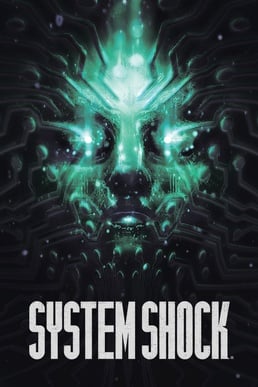
System: Nintendo Switch, Nintendo Switch 2
Release Date: December 18, 2025
Categories: Action, Shooting
Publisher: Atari
Developer: Nightdive Studios

Written by Peter Glagowski
Peter has been a freelance gaming and film critic for over seven years. His passion for Nintendo is only matched by the size of his collection.
