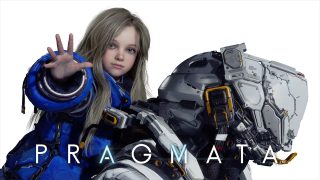


When it was first revealed in 2020, I don’t think anyone knew what to make of Pragmata. More than likely I offhandedly called it “that space game” and moved on. It wasn’t until about a year ago, when someone mentioned it in passing, that I even remembered it existed. Next thing we know it’s coming to Switch 2, getting an amiibo, has an impressive demo, and even got to bump its release date up.
It’s changed in several ways since that debut, but it also managed to hang onto the striking visual of an astronaut with a little girl in blue perched on his back.
That astronaut is Hugh Williams, part of a dispatch crew sent to the Moon to check on a facility called the Cradle. Mankind has been experimenting with and harvesting raw materials at this lunar site, with robotics being a notable application. Most are sterile, simplistic constructs, but not Diana. Looking and acting like a six year old girl in an oversized blue jacket, she doesn’t know much about Earth but proves herself invaluable to Hugh after an accident separates him from his crew.
That brings the duo together and sets the stage for Pragmata — a brand-new science fiction IP from Capcom and one of the best things I’ve played this year.
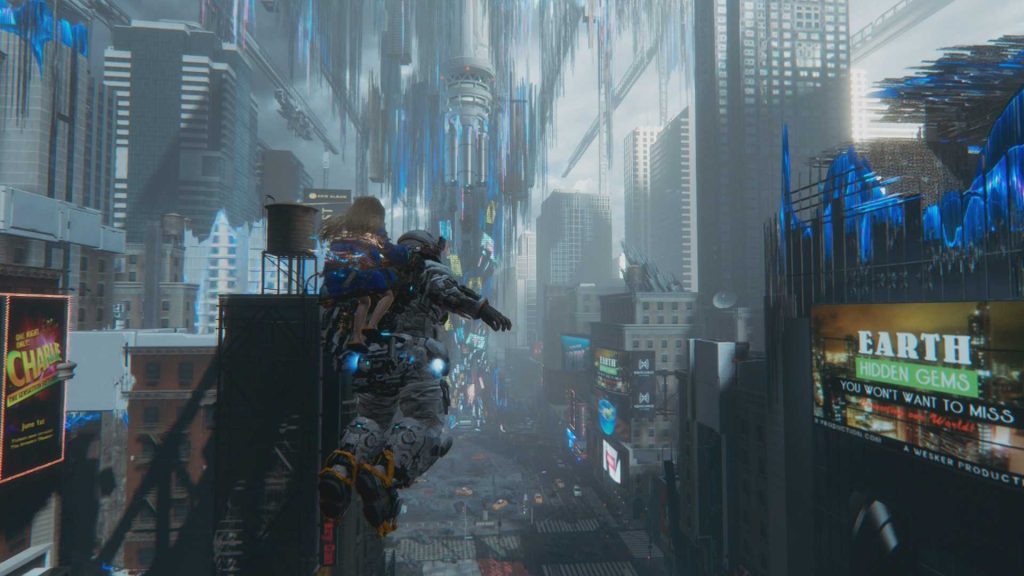
Screenshot: Playing while docked
The most notable thing about Pragmata is its core gameplay. Without Diana in the mix, you’d have a fairly polished third person shooter. With her, the upper right corner of your screen is regularly home to a grid that you guide a cursor through with the face buttons, passing through nodes to trigger vulnerabilities and override enemy systems.
Pragmata’s blend of shooting and hacking never overstayed its welcome. Combat encounters force you to multitask, but each half of the equation is forgiving and satisfying enough that it never becomes unreasonably demanding. There’s definitely a routine in place, where you first hack an enemy to reveal its weak points before opening fire while it remains open, but enough variance comes into play via robot types, stage design, and your loadout.
Hugh’s arsenal grows over the course of the game, giving you dedicated inventory slots for heavier weapons and means of crowd control to complement his main sidearm. Some are straightforward analogs for common video game guns, like your shotgun stand-in, but others are more distinct. I got a lot of mileage out of a gun that shoots a hologram of Hugh out to serve as a distraction, letting me hack more comfortably or take a chance to heal. One gun even lets you remove squares from the hacking UI, an interesting interplay between those parts that I wish was explored more.
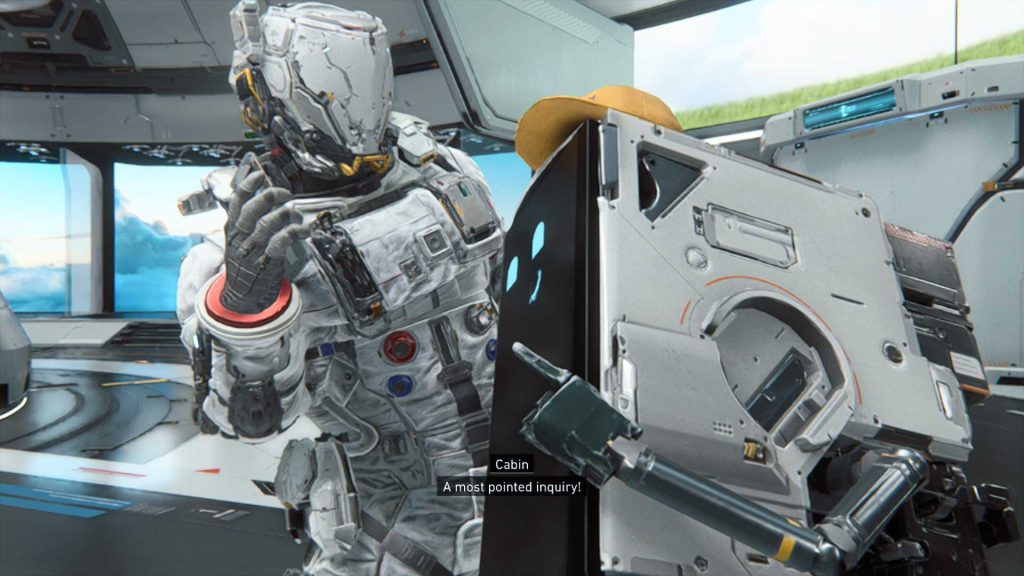
Screenshot: Played in handheld
It gets far less focus than his firepower, but Pragmata’s movement was its own kind of satisfying. You’re in a bulky spacesuit the whole game, yet everything is quick and responsive. Good thing too, because maintaining distance and understanding space is crucial to combat in order to hack safely. Your evasion is paired to the suit’s thrusters, letting you dodge and dash via bursts. Since these also let you hover in the game’s light platforming sections, I made it a point to upgrade them whenever I could.
You also have ways to customize and enhance your hacking. I was surprised how much you could tailor Diana’s capabilities. Initially it just serves the function of revealing those weaknesses, but soon you’ll start finding expendable hacking nodes you can use to apply debuffs. Then come critical hit nodes, a separate stagger system, and even “modes” that change what kinds of outcomes a successful hack on a vulnerable enemy can produce, like bursts of heavy damage or ways to make bots overheat.
While there are plenty of ways to play within these core techniques, your capabilities really don’t change all that much over the course of the game. You do, at certain set points, access more of Diana’s capabilities, like an overdrive technique tied to a meter where she auto-hacks nearby enemies. Everything’s in service to the core system. I appreciated it, though that was largely because it’s satisfying to pull off quick kills while darting around the battlefield.
For sturdier enemies it starts to wear just a bit, be it because their weak spots are tricky to target or their health bars are bigger. Tweaking your loadout can help specialize for those, but I found the most success with an all-purpose approach. Thankfully the game can accommodate both. I will say that my experience with the game’s bosses were a bit of a mixed bag, with a couple overstaying their welcome for the same reasons as those bulkier enemies, though there are some fantastic encounters to look forward to here.
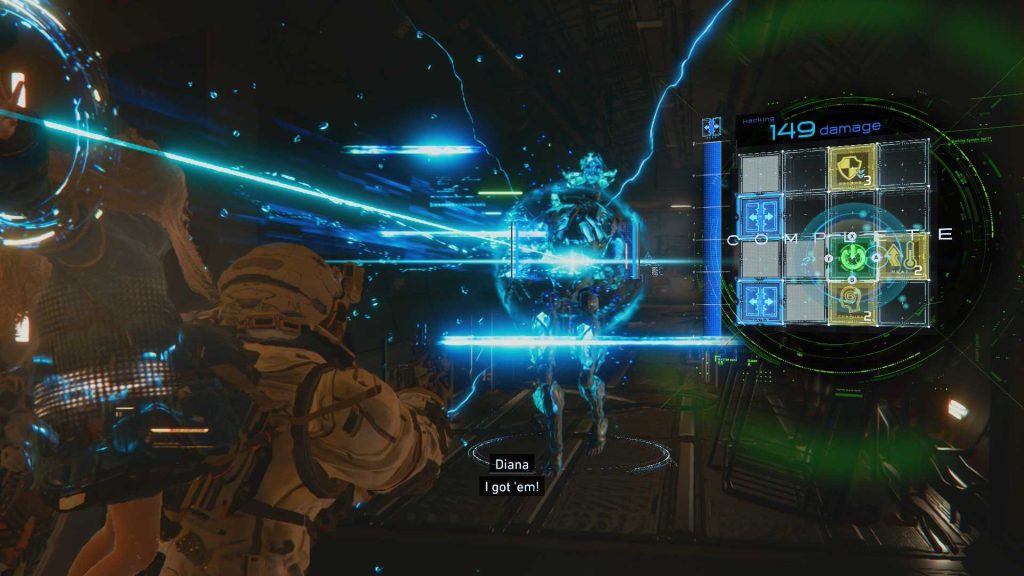
Screenshot: Played while docked
I like to think of the game’s progression, where you access more capabilities and feel more proficient using them, as a natural result of Diana and Hugh coming to trust and understand each other over the course of the game. Their bond really is the core of the entire experience, and they manage to make an endearing pair. A few early lines from Hugh had me thinking he’d be some kind of anti-robot luddite, a dynamic that’s been done to death, but instead he slips naturally into a guardian role to the young android.
He opens up and shares that he’s an orphan who understands the unique and special value of an adopted family. He’s well traveled when it comes to Earth, has a fondness for his crewmates, and hints at a somewhat romantic view of space. All of that compliments Diana’s voracious curiosity and search for purpose, finding herself in supporting Hugh’s goals before finding some of her own. Her cuteness is endearing, and the voice acting from both leads is satisfying in both gameplay and cutscenes.
Strong as their dynamic is, the game’s plot isn’t really anything revolutionary. Still, for a ten hour experience it all works, largely due to what I’ve just described about our duo as well as all of the supplementary world building you can find. Datalogs dotted around the Cradle give you crucial backstory, random anecdotes, and system notifications to flesh out the setting.
It really is a great setting too — I had some worries a lot of the game would be moonbase hallways, but some moments got legit “whoas” from me with respect to spectacle. Each of the Cradle’s sections manages to become distinct. A New York inspired square becomes a set piece for one, while another takes you through a botanical vivarium. The art direction deserves a lot of praise, with the 3D printer aesthetic of lunafilament (a mined and refined resource from the Moon itself) and the robot designs becoming a throughline across stages.
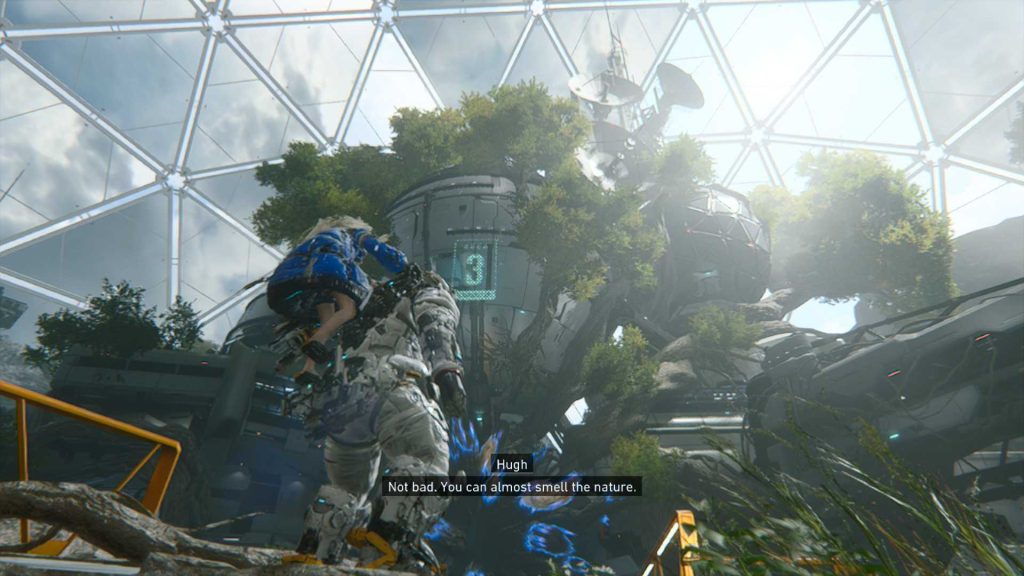
Screenshot: Played in handheld
Pragmata offers a pretty consistent, reliable loop. You’ll access a new portion of the Cradle, start exploring, make your way through fights and a central roadblock (find five nodes to hack, remove enough tree branches to access an elevator), then take on a boss. The routine works though, with the game being tightly designed around it. Early on upgrades to your weapons and abilities are fairly cheap and necessary materials are given out generously, letting you experiment with finding your playstyle.
Checkpoints are put pretty much exactly where you’d want them too, making your home base reliably accessible. This hub, called the Shelter, is where you can manage all those upgrades and tailor your weapon loadouts. It’s also where you can take some time to chat with Diana and even give her replicas of pastimes, like crayons or a CRT TV, to give the place some added character.
Speaking of character, the third most present one calls the Shelter their home. Cabin is a friendly support bot that grants you access to additional features, like a bingo board for additional rewards and training modules (aka, a sectioned off series of optional challenges). They’re a welcome, friendly presence and even make a for a collectible themselves in the form of Cabin figures hiding around the environments — think Mr. Raccoon bobbleheads.
I do wish the fast travel system was a little more free, though. You’re able to go from escape hatches back to Shelter immediately, and from Shelter to any escape hatch, but not hatch to hatch. You always have to use Shelter as a buffer. It “makes sense” for how the game’s setting is structured but still a minor annoyance.
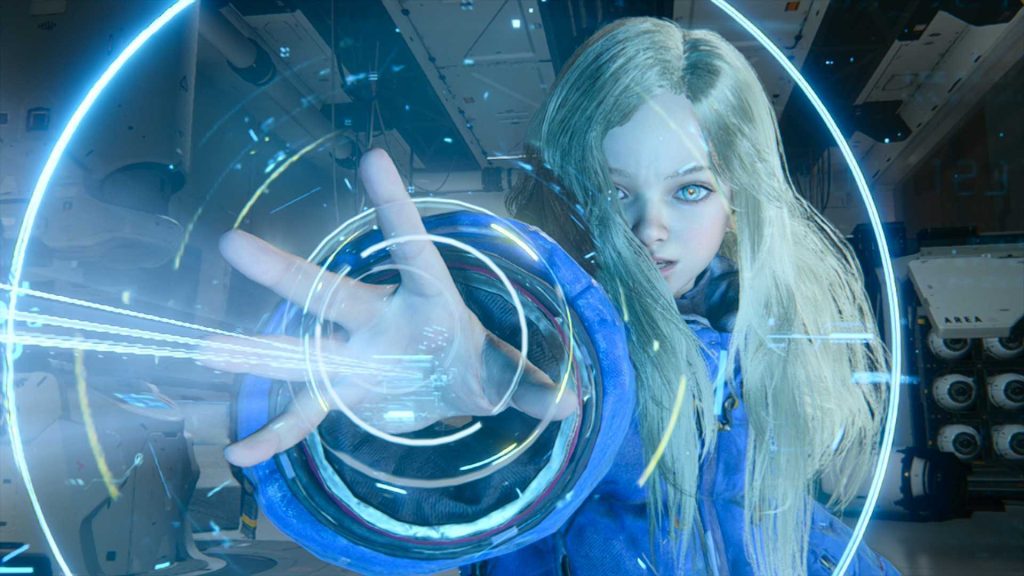
Screenshot: Playing in handheld
Performance-wise, Pragmata on Nintendo Switch 2 largely delivers. The RE Engine comes through again, letting this one rank highly when it comes to visuals when docked. Handheld is a definite step down when it comes to direct comparison, but still serviceable to the point I did my entire playthrough on it, going back through while docked for post-game collectables and to compare specific sections.
Unfortunately, it’s not a flawless experience in either configuration. Multiple locations caused noticeable, replicable slowdown while playing handheld. The aforementioned vivarium area’s dense greenery seemed to be the culprit of my first instance. Later areas that really lean into lunafilament were the worst offenders, to the point a few even caused brief stutters while docked.
Fortunately, those instances didn’t really impact encounters with enemies, which ran smoothly in handheld and even better docked. It’s more so the atmospheric moments that take the hits, as well as character models (hair is once again is a bit of a struggle for the system). I’m thankful those instances were mostly isolated, but the game really could use a patch to address them.
I truly enjoyed Pragmata, and for a certain kind of player I’d call it a unique, must-play adventure. It evoked a certain mid-2000s period in gaming to me, when Capcom itself was experimenting with the likes of Resident Evil 4 and God Hand, leading into PlatinumGames’ early, breakaway success. Maybe it’s the slick presentation paired with a novel concept, or just how compact yet satisfying the entire game was, but Pragmata carries that spirit exceptionally well.
That perception is likely also due to Director Cho Yonghee’s past work. It includes art and design roles on Metal Gear Rising Revengeance, Nier: Automata, and the Resident Evil 3 remake, and influences are felt throughout. After this, I’d encourage fans to keep an eye out for their future work.
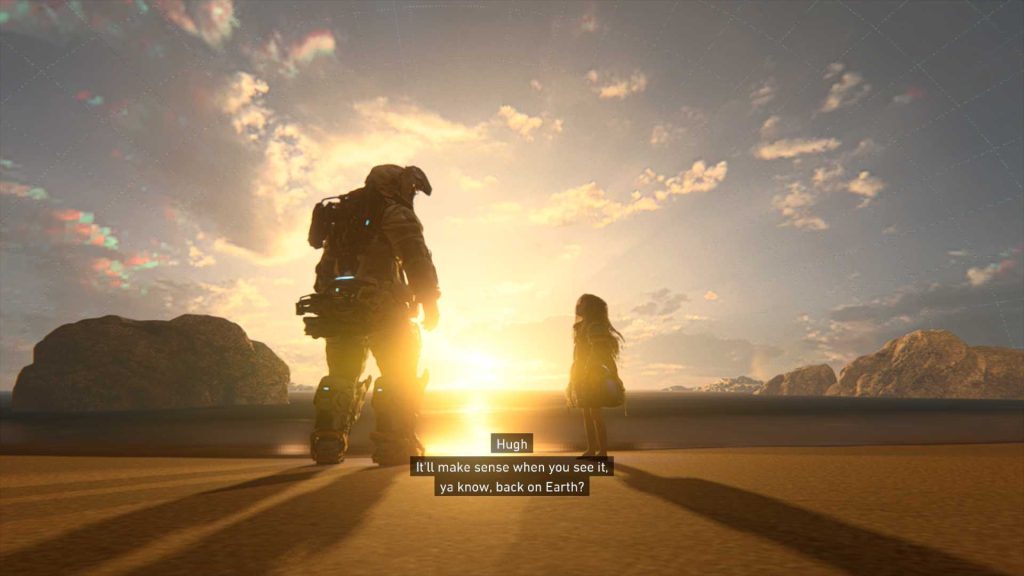
Screenshot: Playing in handheld
For anyone looking for an enjoyable, unique, dense single player experience, Pragmata is a godsend. Immediately after finishing it I loaded it back up because there’s still more to experiment with in its satisfying, unique combat system. This is another success for Capcom, who are having one hell of a year that just so happens to line up with the Switch 2’s inaugural.
Over the last three months we’ve seen Resident Evil Requiem, Monster Hunter Stories 3 and now Pragmata all call Nintendo’s new system their home and all three have been fantastic. With all the sequels and new entries on the horizon from the company (Mega Man! Onimusha! Okami!) I have my fingers crossed that some kind of crossover fighter is in the works just so Diana and Hugh can be a part of it, if only for being the faces for something brand new and exceptional.
I’m getting ahead of myself with that kind of talk though. It’ll take plenty more people giving it a try to reach that point, but I really think this one’s worth the attention. It was certainly worth the wait, and I hope it finds its audience. At the very least, we’re nearly a third of the way through the year and I can safely say that, so far, Pragmata’s my favorite game of 2026.
Leave a Comment
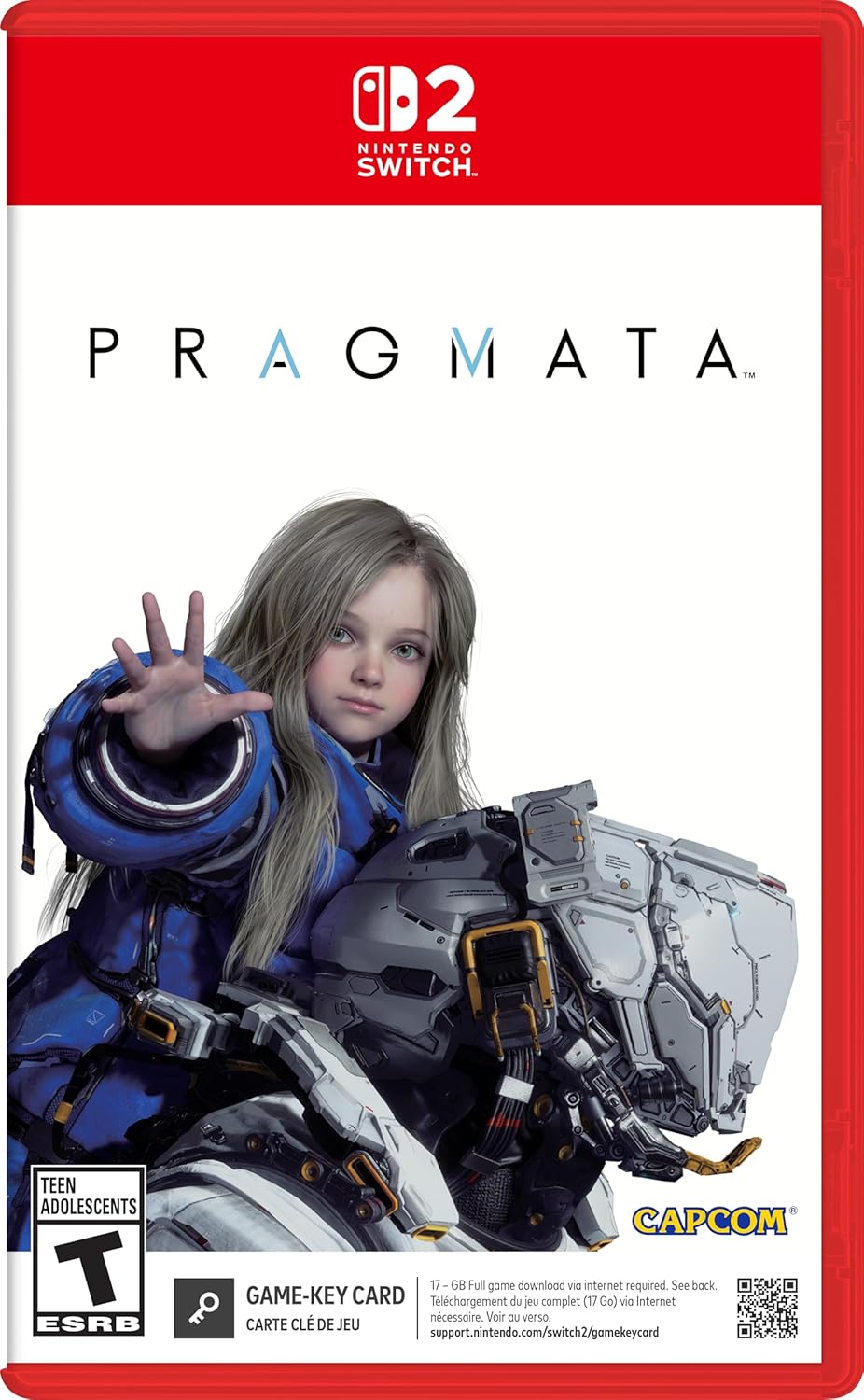
System: Nintendo Switch 2
Release Date: April 17, 2026
Categories: Action, Adventure, Shooting
Publisher: Capcom
Developer: Capcom

Written by Ricky Berg
When he isn’t writing for Nintendo Wire, Ricky’s anticipating the next Kirby, Fire Emblem, or if the stars ever align, Mother 3 to be released. Till then he’ll have the warm comfort of Super Smash Bros. to keep him going.
