
Kirby has proven time and again that he can really be anything and star in any kind of game. What’s not touched on as much is that these experiments don’t always work out. Case and point, Kirby Air Ride. Players and reviewers just didn’t gel with the game back in 2003, and as fond of the game as I am I can’t really blame them. It was so unlike anything at the time that it couldn’t really compete with the likes of Mario Kart: Double-Dash!! or F-Zero GX, which both came out the same year.
Now, flash forward a couple decades, and we have an all-new Kirby Air Ride, with Masahiro Sakurai back in the driver seat, releasing the same year as a Mario Kart and a flashier Sega-developed racer. Funny how that works out, but this time things are different. People have a much greater reverence towards Sakurai thanks to his continued work on Super Smash Bros., the Nintendo Switch has reached sales numbers the GameCube could never dream of, and the Kirby series’ popularity is at an all time high.
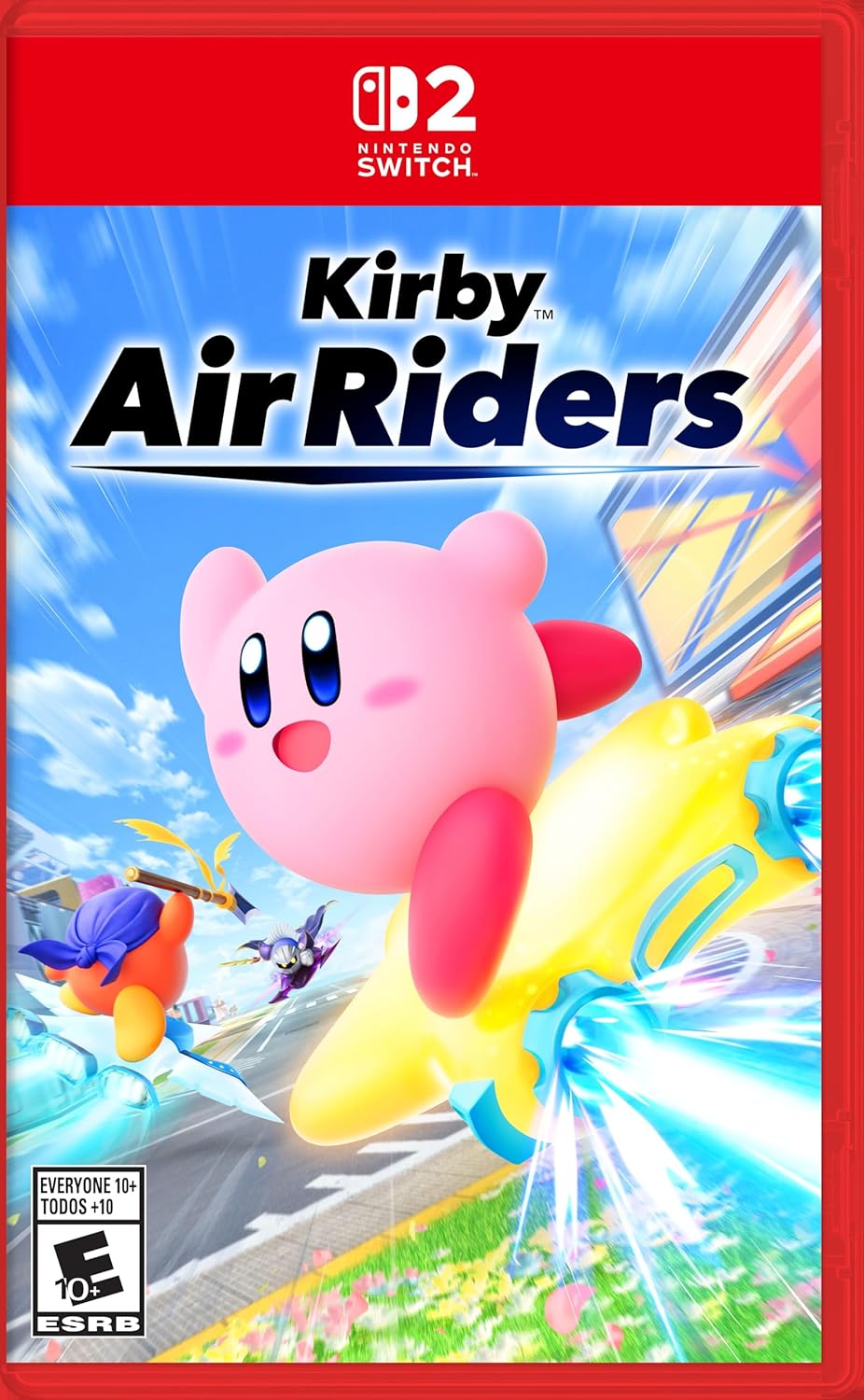
I’m happy to say that while things haven’t really changed with respect to gameplay, revisiting Air Ride was worth the wait. Longtime fans can rest easy knowing their beloved cult classic is back and better than ever, with the attention it always deserved. And if you’re a newcomer? Buckle up, because the Switch 2 just got something special.
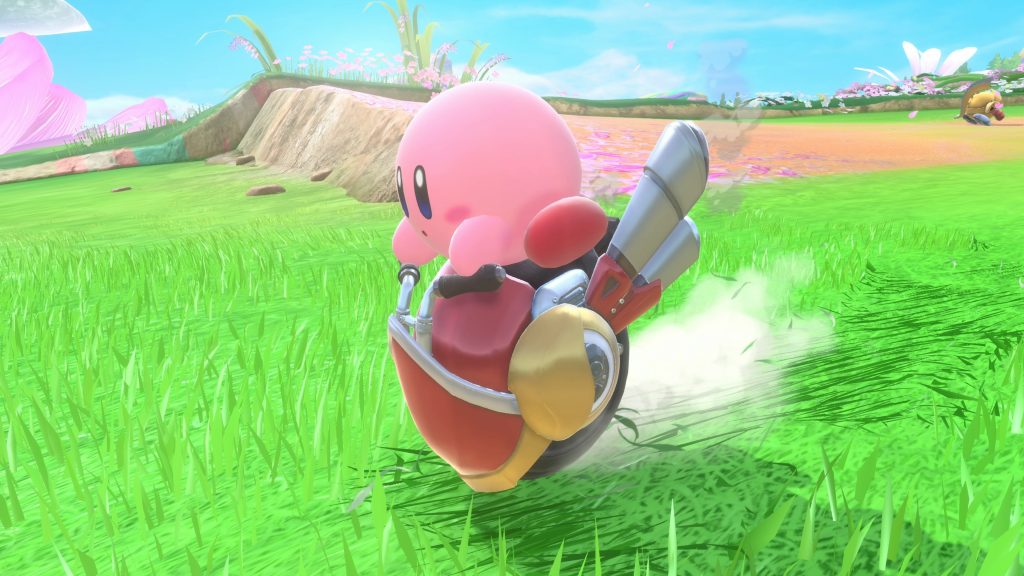
Kirby Air Riders, like its predecessor, thrives on manic simplicity. The ebb and flow of drifting during a race has an almost hypnotic appeal despite it literally being at the proverbial push of a button. Meanwhile, overclocking your machine being the effective goal of City Trial is the kind of sicko game hook that kept people talking about the GameCube original for over 20 years.
Nintendo requesting Sakurai revisit this one, with effectively nothing removed from the experience, is such an out of pocket move but one I’m exceptionally thankful for. It’s the ultimate “if it ain’t broke” endorsement where what’s changed is people’s tastes in games and the ways in which they’re shared and discussed — one need only look at how popular Rick the Hamster (who’s quietly existed since 1995) became overnight to see that.

Expanding the roster to include several more characters does wonders for making the game feel “more Kirby” — something the original was sorely lacking in. These aren’t mere skins or fanservice either, though the odder choices like Starman and Cappy will certainly have niche appeal for series devotees. Rather, each one has distinct stat lines and characteristics ranging from the simple (Knuckle Joe always has the Fighter ability) to the more complex (the spider-like Taranza’s web slinging).
I will take the chance to say that, even just based on Star Allies’ Dream Friends roster, a few expected characters didn’t get the invite. The choices that did make it are definitely welcome, but the fan in me sorely misses the likes of Ribbon or the even more conspicuously absent Elfilin from Kirby and the Forgotten Land. It’s been said no DLC was planned for the game during its development, but if the opportunity comes along I truly hope this is where it starts.
Those character-based idiosyncrasies are multiplied thanks to each rideable machine also having their quirks and varied specs. These are far more drastic and impactful on how your time in any of the game’s modes will go. I highly suggest learning the game on the nice and neutral Warp Star, but also dedicating time to experimenting with everything on offer. Something like Swerve Star, which literally cannot turn and needs to utilize full stops to navigate courses with its rapid acceleration, takes time to master but can feel incredibly rewarding to effortlessly win with once you do.
Where I wish the game got a little more daring is with the families of machines. There are a few each of Bike, Tank, and Chariot-type machines but their differences tend to devolve to “the big one” and “the one that handles well” compared to the wider range of Star-types. Air Ride is already plenty experimental by its very nature, so it’s a shame that these styles aren’t explored more.
All that said, I still love you, Wheelie Scooter.

Structurally, Air Riders has three core modes on offer. Of them, Air Ride is where you’ll go if you’re after a racing game experience. The track roster (supplemented by full remakes of the GameCube original’s tracks) feels well thought out, with courses having plenty of their own unique elements and fantastic theming. Though they’re not existing Kirby locals, they certainly fit in with the series’ established aesthetics. Discovering alternate paths, spots to glide from, interactable elements and more is a treat, with everything passing by like a roller coaster ride.
Top Ride also brings a different kind of racing, but it’s easily the weakest of the modes. The diorama-like perspective has its charm and there are unique elements here (as well as a shared roster of riders and vehicles, a massive improvement of the mode’s past iteration) but not enough to really sell the mode. Its inclusion can feel obligatory, but it does make a decent palette cleanser or slower affair if you’re not up for the game’s typical breakneck pace.
And then there’s City Trial. Sakurai himself called this one “the main event” and it’s certainly the most robust offering the game has when it comes to replayability. For the uninitiated, City Trial puts you and up to 15 other riders into a single large map that can be roamed around freely. Your goal is to get power-ups to increase your vehicle’s specs, with plenty more happening to add to the potential chaos. I’m talking random boss fights, sudden increases in size, machines losing all their health out of nowhere, a rain of spiky Gordos, and plenty more.

On their own those occurrences aren’t anything too wild, and seasoned players might even have strategies to avoid them (heading “indoors” can keep you safe from certain skyborne happenings, for example). But when you’re actively, gradually tuning up your ride to the point its speed is unwieldy or it’s exploding the opposition with a single attack. Becoming more like a comet than a car as quickly as possible is when this mode comes to life, all packed into a five minute session that’s some of the finest local multiplayer one could ask for.
Having the fastest, hardest hitting, high-flying machine doesn’t make you a winner, though. City Trial’s real victory only comes from a contest after that fun first phase. You’ll be presented with four options, letting you pick where your machine will (hopefully) do its best. This, too, is an improvement, as on the GameCube you could end up in an unwinnable situation — think having a Bike-type machine when you’re faced with a gliding challenge.
What hasn’t been improved is the fact these contests are oddly anti-climactic. After five minutes of building, a 20 second drag race can be really underwhelming whether you’re demolishing the competition or left in the dust. Sometimes you don’t even get to play with your friends if no one else picks the same challenge, giving you a no contest victory but not really feeling like a well-earned win. The calamity of it all is the point, and there really is nothing quite like this outside of some of Sakurai’s other work, but there has to be a way to make leveling up your ride more rewarding…

Oh, but there is! At least in theory, the new Road Trip aims to give you the fun of developing your machine and testing it through a series of challenges across a longer, single player experience. There’s even a storyline here, centered on a mysterious newcomer and the origin of Air Ride machines. It’s entertaining in its own way, with a handful of gorgeous cutscenes and a trademark escalation to macrocosmic calamity by the end thanks to the return of a certain wish-granting clockwork star.
I truly enjoyed Road Trip, though at its core its repackaging content from Air Ride, Top Ride, and City Trial and delivering it as a series of bite-sized challenges. Beyond the story there’s not much to it, but that spoonfed variety and longterm stat improvement makes it all too easy to get invested and swallow it all. Across about three and a half hours I was able to get a clear and replay in New Game+ to get the true ending, making it a great weekend distraction and a treat for completionists.

That can actually summarize Kirby Air Riders fairly well. It’s very pick-up-and-play by design if you’re going solo, with hundreds of checklist-like tasks to work through across each mode. Fulfilling these is how you get more riders, tracks, machines, and plenty more unlockables. Being able to select a revealed objective and get dropped into a scenario to complete it is exceptionally convenient and perfect for brief play sessions when you can find them.
Factoring in all the cosmetic unlocks you can buy with in-game currency — paint jobs and decorations for your machines, hats for riders, stickers and designs for your driver’s license — there’s so much to keep you coming back so long as those kinds of goals appeal to you. I do appreciate a lot of these will also come to you without even trying from just playing the game naturally, and the local multiplayer potential here is straight out of the 2000s in the best of ways.
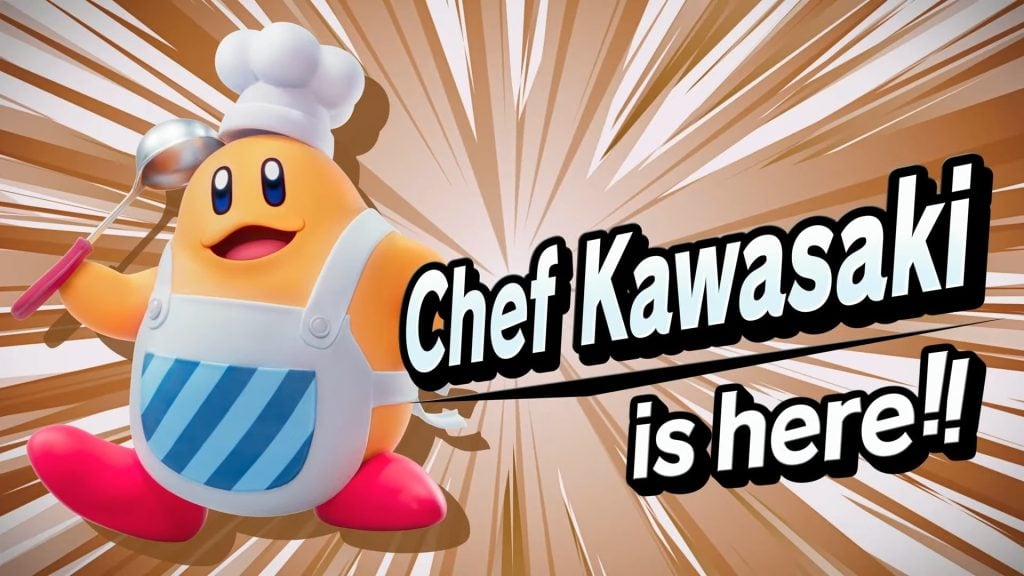
That doesn’t mean you don’t have online though, and Air Riders has been serviceable on that front. Some smart decisions have gone into City Trial to keep you playing and getting you out of matches you’ve already lost. The game also has some of my favorite lobbies ever, putting you in a little lounge/garage called a Paddock to chill with friends between the gameplay. The aforementioned machine customization also feeds into a novel online marketplace where you can browse and purchase other people’s designs. It’s quite Miiverse-esque in execution, just be careful what you show when it comes to Chef Kawasaki.
Kirby Air Riders feels like a miracle game in that it really has no “reason” to exist. Rather than water itself down to make something more appealing to the mainstream, it’s doubled down on everything that made the formula great two decades ago. Add more Kirby to the mix, a focused single player experience, and reliable online and you have what Air Ride should’ve been.
On top of that, you have Masahiro Sakurai returning to the series he created. I never thought he’d direct another Kirby title, and getting that in the form of Air Riders, with so much of his signature design choices now beloved by fans. It may be missing some of the trademark elements HAL has infused into the series’ modern identity, but this is still a fantastic homecoming that manages to harken back to the glory days of Dream Land. We may never get another Air Ride, but as far as second chances go, this is about as perfect as they get.
Leave a Comment
System: Nintendo Switch 2
Release Date: November 20, 2025
Categories: Action, Party, Racing
Publisher: Nintendo
Developer: HAL Laboratory, Sora Ltd., Bandai Namco, Masahiro Sakurai

Written by Ricky Berg
When he isn’t writing for Nintendo Wire, Ricky’s anticipating the next Kirby, Fire Emblem, or if the stars ever align, Mother 3 to be released. Till then he’ll have the warm comfort of Super Smash Bros. to keep him going.
