


Square Enix hasn’t wasted any time in pumping out remakes of their beloved RPGs over the last several years, and Dragon Quest is no stranger to this phenomenon with the recent release of Dragon Quest I & II HD-2D Remake and 2024’s release of Dragon Quest III HD-2D Remake. The latest Dragon Quest rerelease, Dragon Quest VII Reimagined, is a pretty big departure from the HD-2D style, instead opting for a highly-detailed diorama-style look. Originally released in 2000 for the PlayStation, this is the second time that Dragon Quest VII: Fragments of the Forgotten Past has been remade and re-released, with a 3DS remake in 2013 in Japan, which later came to the US in 2016. The 3DS release modernized and streamlined the famously long and unwieldy game, and this new Reimagined release has contemporized Dragon Quest VII even further.
Fragments of the Past, Reimagined
Dragon Quest VII Reimagined is set on the only island in the entire world, home to the Kingdom of Estard. The protagonist and the Prince of Estard, Keifer, aren’t convinced that there isn’t more out there across the ocean and set out to prove it despite centuries of their island’s history saying otherwise. Determined not to be left out, Maribel, the daughter of the local mayor, manages to tag along on the adventure and the three childhood friends are mysteriously sent to another island in an unfamiliar world. From there, their journey unfolds as they discover that not only is the world much bigger than they’ve been told, but that it’s their job to restore the missing pieces of it and make it whole again. Along the way they’ll meet friends – some who’ll join them for good, others who’ll accompany them for only a short time – and enemies who’ll test their mettle at every step of the way.
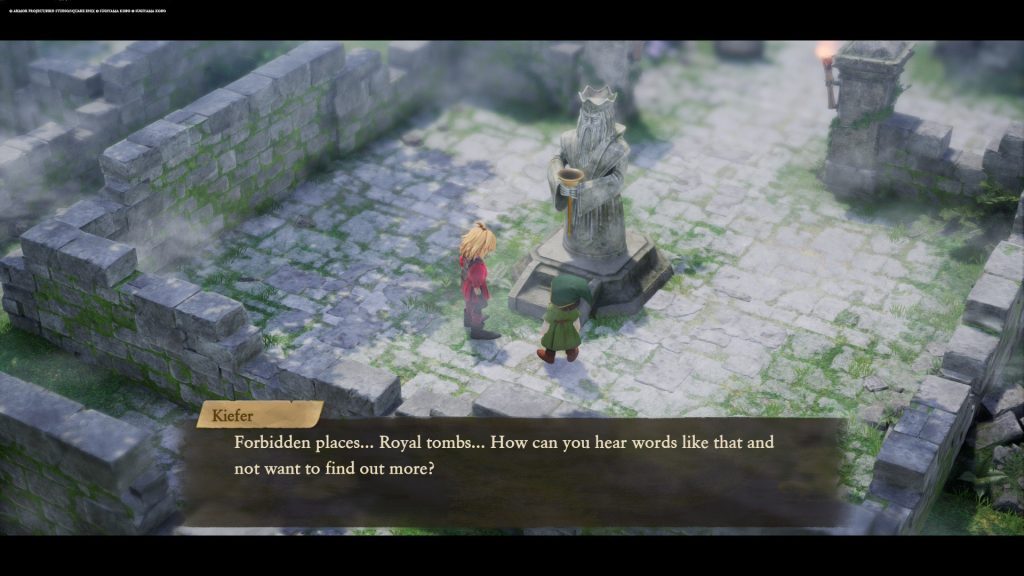
While the early story unfolds in the typical Dragon Quest fashion of “arrive at a town, learn about their problem, go and solve it (usually by fighting monsters), and come back to get rewarded,” — I really appreciated that this formula didn’t stick around in its barest form for long. Yes, that is the gist of a lot of the story sections, but as the adventure continued, not only did I find new complications to this formula that kept things fresh, but I was constantly finding hints about the greater forces at work in the world of Dragon Quest VII.
As with most RPGs, it’s to the player’s benefit to talk to everyone they meet and explore every nook and cranny of each location – checking bookshelves, drawers, wardrobes, pots, barrels, and more rewarded me with more than just useful items, I found information about the world as well as clues to several overlapping story arcs that came in handy further down the line. In a way it felt like big and small parts of the story were “leapfrogging” around a bit, something I heard or saw a couple towns or islands back suddenly became important to know for the current island’s story or provided a hint to treasure and other upgrades. The various loose threads I’d discovered that tangled and weaved as I progressed were so satisfying to see resolve, especially when I’d forgotten about them for a little while as I made room for other threads to pull at. It’s the perfect way for a game like this to unfold, as your party works to restore a broken world to its whole state, watching these interconnected pieces of the story fit together as you progress makes this world feel so much more alive.
The Great Leveller
As far as streamlining goes, Dragon Quest VII Reimagined definitely cuts down a lot of the length of the original title, though I feel that the bones of that length are still very much here. I can’t expound on this too much as someone who never played the original release and never made it past the intro of the 3DS version but I will say that the intro is quick and you’ll be on your way to starting your adventure properly early in your playtime.
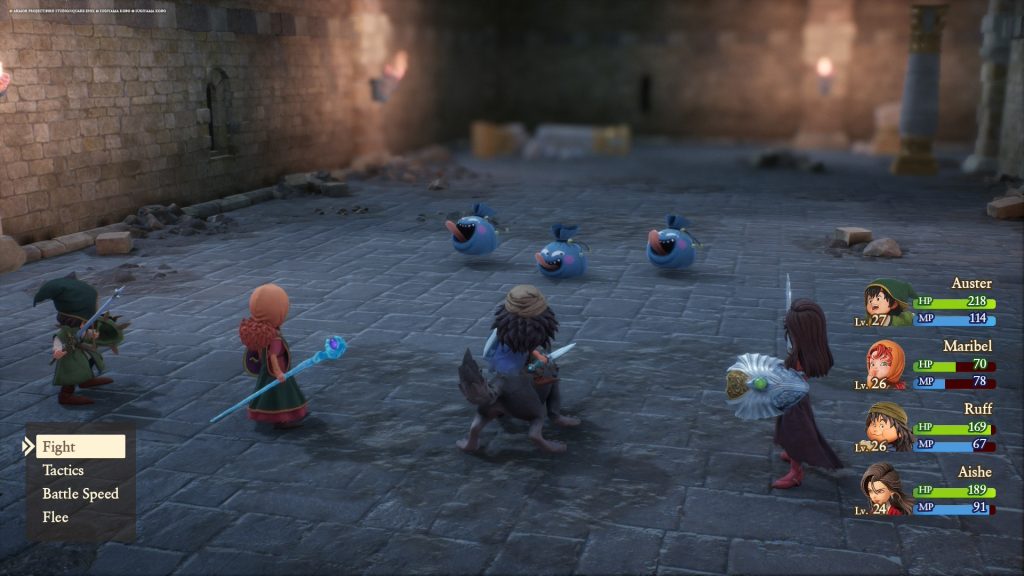
There are also plenty of quality of life features making things run smoothly, including things like adjustable battle speed, the ability to ambush weaker monsters on the map and defeat them without entering a battle, a hint system on the map page, and prominent quest markers for important NPCs and items required to advance the story and side quests. All of these features cut down on time spent battling and exploring, making things move quickly, though the content of the game is still plenty beefy. On the flipside, some story sections still have a lot of back and forth between two points on the map for errand-running, while others are very cutscene-heavy, and more than a few suffer from both. Sections like these are where I felt that this game dragged the most despite the quality of life features and other streamlining, and since other story sections moved very briskly – even with exploring every bit of each town – the pacing ended up feeling uneven.
Easy (or Tough) Going
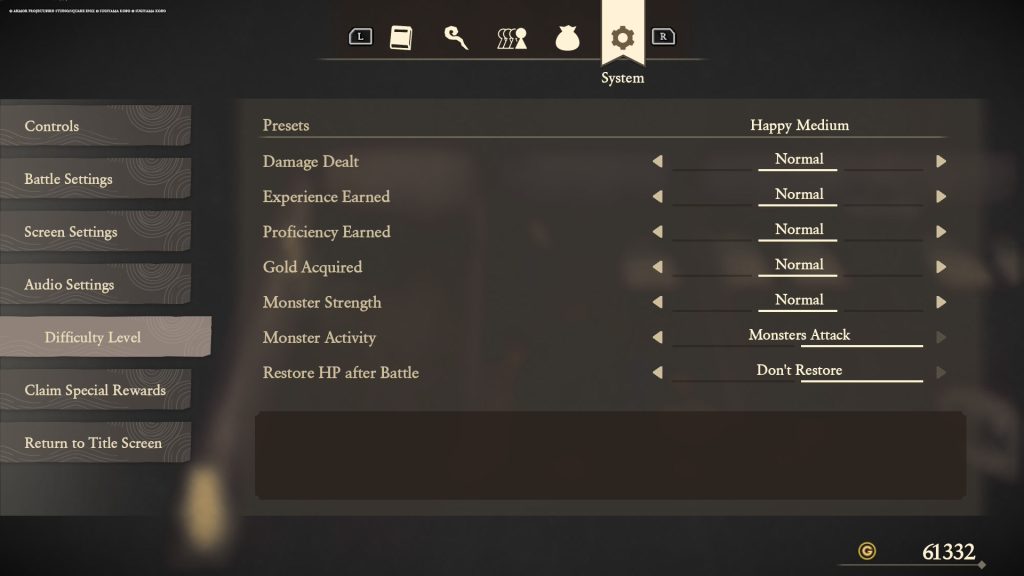
The difficulty options available in Dragon Quest VII Reimagined are fairly robust, allowing players to really tailor how easy or hard they want their experience to be. The various options on the difficulty screen are as follows, and you can set most of these to More, Normal, or Less:
- Damage Dealt
- Experience Earned
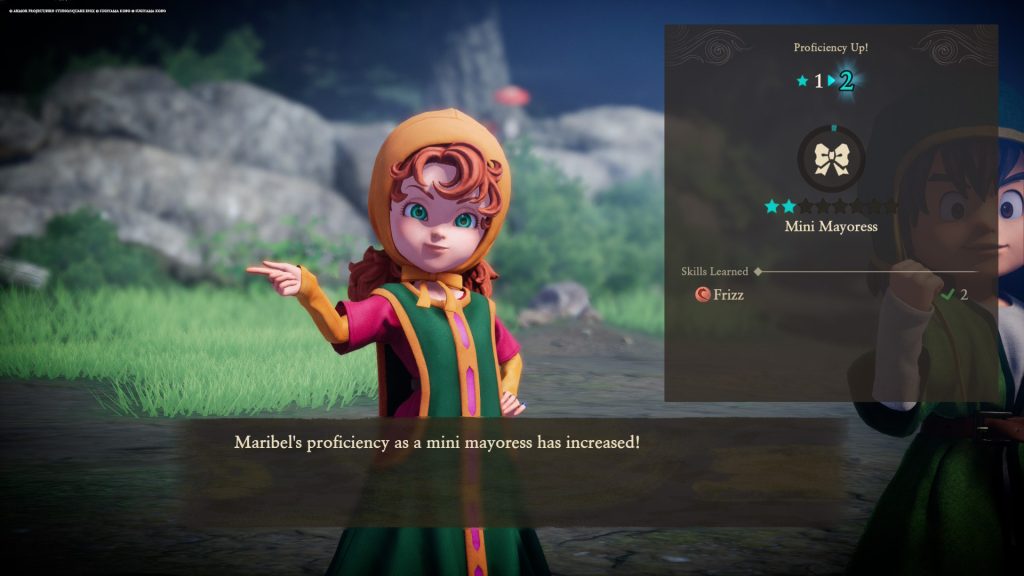
- Proficiency Earned (how quickly you’ll be able to level up your party’s Vocations)
- Gold Acquired
- Monster Strength
- Monster Activity (whether monsters will attack you when they see you or not)
- Restore HP after Battle
Elsewhere in the settings you’ll also get the option to turn off the Heads Up Display, which will remove your mini-map, reminders for shortcut buttons, the name of your current location, and the current status of your party from the screen while you’re adventuring, and the option to remove the Objective Markers from your map. There are a lot of options for Dragon Quest purists to dial back some of the more modern changes that have been made, though they’ll find that even on the hardest difficulty settings there are a few edges sanded off that are out of their control. Your party gets access to pretty powerful spells that hit every enemy fairy early on, which makes early monster encounters more of a breeze than in other Dragon Quest titles. If you spend just a little extra time grinding early on and keep up with fighting most of the monsters in an area as you pass through, you’ll be a step ahead of nearly all of your fights for the rest of the game.
For those who don’t want to manually work their way through every fight they come across, there’s also an Auto-Battle option that may be the smartest and most efficient auto-battle I’ve ever seen in a game. Party members prioritized moves that hit multiple enemies when appropriate, knew when and who to heal, when to hit weaknesses, and even when to pull off combos that relied on status effects. After being initially tentative about using it due to auto-battle settings in other games often choosing inefficient moves and wasting MP or healing items when not needed I ended up relying on it often for grinding out basic fights when I was running from point A to point B, and even gave it a shot for some early boss battles. The boss battles I tested the auto-battle out on were usually over very quickly and only once did I feel the need to turn it off and take control to ensure I won the fight with every one of my party members still alive.
A Veritable Volley of Vocations
Dragon Quest VII Reimagined’s Vocation system is very fun to mess around with once you finally unlock it, which for me was about 11 hours into the game. Each of your party members has access to their unique base Vocation until this point, which dictates what Skills they learn to use in battle. Once you can switch Vocations, they won’t be able to use the Skills they’ve learned in their current Vocation unless they re-equip it, and they’ll have to learn all of the skills of their new Vocation as they level it up. At first I thought this would be a tedious process that would set my team back but thanks to their levels not being tied to their Vocations, they were still plenty strong enough to take on a few fights while they learned new Skills.
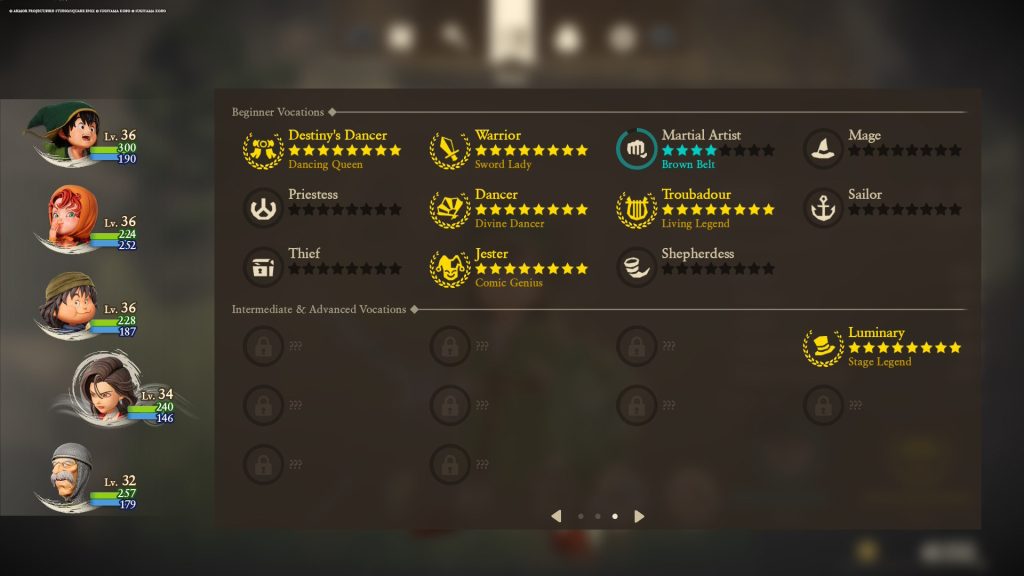
Shortly after unlocking the ability to change your Vocations, you’ll also unlock the ability to Moonlight, allowing each member of your party to equip two Vocations at once, essentially turning the Vocation system into a dual-classing system. By equipping two Vocations, the party can use the skills of both. Additionally, if one of the Vocations equipped is already mastered, the party member receives an experience boost. Once you unlock Moonlighting, the real fun of the Vocation system begins. Mastering multiple Vocations allows you to unlock even stronger Intermediate and Advanced Vocations with stronger Skills, which encourages mixing and matching several Vocations as you play, leading to a ton of variety in your party. Switching Vocations is also incredibly easy thanks to a new quality of life feature, an item you’ll receive called the Career Sphere, which allows you to switch Vocations anywhere and at any time and even gets assigned to a dedicated shortcut button on the D-Pad, making things as easy as possible. The ease of Vocation switching allows for a lot of fun mixing and matching to experiment with your parties skills, and gives you the freedom to try and unlock as many of the Intermediate and Advanced Vocations you want as you go.
Putting on a Show
Visually, Dragon Quest VII Reimagined is stunning. I absolutely adore the detailed diorama look and found it to be a refreshing palette-cleanser after playing the also-gorgeous HD-2D versions of Dragon Quest I, II, and III so recently. The big-headed design of so many characters was weird to get used to at first but I quickly got over it and found myself really enjoying how these characters looked by the end. Dragon Quest is at its best when it looks a little goofy and rendering Akira Toriyama’s iconic designs with highly-detailed, doll-like 3D models sits just shy of looking too goofy, and I’m hoping we might see a few more Dragon Quest reimaginings in this same style. Performance-wise the game holds up very well on Switch 2, though I sometimes noticed a small amount of texture pop-in when first booting up the game or when transferring from the overworld into a town or when using Zoom to teleport to a new location.
Positive Reinforcement
I’m a huge, huge fan of RPGs, and I found that my time with Dragon Quest VII Reimagined was definitely time well spent. Yes, the streamlined story and quality of life features led to a few hiccups in regards to the pacing feeling uneven and the game feeling too easy at times, but playing it is still a blast. This is one of my favorite job systems I’ve found in an RPG, the way small threads of the story intertwined and connected was a huge part of making this truly feel like a game that you’re puzzling out and putting together piece by piece, and it looks amazing to boot. It’s safe to say that any time the team at Square Enix wants to serve up more Dragon Quest, I’ll be seated and ready for whatever they’ve got cooking.
Leave a Comment
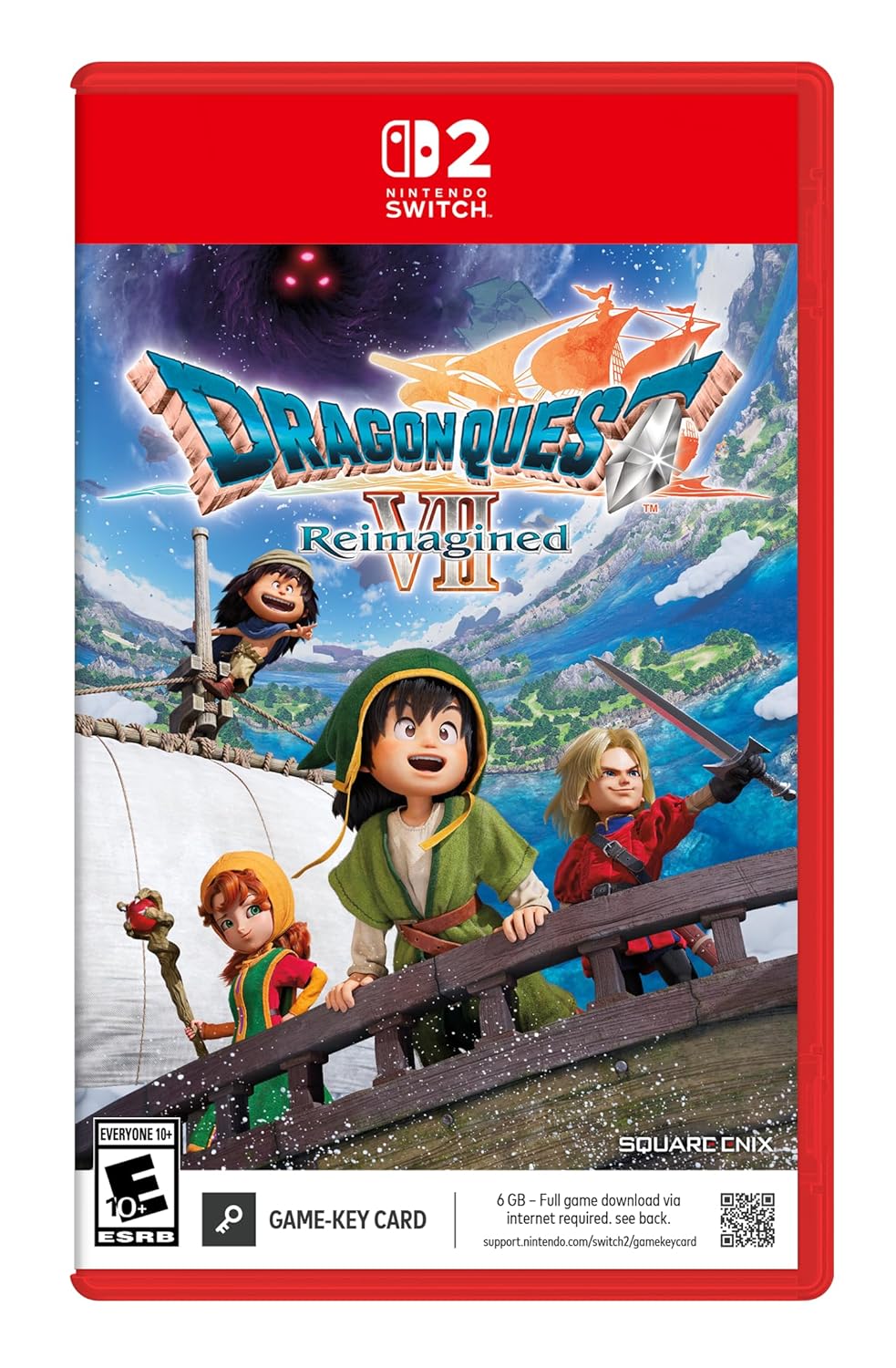
System: Nintendo Switch, Nintendo Switch 2
Release Date: February 5, 2026
Categories: Role-playing
Publisher: Square Enix
Developer: Square Enix, HexaDrive

Written by Jaxson Tapp
As a lover of gaming and the written word, Jaxson currently fills his time not only with playing games, but also writing about them. Ready for anything, Jaxson’s passion for puzzle games, JRPGs, tough platformers, and whimsical indies helps him bring a well-rounded opinion to Nintendo Wire’s reporting.
