


As a fan of old point-and-click adventure titles, it often feels as if designers have completely moved on from that interconnected puzzle box style of game making. There’s still Cyan Worlds making Myst-like adventures, not to mention remaking Myst a hundred times, but I can count the number of similar games from the past few years on both my hands. Adventure games are acknowledged as a part of the early days of PC gaming, but rarely does anyone list them among their favorites. Thankfully, that didn’t stop director Tonda Ros from creating Blue Prince, the 2025 hit indie darling that temporarily put puzzle gaming in the limelight.
A favorite of mine from last year, Blue Prince would receive wide acclaim from critics and audiences alike, many completely unaware of its general inspirations and design history. Blue Prince is the story of a mostly solo dev who incorporated their love for puzzle design along with the rising indie game scene to create a title that would entice and perplex players in equal measure. Iterated on over the course of eight years, Blue Prince draws from not just gaming, but films, books, and tabletop games to craft something that feels unique. It’s also one of the better uses of roguelike inspiration I’ve seen from an indie game in some time.
The general premise is that the player character, Simon P. Jones, inherits the mysterious Mt. Holly Estate after the passing of their great uncle, Herbert S. Sinclair. While the mansion is part of their inheritance, Simon will need to prove his worth to obtain the rest by reaching the often sought, but never found, 46th room of the 45-room estate. Under some stipulations, such as not being able to spend the night in the mansion and only traversing through 50 rooms before tiring out, Simon will have to draft different rooms each day in an attempt to reach the end of the house. At the end of every day, the house will reset, and all progress and items will return to a default state before he can try again.
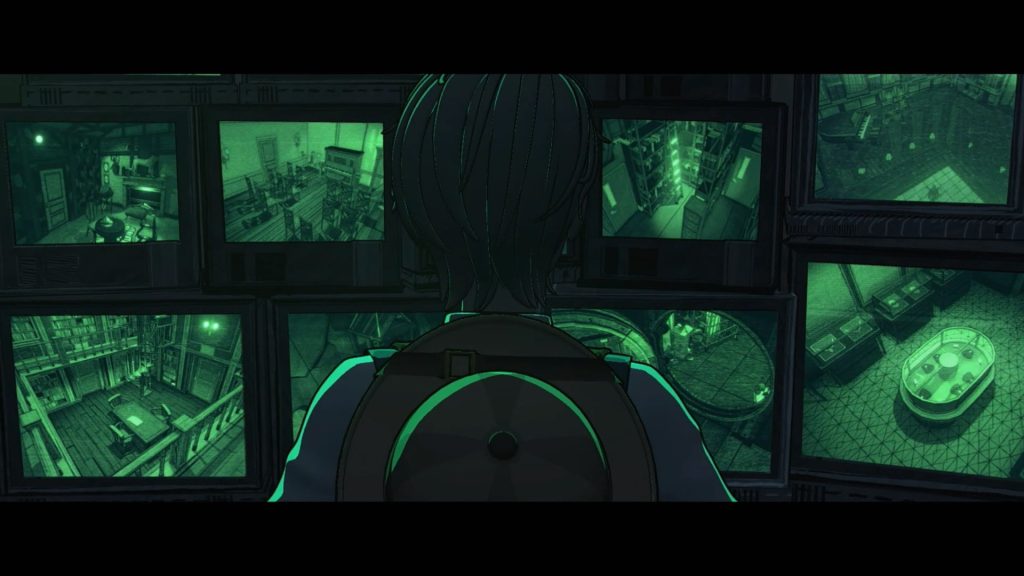
There are lore explanations for why these things happen, but Blue Prince doesn’t force-feed any of that to the player. You simply have to deal with the obstacles in your path and accept that forces beyond your (current) understanding are at play. It’s an ingenious way to incorporate roguelike staples, such as randomization, into a puzzle game without making things feel overbearing. It can be annoying when you draft yourself into a dead end or fail to pull a specific room you want, but Blue Prince isn’t solely about reaching the 46th chamber. As you make slow progress in the house, you’ll soon learn there are other prizes waiting to be uncovered and solved.
That’s the true beauty of what lies within Blue Prince. It creates this scenario where you seemingly never run out of ways to explore a location you’ve visited time and time again. Older puzzle games could be seen as lacking replay value because their solutions are fixed, but Blue Prince introduces randomization in a way that doesn’t undercut the fixed solutions it has. It’s a little hard to not give away solutions to explain how, but rooms like the “Breaker Box” and even the “Boiler Room” link to various mini-puzzles that can have a profound impact on how you traverse through the mansion each day. That you can’t account for them, though, means you need to shift your perspective on the fly to what is being offered to you.
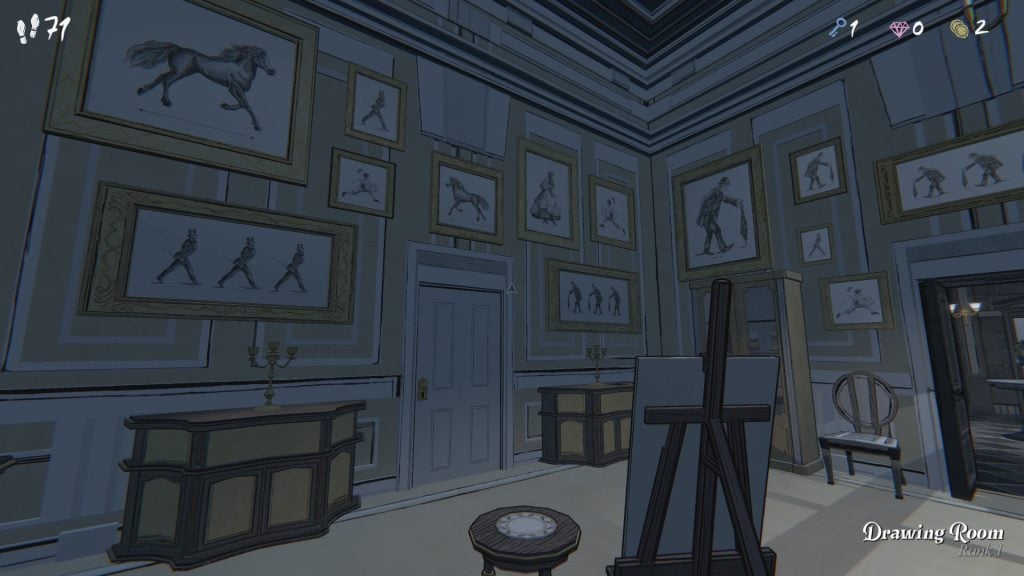
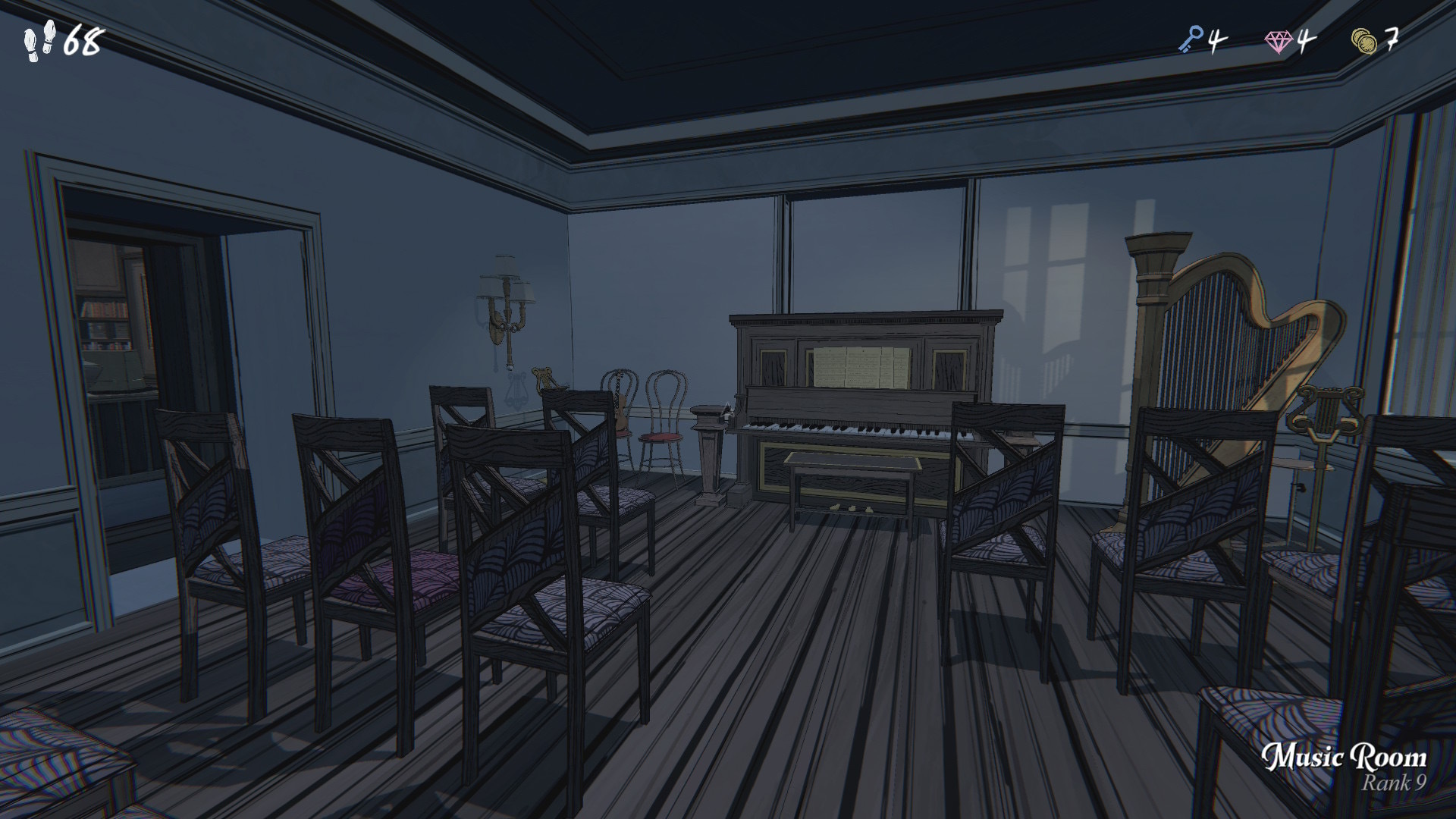
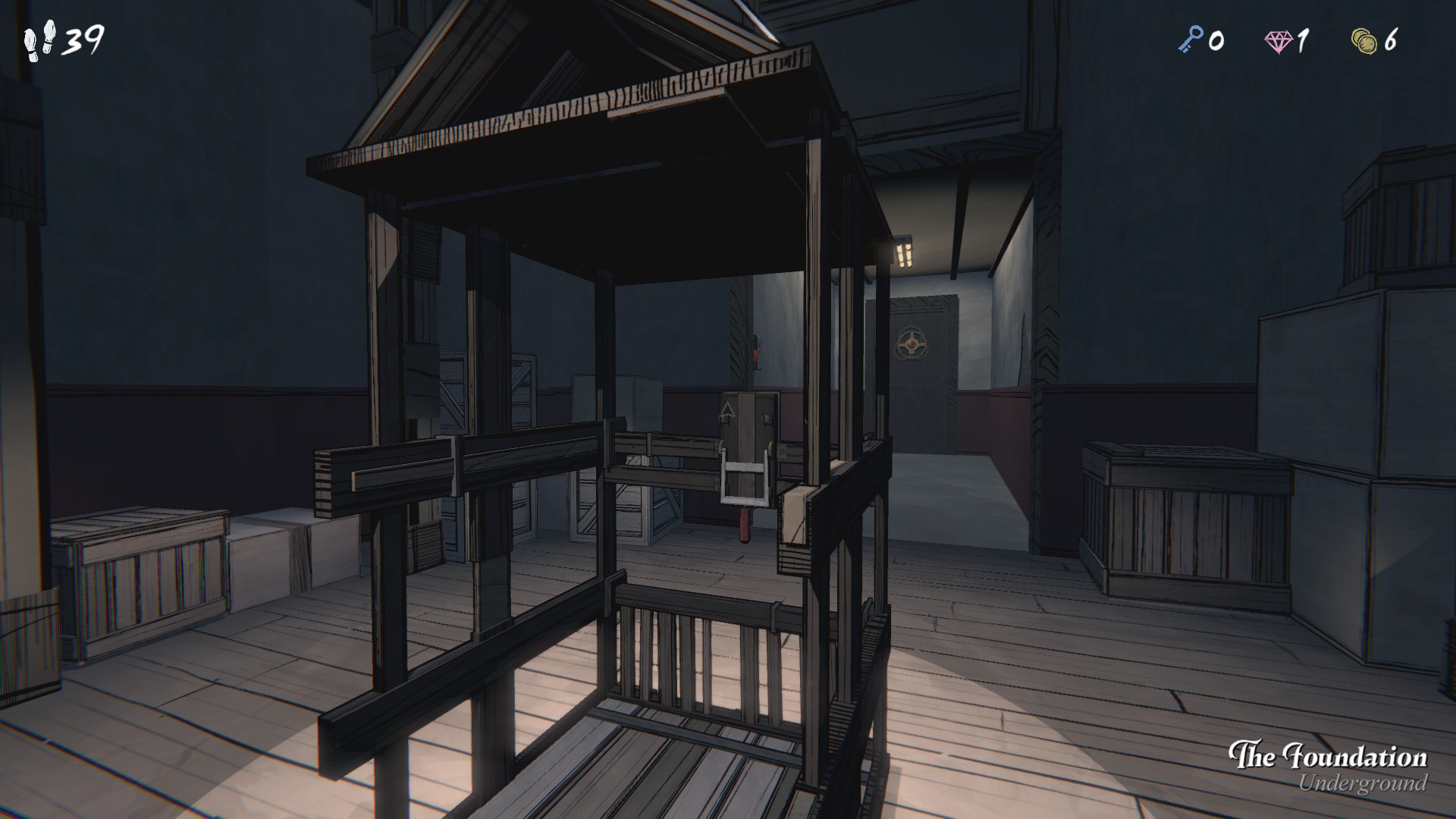
I’m not sure if this constitutes a spoiler, but eventually finding that 46th room is technically not the ending of Blue Prince. It can be a hard-fought journey to achieve just that, but Blue Prince has even more mysteries and discoveries waiting for those who conquer the initial challenge. When I first opened the door to the 46th room last year, I figured that was all I would need from the game. Then a couple of days went by, and I got curious about what was lurking in the depths of the house, not to mention all the alternate paths I hadn’t taken.
This is where my only true complaints with Blue Prince come in. Getting to the 46th room is a constantly rewarding task that will see you inching along at other mysteries, but once you’ve found the “ultimate” reward, most of those smaller puzzles have dried up. The bigger puzzles which unlock (or, more realistically, which you become aware of) then require specific rooms and specific items and getting those to appear can feel fruitless. There are ways to tip the odds in your favor, such as drafting the “Coat Check” to save an item from a run or finding little puzzle boxes to accumulate more allowance for each day, but those only go so far. If you 100% need a room, there’s no guarantee it will come up now or in the next ten runs. That can make solving something like the underground chess puzzle a slog. There’s a real possibility that doing everything Blue Prince has can take you over 100 hours, something which I eventually gave up on last year.
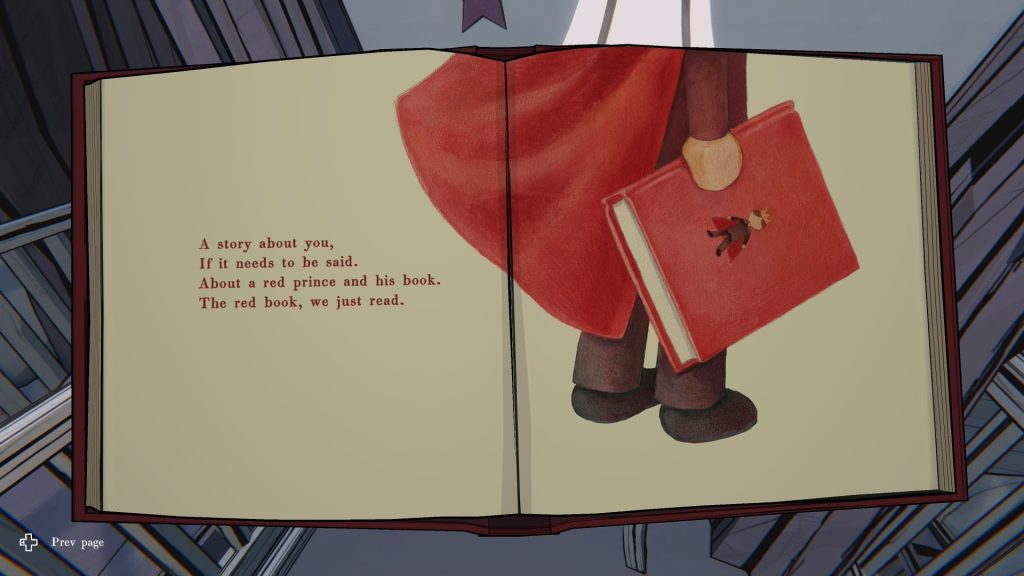
For the purposes of this review, however, I only got to the 46th room to test how this Nintendo Switch 2 conversion works. As much as I can say about the design of Blue Prince, it wouldn’t matter if Nintendo fans were being served up a subpar iteration of the game. While no one will be confusing this for the PC or PlayStation 5 ports of the game, Blue Prince equates itself to Switch 2 pretty well. On handheld, despite the screen’s faults, Blue Prince is very sharp and colorful. Text is clearly legible, there’s no hint of slowdown or screen tearing, and the VRR panel smooths out any hiccups that might exist. The game is locked to 30 fps, sadly, but this isn’t a fast-moving action game or even a puzzle title that demands quick reaction.
In docked mode, that’s where I feel Blue Prince on Switch 2 maybe doesn’t quite stack up. If you have a 4K TV, Blue Prince is going to look like a jagged mess at times. Standing outside the mansion before entering each morning, you’ll see tons of stair stepping, low quality textures, and less readable text. The 30 fps cap is still there, which is certainly less enjoyable on a bigger screen. Mouse controls are included to mimic the PC version, but I don’t think they’re smooth enough with the lower frame rate to feel great. There’s also some oddness with inputting text on various terminals in-game when using mouse controls that I don’t like (ZR suddenly doesn’t act as accept). At least you can shift between standard controls and mouse mode instantly, so you won’t need to commit to one or the other.
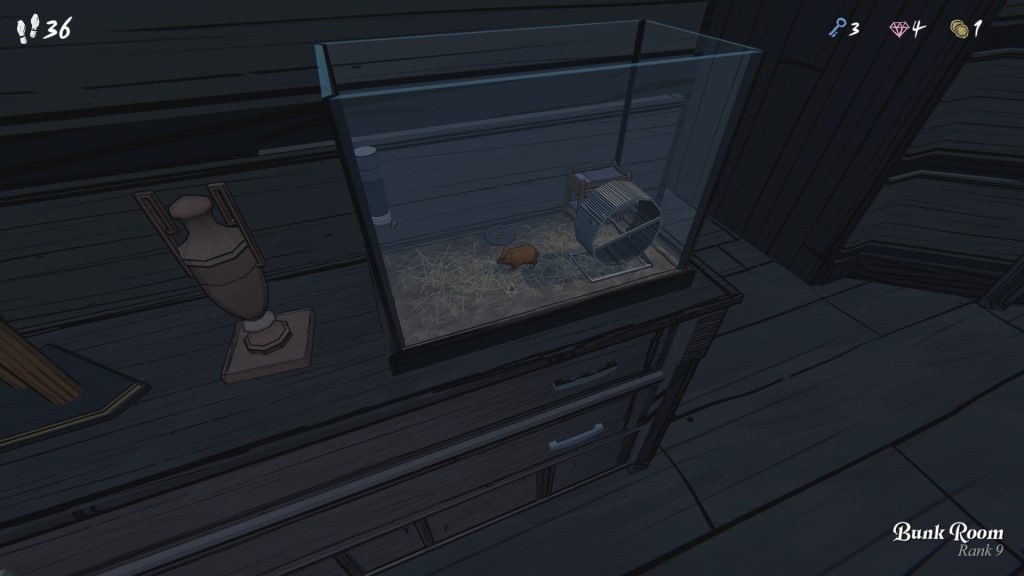
Some of that is understandable as the Switch 2 is not a super powerful console. Nintendo’s latest is still an impressive piece of technology for its price and size, but I do get the impression that Blue Prince isn’t utilizing the hardware as well as it could. There is nothing that can be done about DLSS implementation as the game’s engine doesn’t support it, even on PC. Still, I find it highly unlikely that 60 fps was off the table considering the main game appears as though it could run on the original Switch. At the very least, I wouldn’t mind seeing a resolution increase to 1440p simply so that everything will scale better in docked mode.
Most people aren’t going to be bothered by that. I understand I’m a bit spoiled since I have access to a powerful PC that can brute force most issues away. I can promise you, playing Blue Prince at 30 fps isn’t going to take away from its powerful atmosphere, smart puzzles, and engaging hook. Even if this version is compromised in some way, the underlying game is so well-designed that new players are bound to not care. To some extent, I don’t even care as I appreciate having such a gem in a handheld format now.
Maybe future updates will smooth out some of the issues I have on a technical level, but Blue Prince on Switch 2 is a solid port of the game. Now, even Nintendo fans can see what they were missing out on last year and get to experience one of the best modern puzzle games at the same time.
Leave a Comment
System: Nintendo Switch 2
Release Date: March 3, 2026
Categories: Adventure
Publisher: Raw Fury
Developer: Dogubomb

Written by Peter Glagowski
Peter has been a freelance gaming and film critic for over seven years. His passion for Nintendo is only matched by the size of his collection.
