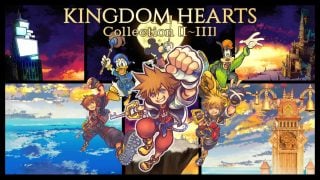

A journey where you’ll never know who you’ll run into next. That tagline for the first Kingdom Hearts stuck with me, because it really seemed true. How else could I come across Aladdin, Cloud Strife, and Tigger in a single game? The idea of exploring Disney’s animated worlds was appealing, but over the course of nearly a dozen games it’s been the original cast and ever growing universe that’s kept me coming back.
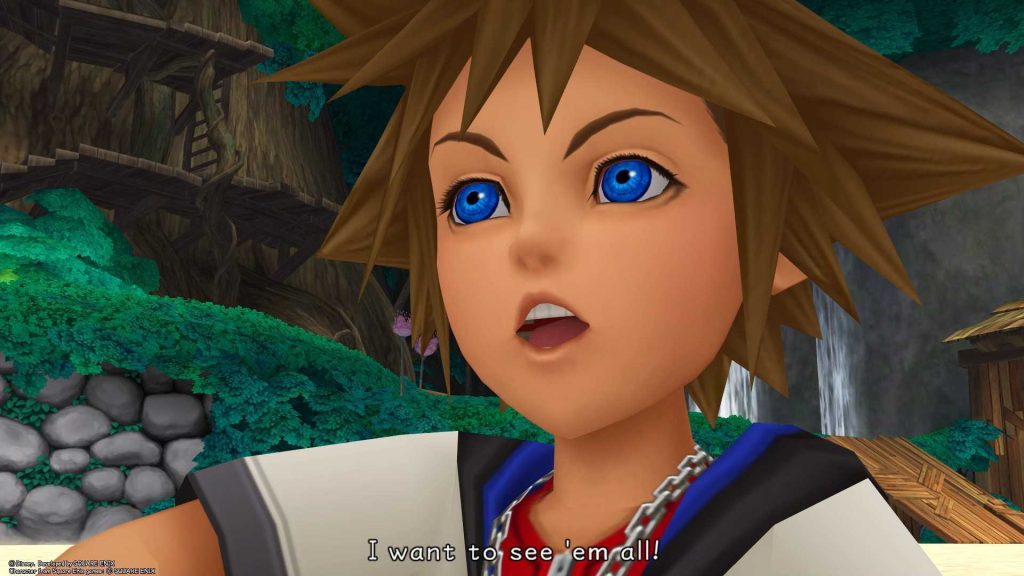
Of course, despite having a great history on Nintendo handhelds, the series’ history is most connected to the PlayStation 2. That’s why the news that the entire franchise would be coming to Nintendo Switch 2 was a big deal — even more so that the future of it would be branching to full multi-platform status for Kingdom Hearts IV next year. That’s the future though and if there’s one thing you can take away from the Kingdom Hearts I-III Collection, it’s the importance of the past.
The full collection is broken up as so, representing 25 years of light, darkness, and friends equating to power:
Kingdom Hearts -HD 1.5+2.5 Remix-
- Kingdom Hearts Final Mix
- Kingdom Hearts Re:Chain of Memories
- Kingdom Hearts II Final Mix
- Kingdom Hearts 358/2 Days (HD cutscene compilation)
- Kingdom Hearts Birth by Sleep Final Mix
- Kingdom Hearts Re:coded (HD cutscene compilation)
Kingdom Hearts HD 2.8 Final Chapter Prologue
- Kingdom Hearts Dream Drop Distance HD
- Kingdom Hearts χ Back Cover
- Kingdom Hearts 0.2 Birth by Sleep -a fragmentary passage-
Kingdom Hearts III + Re Mind (DLC)
Suffice to say, that’s a lot. Like, a lot a lot. You’re going to lose track of how many times you go to Olympus Colosseum and double take when you hear Mickey Mouse tell you he can’t help you with revenge. As serious as it takes itself, it’s that variety that gives Kingdom Hearts a lot of its appeal. That and some fantastic action-RPG gameplay and a soundtrack that never lets up.
So get comfortable, because we’re diving fully into the entire package to tell you why this series is so beloved and a must-play experience. Read on, and let your heart be your guiding key.
Switch 2 Performance
To a certain group of fans, the idea of this much Kingdom Hearts being on a Nintendo system is a dream come true — myself included. The significance of that console migration wouldn’t mean a thing if these ports didn’t deliver where it counts, though. Thankfully, with only a few minor exceptions, I found the entire collection a fantastic fit on Switch 2.
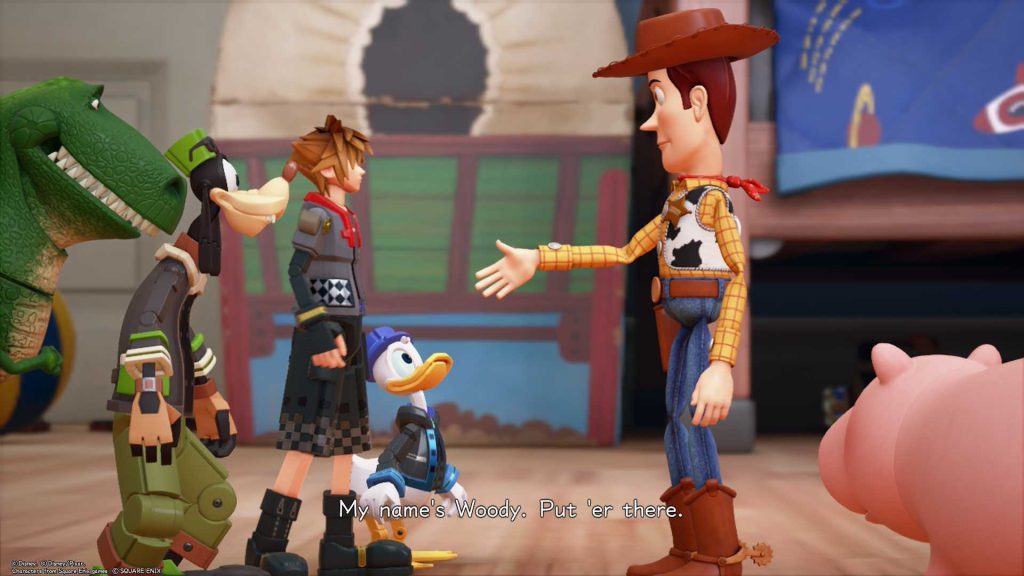
The PS2-era titles (including Birth by Sleep) all play flawlessly and look fantastic even in handheld. I did notice some slight hiccups in FMV cutscenes, particularly the animated intros to the games, but I’d chalk that more up to the process of getting these games to run on PlayStation 3 back in the day followed by the improvements in future versions. Another quirk of that optimization (or slight lack thereof) is that the transitions from area to area in Kingdom Hearts II stutter briefly. It’s more a minor annoyance than any true detriment, especially when the transitions are quick as can be.
In between we have Dream Drop Distance and a fragmentary passage. The former ran buttery smooth and looked nice and clean, though the latter represents the lowest point of the collection. The frame rate can drop in more fluid actions and visually impressive spell-slinging, and the lighting feels off in handheld. It being a very brief title and effectively an expanded tech demo, I can excuse this to a point. Just brace yourself and keep expectations in check if you want to visit every corner of the series and you’ll be fine.
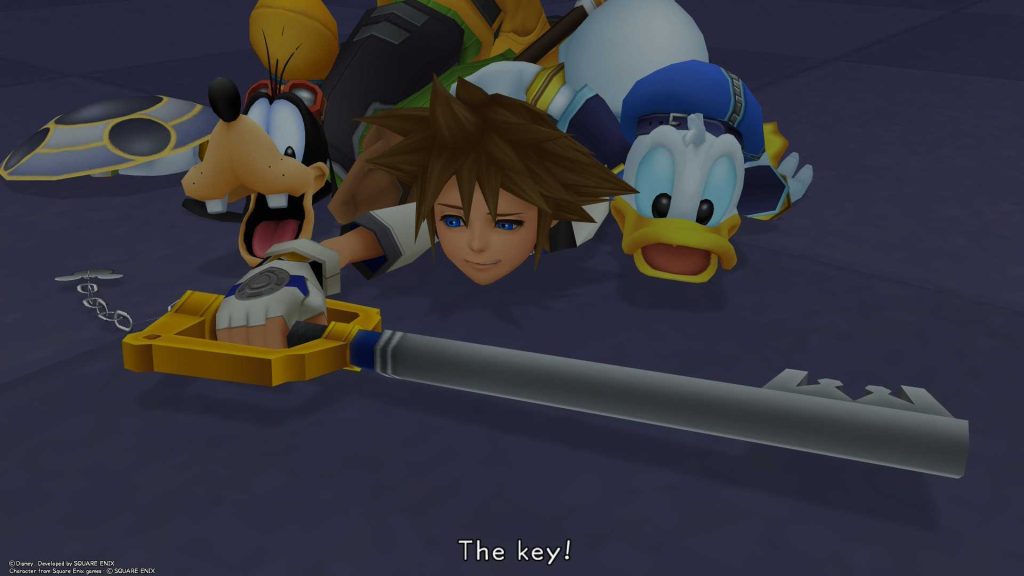
Which takes us to Kingdom Hearts III. Honestly, I was very impressed with how the latest game in the series looked and ran on Switch 2. Performance was fluid and consistent, without the issues mentioned above. The disparity between handheld and docked is worth mentioning; while some of the more stylized areas look good no matter which config you’re in, the lighting and textures get a noticeable bump on TV. About the only sequences where I saw drops involved Attraction Flow special attacks in dense areas (think the forest outside of Twilight Town), but those were more situational and largely benign.
Having the entire series available and in such good shape is the best outcome for Nintendo fans and a vast improvement over the previous cloud versions of the games. I could conclude right here and just say go for it, no regrets, embrace 25 years of action-RPG excellence.
Instead, though, I’m going to dive into the heart of each piece of the collection one by one. These are games I’ve been playing for two and half decades, and I can’t pass up the opportunity to share specific highs and lows from each of them. If you don’t know your DTDs from your BHKs, or if you’re curious how I feel about the entirety of the series after revisiting them all for review, this breakdown is for you.
Kingdom Hearts
The one that started it all. That distinction comes with a lot of unique quirks, like a straightforward (by comparison) story and some gameplay ideas that would either be dropped or reworked by its full sequel. It’s easily the purest entry with respect to the initial mission statement of being a blend of Square Enix’s RPG acumen and Disney’s animated classics, and I found its treatment of those halves refreshing when compared to some of the later games.
Revisiting it was a giant dose of nostalgia thanks to quotes that have been seared into my brain for 25 years. From introductory lines from Destiny Islands and Traverse Town that helped establish this universe all the way to the agony of refighting Riku at Hollow Bastion again and again and again; as a long time fan, it’s hard not to love this game despite it showing its age.
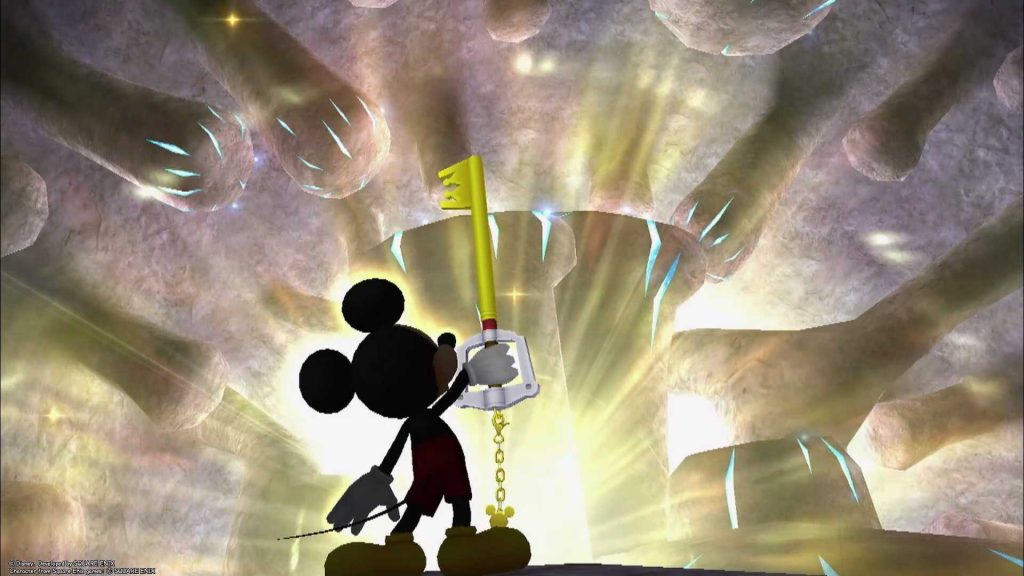
The biggest hindrances are the awkwardness of its occasional platforming segments (forget licensing issues, is that why the Tarzan world never came back?) and Sora’s slow walking speed. Movement was not a strong suit, with things feeling stiff and imprecise. These flaws would be ironed out in later games, but it definitely demanded a lot of patience in this one.
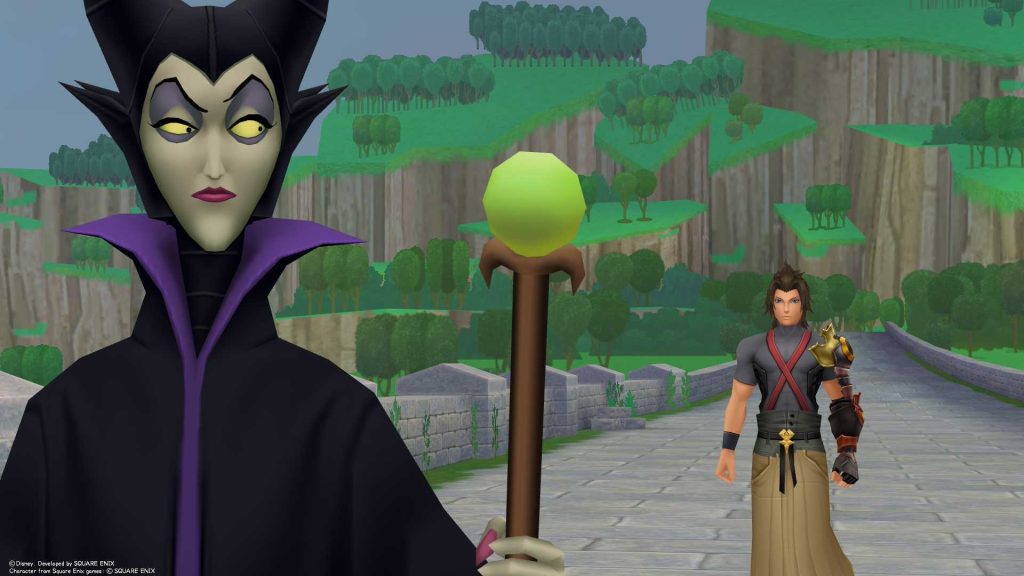
Some worlds are also executed pretty poorly. Wonderland’s boxy rooms, Atlantica’s underwater controls, and the already mentioned Deep Jungle all have their moments where the tedium creeps in. Thankfully the likes of Halloween Town and Hollow Bastion elevate things. This is also as good a point as any to mention that recurring lead Disney villain Maleficent is at her absolute best here, and even as original antagonists have taken over I genuinely want to see her back in this kind of prominence come Kingdom Hearts IV.
Most importantly though, combat still feels good — Square nailed things like the sound design, weight of Keyblade hits, and combo syncopation on the first go. Even without the fluidity, spectacle, and customization of later entries, this is an enjoyable bonk ‘em up. Good thing too, because you do a whole lot of it across the dozens of hours here. It’s thanks to that longevity and the foundational nature of its story that I know now, without a doubt — Kingdom Hearts is great.
Kingdom Hearts Re:Chain of Memories
Unlike every other playable game in the collection, I’d actually never touched Re:Chain of Memories until now. I instead played the original Chain of Memories way back when on Game Boy Advance. I always looked back on that game pretty fondly, appreciating how it took a PlayStation 2 game and adapted it to handheld hardware. Maybe its card-based gameplay isn’t for everyone, but on the GBA it and revisiting Sora’s memories of the first game were intriguing at their best and novel at their worst, and all carried by some fantastic sprite work.
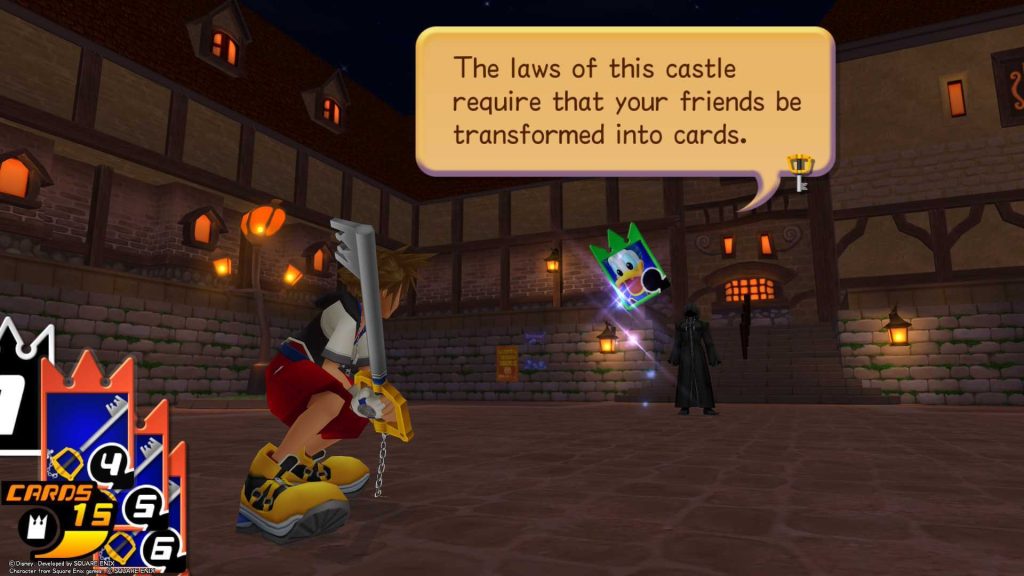
Now, Re:Chain of Memories is a different story. Any excitement I had for exploring this HD take on a game I looked back on so fondly dried up pretty fast. It’s not bad, but without the limitations that informed its original design this 3D adaptation doesn’t make much sense. Especially after spending time in the original Kingdom Hearts, the reuse of assets and comparatively “restrictive” gameplay felt odd. It does file some of the rougher edges of the GBA original — Riku’s campaign gets some notable improvements — but this version just doesn’t have the same kind of flair or appeal compared to its collection-mates.
Without that, what’s left is its narrative. In Chain of Memories’ defense, it actually does a lot within the confines of its sole “true” locale, Castle Oblivion. Longtime fans and anyone playing these in release order are introduced to Organization XIII, Riku’s bond with King Mickey is established, and the importance of Sora connecting hearts is critical to its resolution and laying the groundwork to this collection’s greatest adventure.
Kingdom Hearts II
It’s not exactly a hot take to say that Kingdom Hearts II is the best entry in the series. Identifying everything that made the first game distinct and memorable, expanding on them, and progressing the story forward is the definition of a great sequel. KHII manages this so well, and every entry that would follow seems to be pulling from its playbook.
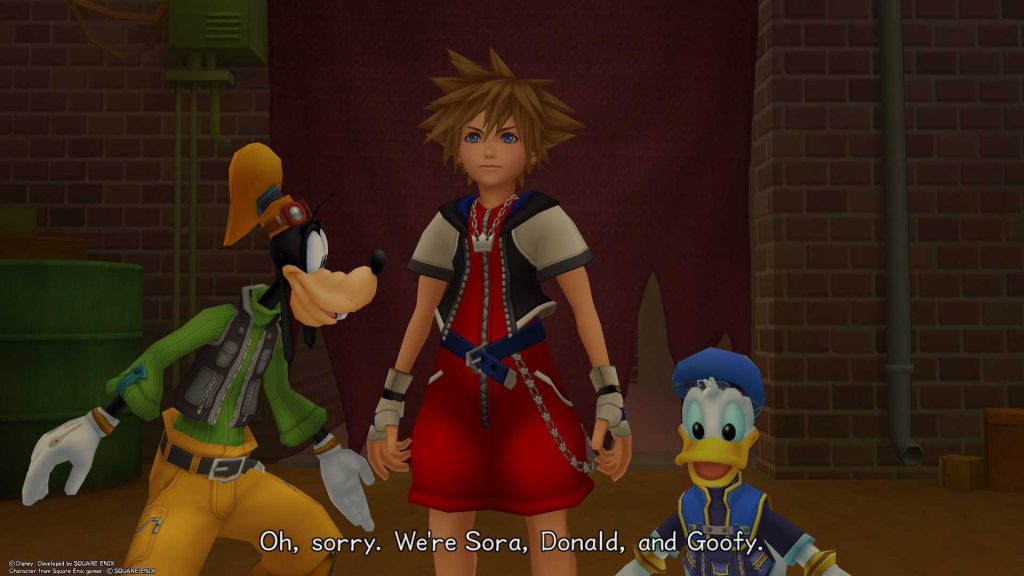
Identifying exactly what those bits and baubles are is slightly less clear cut. Gameplay improvements are largely in quickening the pace of the combat and leaning into greater spectacle, similar to what Square Enix was doing at the time in Final Fantasy VII: Advent Children. KHII’s Reaction Commands were a big part of this, effectively being context-sensitive techniques and quick time events that allowed Sora to perform show-stopping techniques with allies and showcase his now trademark acrobatic and flourish-heavy fighting style.
Personally, I think Kingdom Hearts II is where the balance of Disney and Square Enix is at its best. There’s a great variety of worlds here, including many returning favorites from the first game, unique additions like the Pride Lands (where Sora becomes a quadrupedal lion that can drift), and the 1980s deep cut that was Tron’s Space Paranoids — a world that ends up surprisingly important in the larger narrative by its ties to the games’ overarching villain.
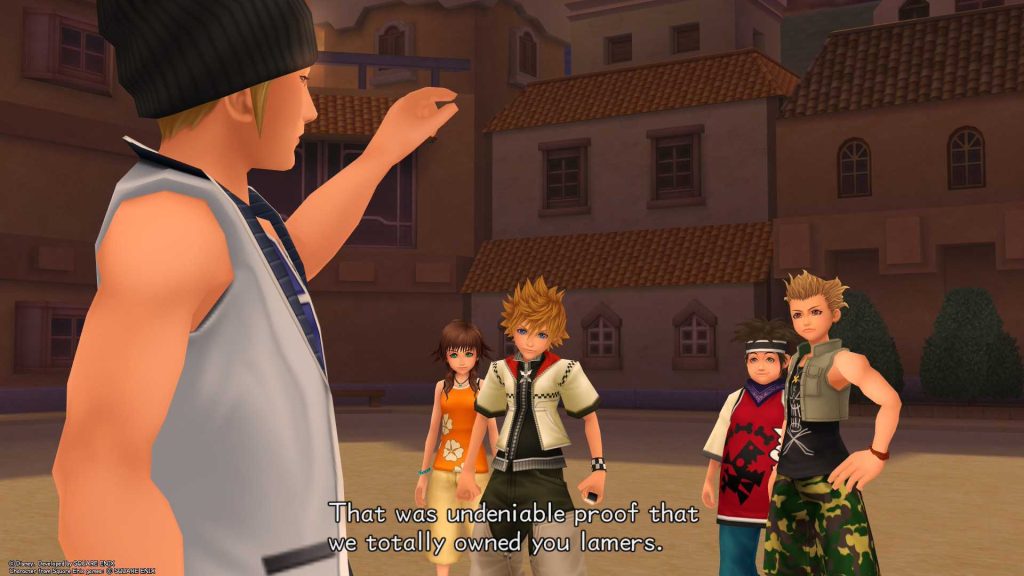
And it is the villains that really drive this one. Organization XIII’s prominence is firmly established and expanded on here as Sora faces off with members one by one. With them comes the full unraveling of Nobodies, an essential concept to the series exemplified in groups of mooks as visually impressive as the Heartless and the tragedy of new character Roxas.
If not for its reliance on storylines established in its two (and a half?) prequels I’d almost go so far to say Kingdom Hearts II is the most “essential” of these games to play. If you’re not invested in the overarching story and don’t mind some PS2 era quirks and limitations, this is the one to go with for the best in class gameplay.
Kingdom Hearts Birth by Sleep
Originally released on the PSP, Birth by Sleep is one I always looked back fondly on. This distant prequel expanded the series’ scope in a big way, both narratively and in terms of gameplay, despite releasing on weaker hardware. After picking it up again, now with the HD Final Mix treatment, some of its flaws — its camera and the blandness of its new Unversed enemy type come to mind — are a bit clearer. That said, I think it benefits the most from the hindsight of future entries from a narrative perspective.
Sora is no longer our lead, with protagonist duty split across three new Keyblade wielders that have their own distinct styles. Terra, Ventus, and Aqua emphasize strength, speed, and magic respectively. That comes through in their basic combos and movement abilities, but it’s most pronounced in what BbS brought to the table to expand upon the series’ by then well established combat.
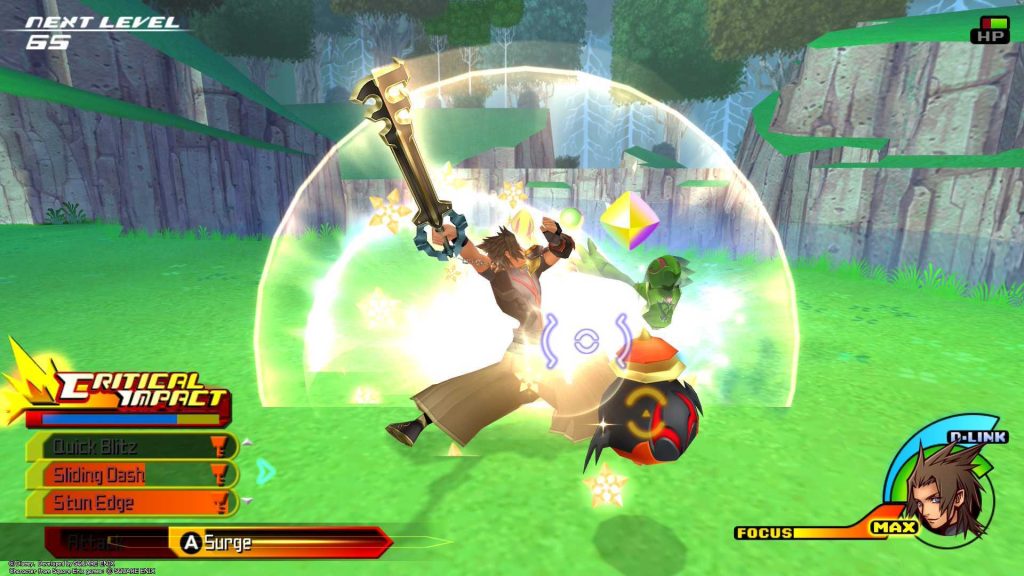
Rather than gaining abilities, you now gain commands which you’ll use to customize a deck of attacks, magicks, and other skills. This Command Deck system defines the experience of BbS, as you need to level up and fuse commands to gain new ones, accumulating and diversifying your powerset as the game progresses. As a twist on the series’ combat it works well, though in this entry it still has some kinks to work out. Certain commands are streets ahead of others in terms of power, and being able to play a board game to gain and level them up independent of gameplay makes getting overpowered really easy.
The commands also have attributes that, when performed in sequence, will cause your character to transition into a different fighting style entirely. For example, when playing as Ven, doing quick and wind-based commands will put him into his Speed Rave style, changing up his basic attacks and movement properties. Eventually you gain access to even higher level styles, and developing go-to decks to take advantage of various styles forms the crux of player expression here.
As notable that twist on gameplay is, it’s really the narrative beats that end up elevating BbS. It can be somewhat tedious to take it from the top with each character, and the Disney worlds are exceptionally brief this time around, but when taken as a whole it’s hard not to appreciate what’s being done here. The three leads go on to be exceptionally important to the series, weaving into established ideas and leading to bigger payoffs down the line. This game also gives the first look at this Kingdom Hearts saga’s main villain, Master Xehanort while also introducing the enigmatic Vanitas as another antagonist.
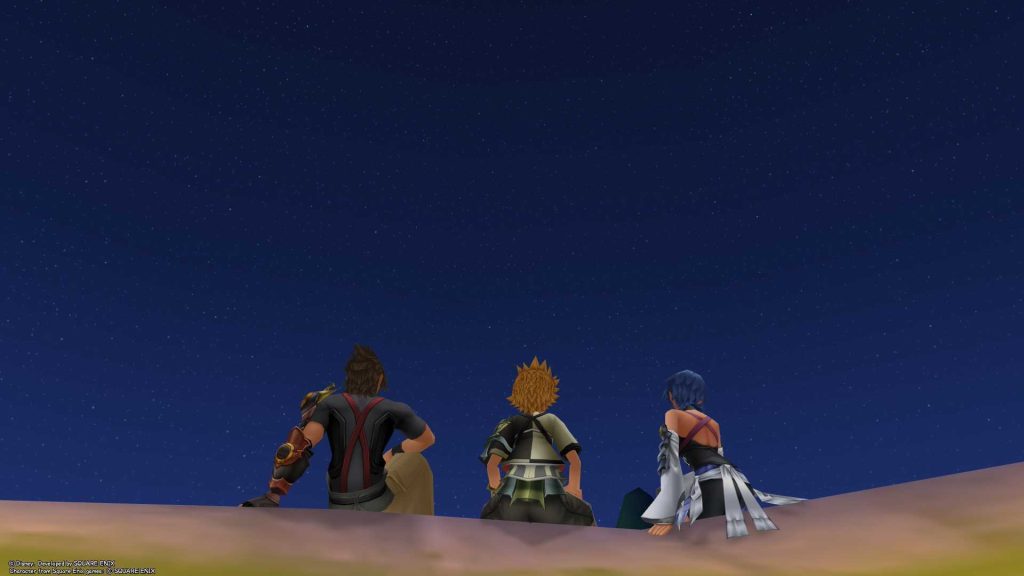
Even as the Disney elements start to slip further into the background here (though its selection of worlds is pretty good), Birth by Sleep manages to hold its place as a high point for the series. Before I used to consider it the best of the handheld titles, though after some time with this collection I don’t know if that opinion holds as strongly, courtesy of the next game we dove into.
Kingdom Hearts Dream Drop Distance
As a whole, Dream Drop Distance might’ve been the most pleasant surprise of the entire package. Having only played this on 3DS back when it originally launched, the HD treatment looks great and it altogether ran like a… well, dream. Not all of its ideas are exceptional, but the pieces all come together for a competent adventure that pushed the narrative into uncharted territory.
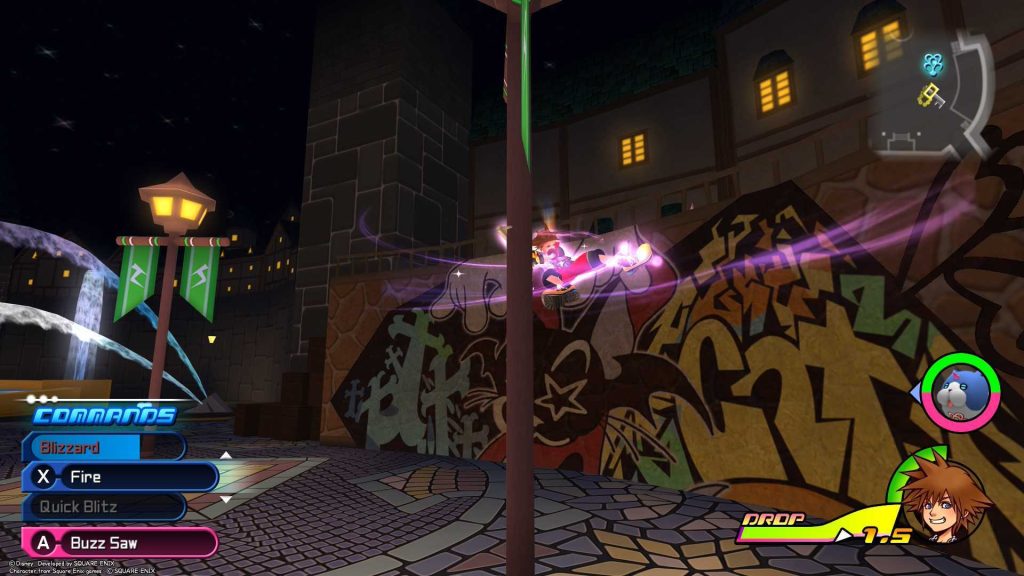
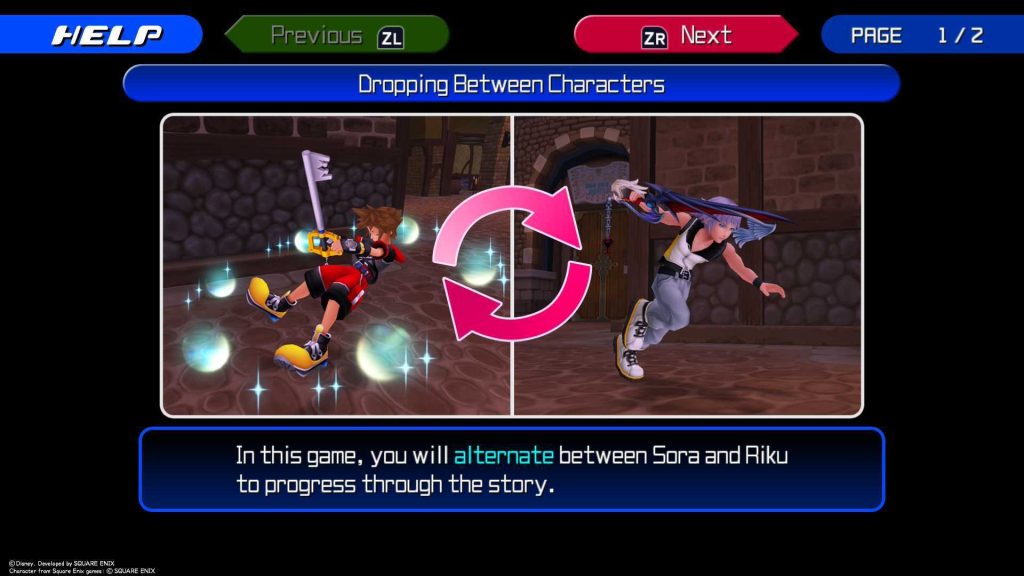
The most curious element of KH3D is that you have both Sora and Riku as playable characters. Unlike BbS or CoM, you aren’t selecting one of them for an individual campaign. Instead, you have a meter in the bottom right that fills up over time and from getting hit by certain attacks. Once full, you’re forced to swap between the two, diving into their version of a given world. It’s done alright enough, but can occasionally lead to oddly tense moments plus the repetition of certain environments. They do have their own stories and areas exclusive to each character, but it’s not a feature I really see the series exploring again.
The Command Deck system from BbS is back, though with some adjustments. Commands no longer level up, and there’s no melding them into new ones. Whether this is an improvement or not will come down to your personal preference, as there’s still a good variety of techniques to be found. Were it a simple streamlining I’d likely enjoy it more, but now in order to grow your collection of commands you have to engage with a whole other system.
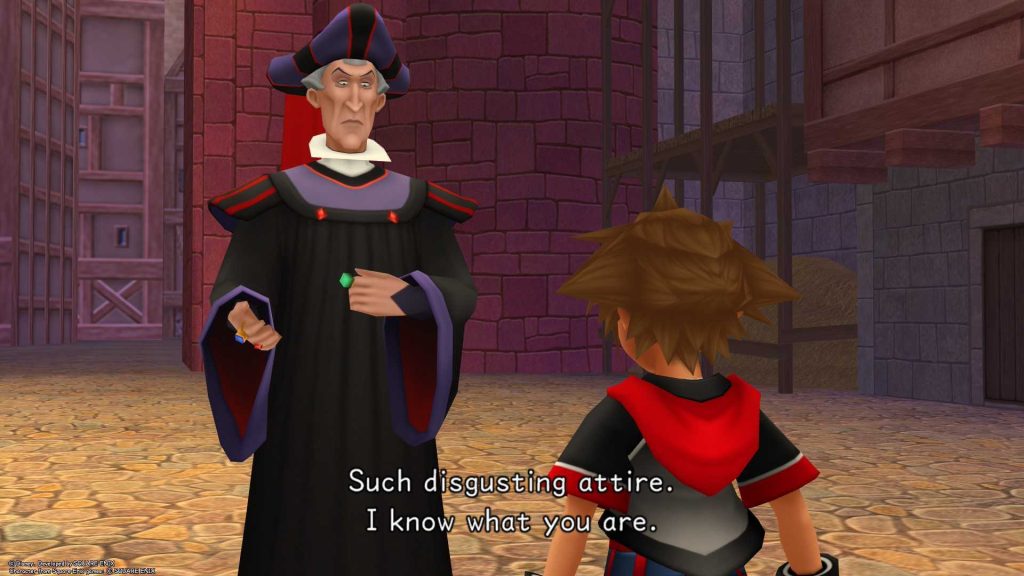
I speak, of course, of Dream Eaters. For KH3D, Square introduced yet another type of enemy, though this time you can collect and create them to fight alongside you in place of party members. Progressing these animal-inspired buddies is what grants you new techniques. They aren’t as visually interesting as Heartless or Nobodies, but they’re at least more imaginative than Unversed. I just don’t know if they make the experience of playing a Kingdom Hearts game better.
What does though, is Flowmotion. Now Sora and Riku are capable of bouncing off walls, swinging around poles, and turning momentum into both attacks and traversal. It really opens up possibilities for stage design (verticality becomes a bigger factor), but 3D’s areas end up really big and empty to compensate. Still, I think it’s a positive addition that saw refinement in KHIII, so experimenting with the initial system in 3D was its own kind of fun.
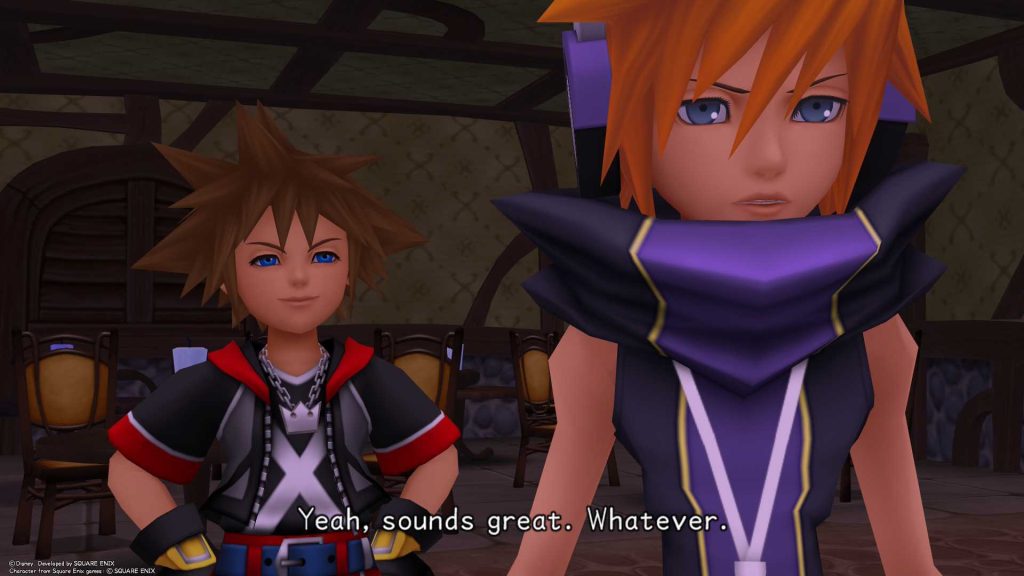
I mentioned the story for this one briefly already, and it really is one of the tougher ones to wrap your head around — it has a prodigious lore glossary to try and help, at least. Basically, Sora and Riku are taking on a test to try and formally become Keyblade Masters rather than two kids who fell into these circumstances. Doing so involves visiting “sleeping” worlds, uncovering revelations about Xehanort’s overall plan, and bundling up several narrative threads but not really resolving them. Its climax is definitely one of the more notable ones in how it tees up KHIII as a finale, and I’ll always appreciate Square Enix giving the cast of The World Ends With You another chance in the spotlight here.
Ultimately I enjoyed Dream Drop Distance more than I anticipated, even with some of its rougher steps and weirder ideas. In that way it might be carrying the spirit of this collection the best out of all these games, giving the games you remember another chance to shine. It’s all too fitting for what was originally a Nintendo exclusive title to get that chance for me (and I imagine a lot of you) on Switch 2.
Kingdom Hearts 0.2 Birth by Sleep – a fragmentary passage
This most idiosyncratically named title isn’t so much a full game as it was an early peek at what Kingdom Hearts III would be. It bridges the gap between Birth by Sleep and the original Kingdom Hearts while also setting the stage for KHIII; that’s a lot of narrative lifting. You play as Aqua as she traverses the Realm of Darkness, revisiting fragments of Disney worlds previously explored in BbS.
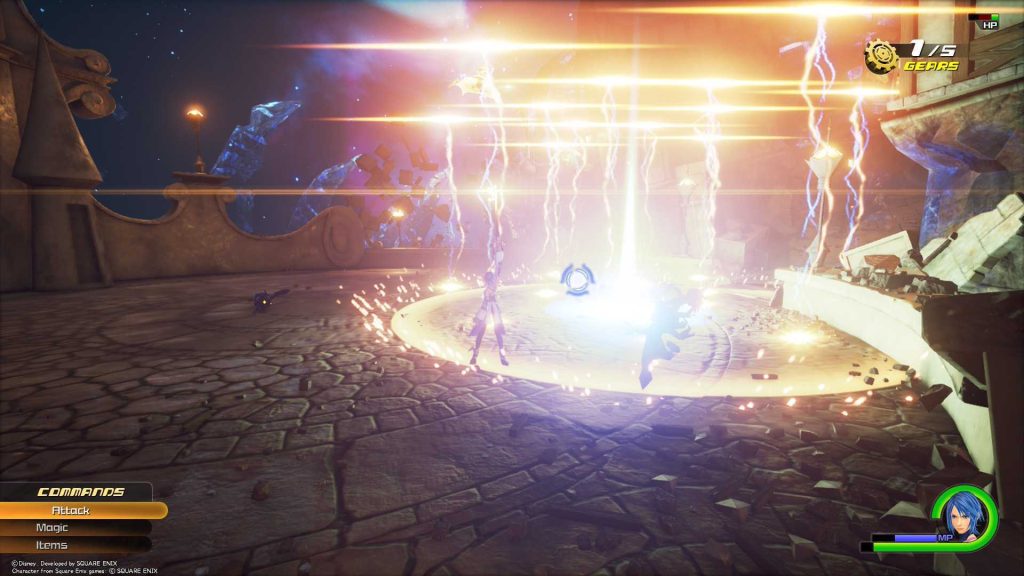
It feels odd to evaluate this one alongside the rest. As mentioned, this is not a full, dozens of hours, Kingdom Hearts experience. It’s about the length of a single world from KHIII, though credit where due, it uses that length of time well. Unique and thematic ideas are used as playgrounds to test out the (at the time) new combat system. Using the clock tower from Cinderella’s Castle of Dreams as a mechanic to unwind time is a neat idea, as was the use of Snow White’s Magic Mirror to explore Aqua’s growing doubt and despair. And there’s plenty of that, as it’s a mostly melancholic affair, though for this series that’s somehow refreshing.
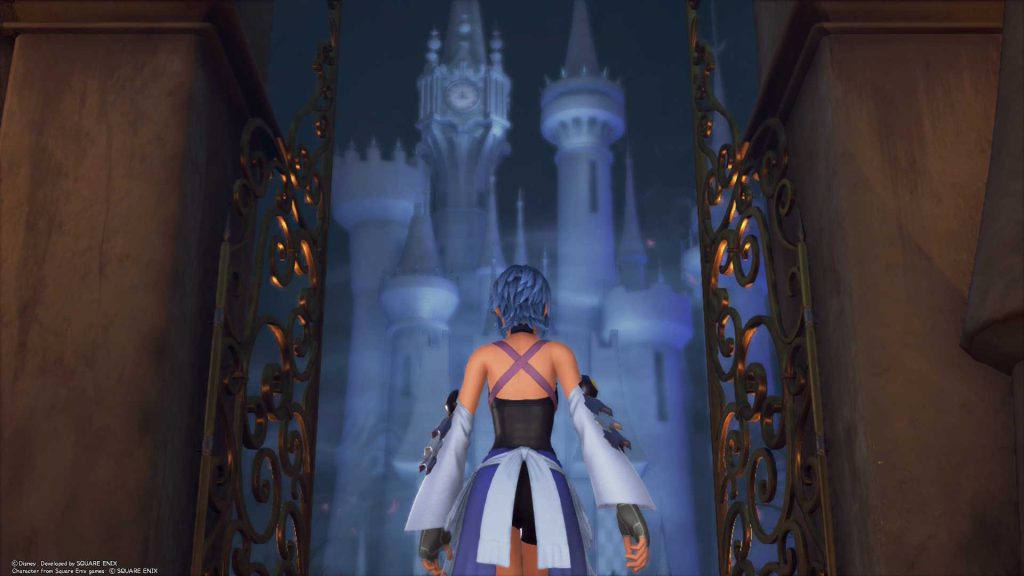
I touched on this already, but performance in this one is where the entire package is at its weakest. The same was true on other platforms, though playing handheld makes those inherent flaws more noticeable, particularly when unleashing some of Aqua’s more impressive magical attacks. Remembering that in the series’ context this is a glossed up demo does make me want to give it some slack, and it’s not so noticeable that it becomes unplayable. It simply ends up the low point of what is largely a very well done collection of Switch 2 ports.
Kingdom Hearts III
And here we are at the latest adventure of the series. Kingdom Hearts III was a highly anticipated game back in 2019 and I was willing to overlook a lot of its flaws in the interest of concluding a chapter of the series. In the context of a finale, there’s a lot of love for the series as a whole via returning characters and a combat system that’s pulling from every style established since Kingdom Hearts II. As a standalone experience, it’s forced to carry the weight of its predecessors to its own detriment at times.
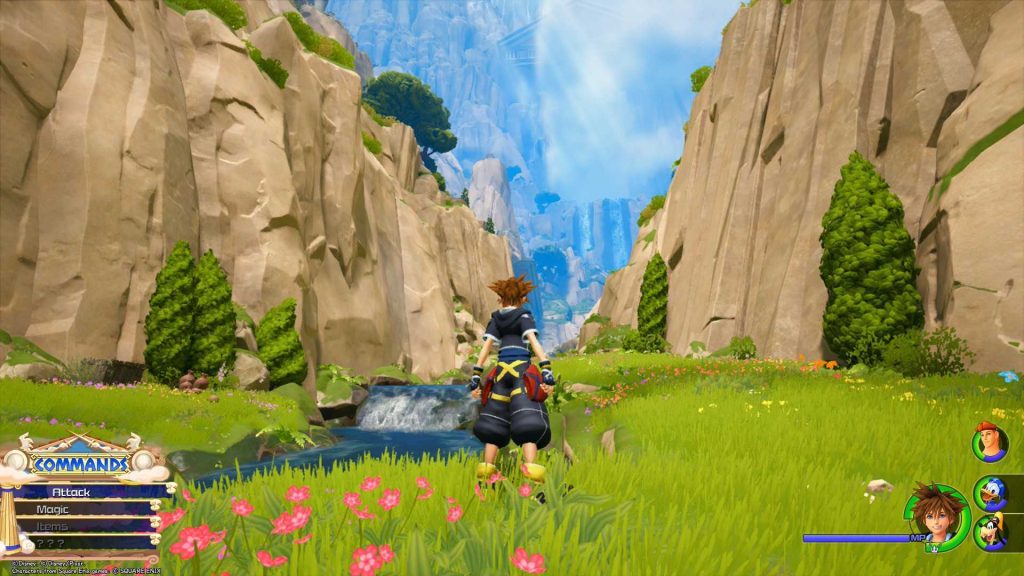
All of these games are cutscene exposition heavy, make no mistake about that. KHIII though spends so much time recounting past events that it can almost lock you out from what’s happening during its own adventure. Which is a shame, because there are some real high points here. Pixar worlds are introduced to the series, and both Toy Box and Monstropolis do a great job of connecting themselves to some of the series’ core themes. Woody of all characters gets to talk down a version of the main antagonist while waxing poetic on what it means to be a toy, and whether you find the moment poignant or hilarious, it’s exactly what these games have been about from the beginning. The same can’t be said of the game’s treatment of Frozen. It often recreates full scenes directly from the movie while keeping the Kingdom Hearts elements separated. So we get “Let It Go” in full, but hey look in the background, it’s Sora, Donald, and Goofy — hope they don’t get locked inside an ice fortress for a while. The whole treatment gives an impression of Disney requiring Frozen’s inclusion, but also being too restrictive and protective of the brand.
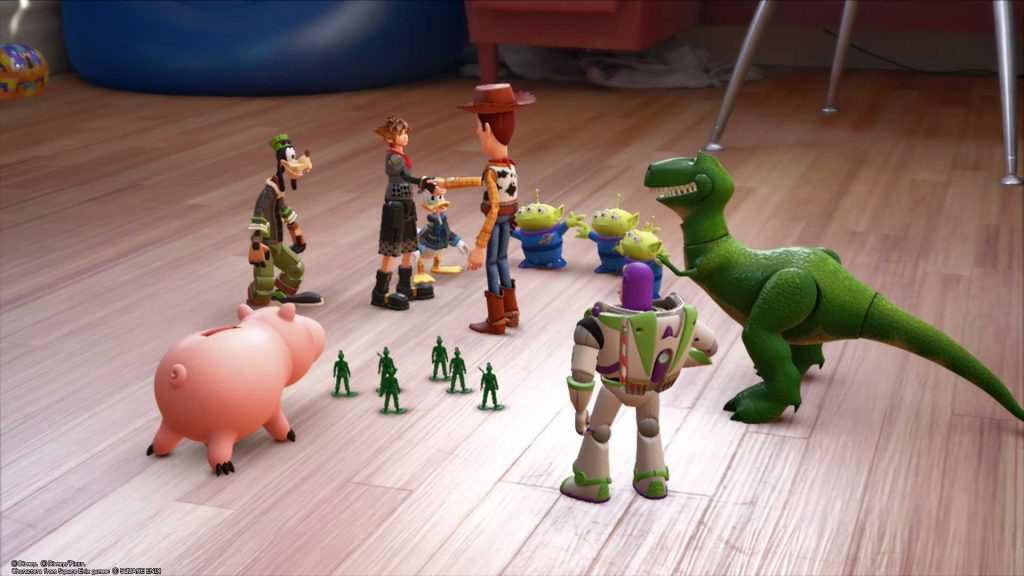
It’s easy to measure these moments — Kingdom Hearts III is both the freshest experience for me and the one I spend the most time focusing on for this review — but the combat is also a mix of excellence and extraneous. Largely, it’s a fluid and impressive system that melds Reaction Commands, Limits, Flowmotion, Style Changes, Shotlocks, Drive Forms, Summons and good ‘ol fashioned Keyblade bashing into something that works and makes you feel powerful.
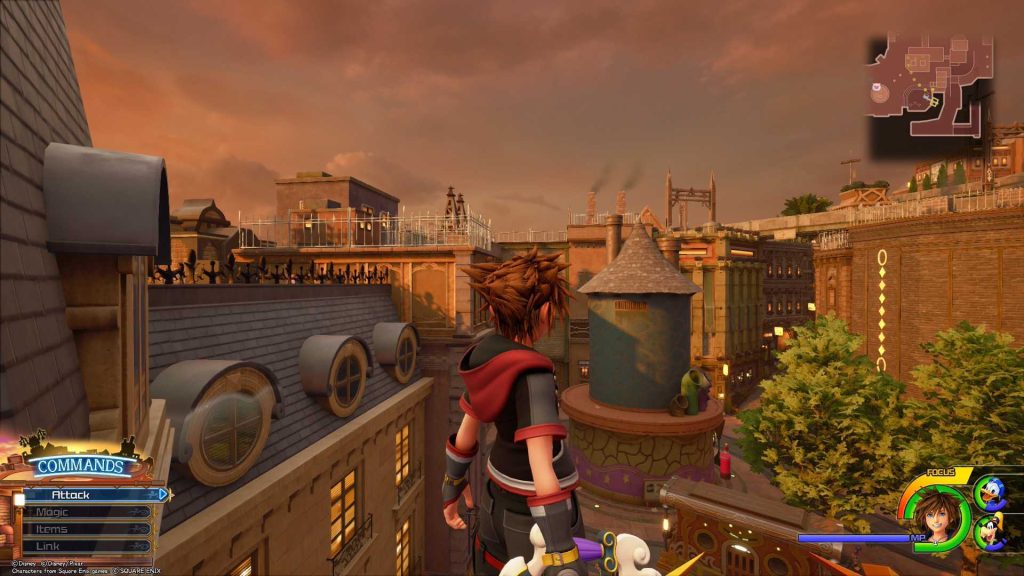
Where it falters is the Attraction Flow system, where theme park rides appear for lengthy attack sequences. You have control of these, activating and ending them as you like once they trigger, but they end up tiresome and difficult to optimize. Around the third time I was swinging a pirate ship at a single Heartless I started to avoid these.
I guess the core question here is if it does its job of closing the book on Xehanort’s time as our main antagonist and the resolution of Sora’s journey. And the answer to that would be… kinda? The Re Mind DLC does a lot to clean up what was a somewhat muddled conclusion from the original release (while adding some really enjoyable super bosses) but it’s harder to resonate with it the same way as older titles, like the first and second game. Maybe that’s just being older now, but I think it speaks to the power of following your own advice. In this case, things might have been better left simple and clean.
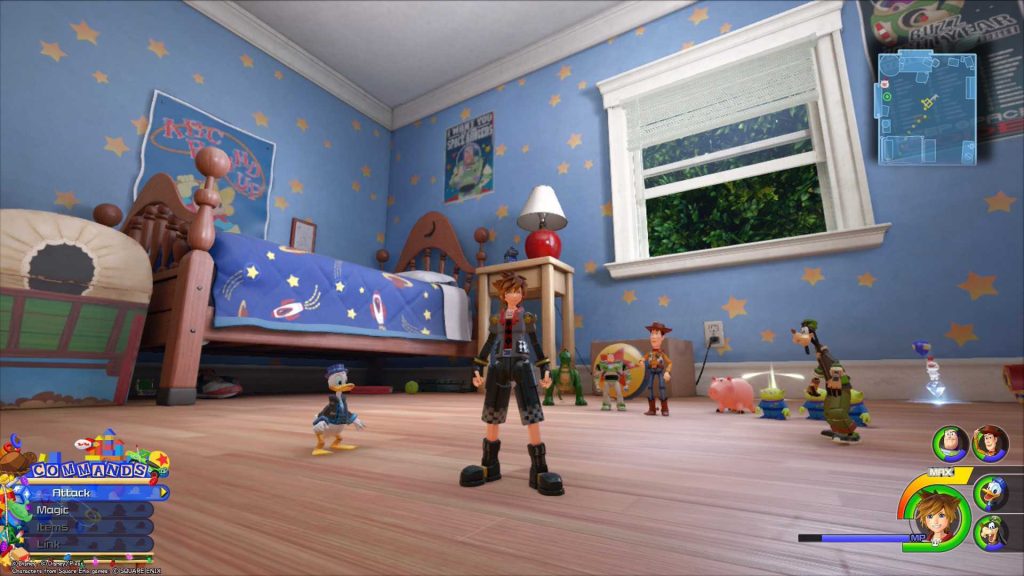
It bears repeating though, that Kingdom Hearts III plays fantastically on Switch 2. Other than some occasional slowdown and diminished visuals, handheld was everything I’d have wanted from this port. Docked closes that gap to what I remember from the PlayStation 4 release, looking and running great. If you want the most out of a single experience rather than going all in with the collection and can’t wait until late 2027 for Kingdom Hearts IV, you might want to consider KHIII as a standalone pickup.
Kingdom Hearts 358/2 Days, Kingdom Hearts Re:coded, Kingdom Hearts χ Back Cover
Alongside the playable games, this collection also includes three “movies.” Two of them compile and expand on cutscenes from a pair of Nintendo DS games and the third provides supplemental narrative for a mobile/browser game that continues to become more relevant as the series continues, if KHIV’s trailers are anything to go by. For a series that takes its lore and narrative this seriously, the presence of these movies is welcome.
Actually sitting down and watching them, though? Not so much. Kingdom Hearts games already have sequences where cutscenes pile on for upwards of an hour, but now you excise the gameplay? Granted, you’re able to do these as chapters, which I’d recommend for Coded in particular as it ends up the lengthiest of these and also the least consequential to the overall series plot. I wouldn’t go so far as to call it filler, but I couldn’t bring myself to care about a Data version of Sora going through the motions of the first game for the third time.
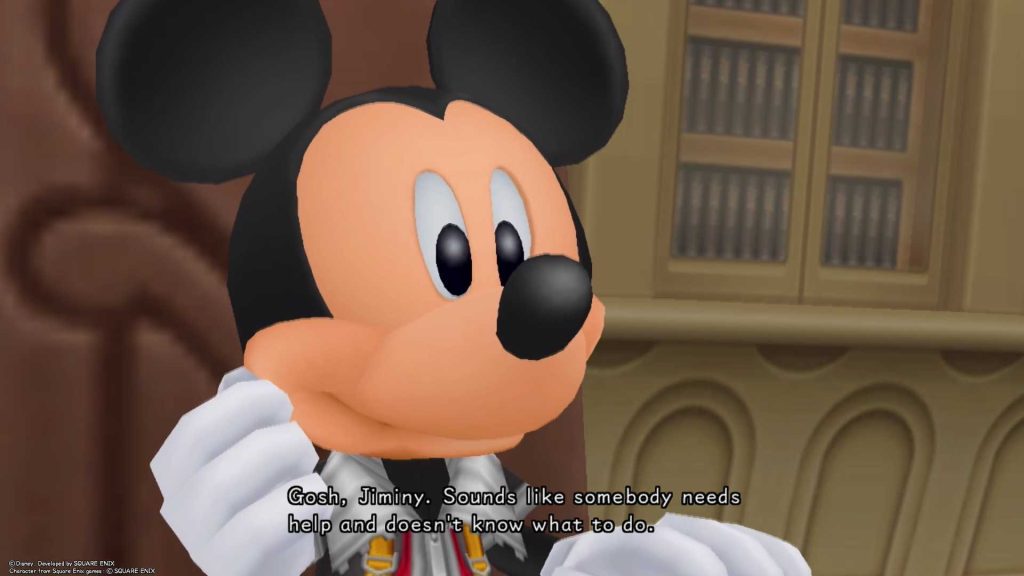
Comparatively, 358/2 feels essential even if you aren’t aiming to understand every single piece of this package. That’s largely thanks to the character Xion and the increased focus on Roxas and Axel that became a recurring element of games that would come after. Those three characters become yet another trio, and their tragedy told in 358/2 explores the themes of identity and self actualization that were given some attention back in KHII’s prologue. Having played the original DS version of this story, I wasn’t too bothered by its repackaging, though it does lead to some awkward transitions and the absence of a sense of time Roxas has spent with the Organization kinda muddles the story’s progression.
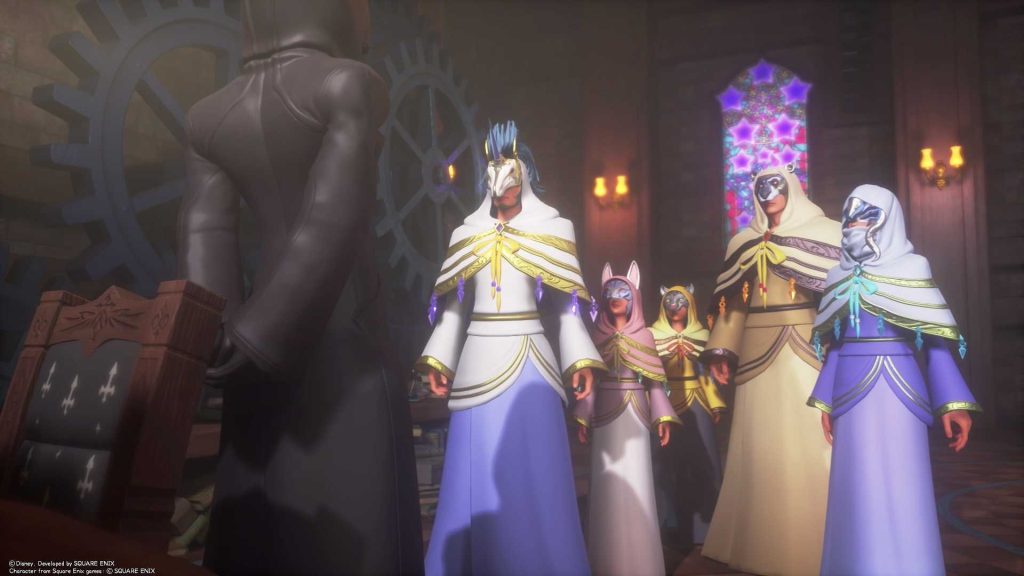
As for Back Cover… it’s honestly really hard to evaluate. Unlike the rest of the package, the likes of Sora and Xehanort aren’t really factors to what unfolds here and there’s effectively no Disney presence to elevate and compliment. It instead gives added context to the Keyblade War, which went from a cool visual from one of the series’ secret endings to essential lore way too fast. Even in retrospect, with all of these games under my belt, Back Cover doesn’t feel essential. Time will tell, as the games continue to delve into the Book of Prophecies, Luxu’s Black Box, and the Master of Masters, just how important this movie is.
Final Thoughts
It’s only fitting that a look back on 25 years of Kingdom Hearts would end up this wordy, but I promise we’re almost done. As specific as we can get with each individual game, it’s the series-wide elements that have united fans in support of these games. The UI, particularly the world-specific command menus and screen transitions introduced in Kingdom Hearts II, are such a nice flourish that uplifts the world-hopping nature of its universe. Even when the scripts can get twisted and anime-esque, the performances from such a broad cast of Disney and Square Enix regulars, alongside the Kingdom Hearts-specific leads, have given a consistent voice to the franchise.
More than anything though, I have to emphasize the work of Yoko Shimomura. Her work as composer is essential and iconic, and though her career stretches into the likes of Mario RPGs and Street Fighter, there’s no denying Kingdom Hearts as her masterwork. Tetsuya Nomura may be the creator, director, and designer but it’s Shimomura who’s tapped the emotional core of these games with the likes of “Dearly Beloved” and “The Other Promise.”
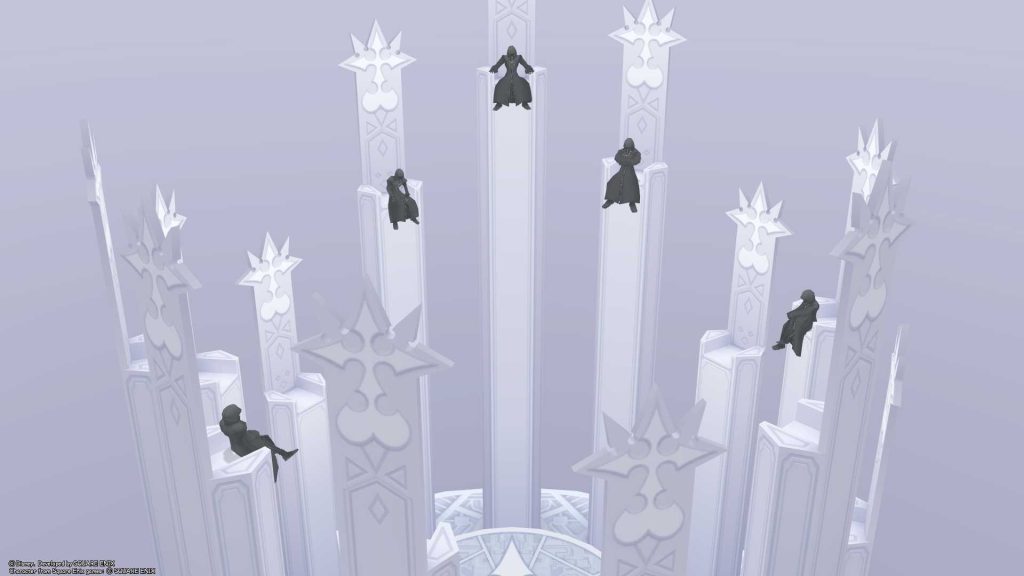
For Nintendo fans who’ve perhaps never given these games a go, my highest recommendation would go to the collective package of Kingdom Hearts, Kingdom Hearts II, and Birth by Sleep. Kingdom Hearts III comes in at a close second, and while I was thoroughly impressed by Dream Drop Distance, the 2.8 package is easily the weakest portion of the I-III collection.
That we even have these options on Switch 2 is surreal to me. Even more so that Kingdom Hearts IV will be launching on a Nintendo console, yet here we are. No matter where you do it, these games have fully endeared and solidified themselves as a must-play franchise.
Leave a Comment
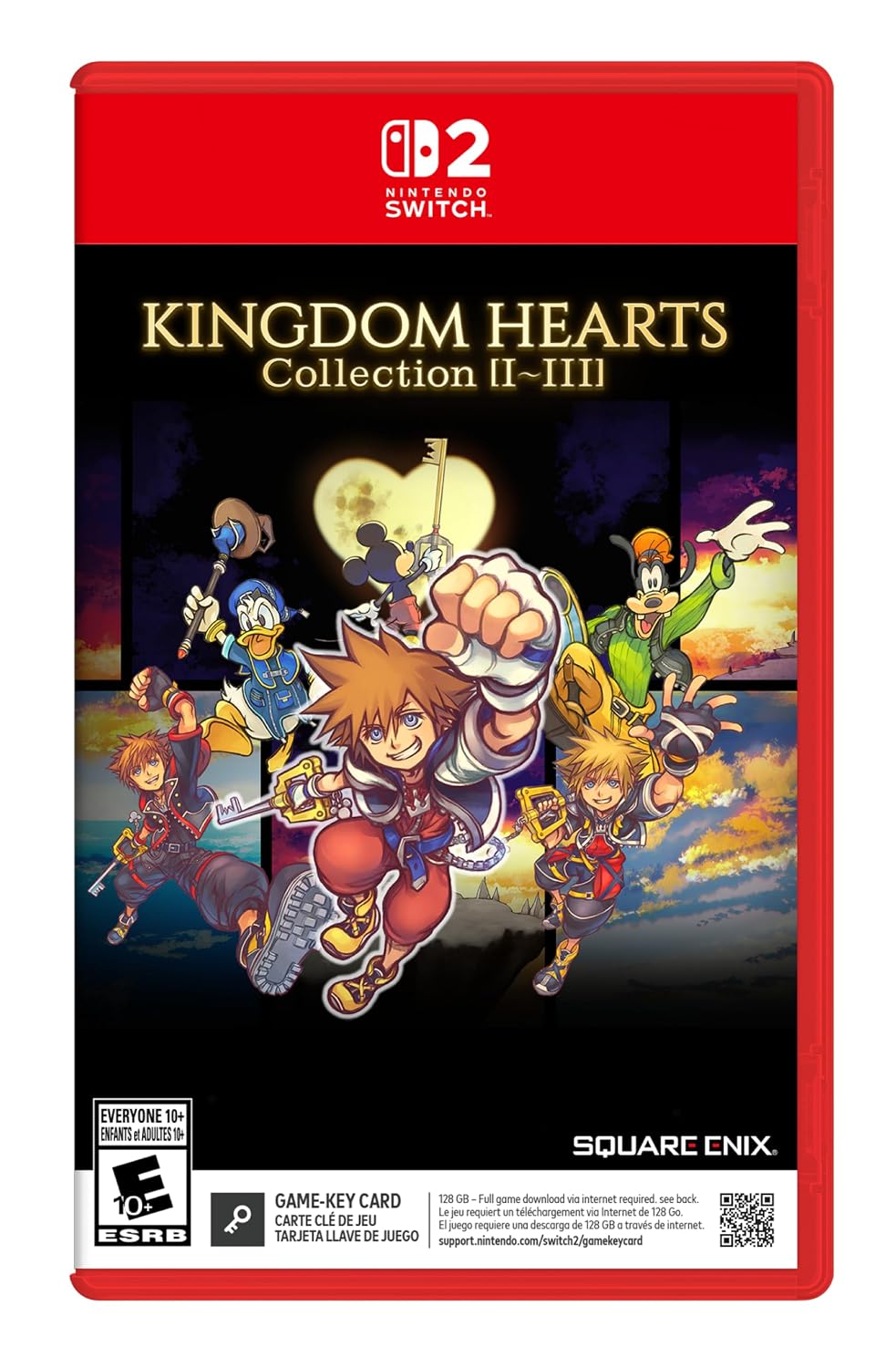
System: Nintendo Switch 2
Release Date: October 8, 2026
Categories: Action, RPG
Publisher: Square Enix
Developer: Square Enix
Written by Ricky Berg
When he isn’t writing for Nintendo Wire, Ricky’s anticipating the next Kirby, Fire Emblem, or if the stars ever align, Mother 3 to be released. Till then he’ll have the warm comfort of Super Smash Bros. to keep him going.
