
Just last week, Sony announced that the price of the PlayStation 5 would be increasing in the US, the UK, Europe, and Japan. Starting on April 2nd, 2026, the PlayStation 5 Digital will be $600, the standard PS5 $650, and the PS5 Pro $900. That’s quite a shocking increase, bringing the system’s price in line with the Xbox Series X after Microsoft increased its prices last year. For consoles that are nearing their sixth anniversary, it’s stunning that they’ve increased in price to the tune of almost 200% instead of becoming cheaper over time.
While it’s easy to point the finger at Sony and claim greed, the global economic situation has not gotten any better since 2026 started. Not only are AI Datacenters still hogging consumer parts from the market, but the ongoing RAM crisis is showing no signs of slowing down and prices for flash memory are starting to go up. It’s a no-win situation for any company working in electronics and computers, which is pretty much every video game company on the planet. You either increase prices or risk losing a ton of money on production.
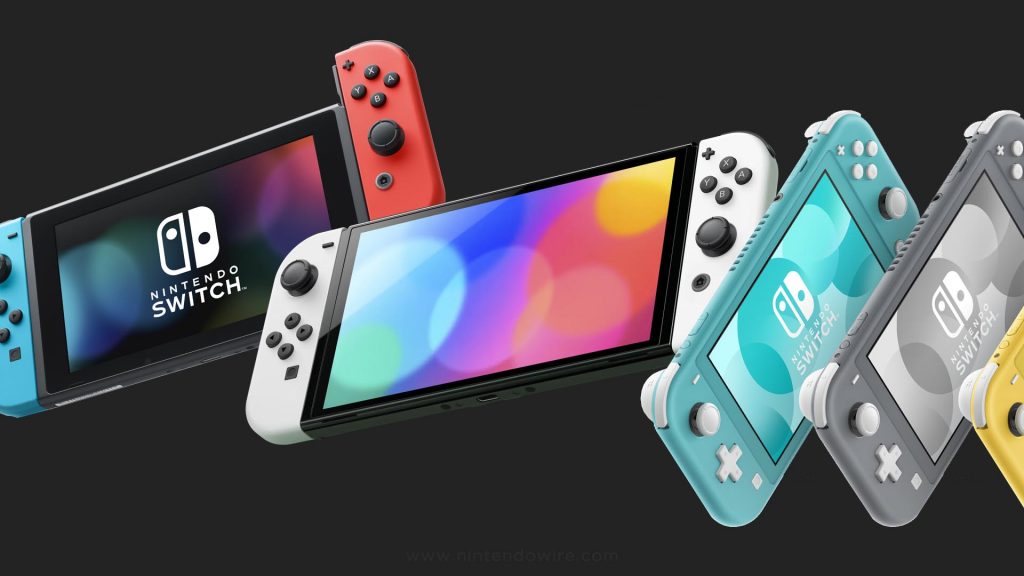
So far, Nintendo has kind of avoided needing to do this. The Big N had delayed pre-orders of the Switch 2 in the US last year due to economic uncertainty, but then kept the originally announced $450 MSRP while lightly upping the price on the previous Nintendo Switch 1. It also increased the price of peripherals for both consoles, not to mention made the standard price for first-party games $70. The console is selling pretty well, but with a reported US production decrease to the tune of 30%, it’s likely inevitable that Nintendo will need to up the price of the console this year.
One way the company is already trying to counter price increases is by decreasing the price of digital games. Last Wednesday, the company announced that all first-party games will have different prices between physical and digital editions. The first game to enact this, Yoshi and the Mysterious Book, will be $60 digitally and $70 at retail, which potentially highlights a $10 difference moving forward. It’s weird to think that a price decrease is how Nintendo will get around needing to increase prices elsewhere, but it lines up with what we know about flash memory prices.
As far as the hardware is concerned, we already know that Nintendo created a Japanese-only version of the Switch 2 to get around tariffs on parts and curb potential exporting due to the weakened yen. This has seen the console explode in popularity in the region, humorously becoming more popular than Nintendo itself. I’m not sure if an English-only model for the US would be viable (the US has far too many cultures in it to exclude other languages), but we could see select language models become a reality. That might be more of a pain to manufacture and ship than it’s worth, however.
Realistically, I anticipate the Switch 2 will see a price increase before the summer. These last two weeks have been full of rumors regarding upcoming Switch 2 games, but I don’t know how Nintendo can continue its current $450 MSRP if obtaining the parts necessary to manufacture the system keep going up in price. No one is going to be happy about a $550-600 Switch 2, but if it comes packed with the rumored new Star Fox or Splatoon Raiders, it might go down easier. Providing themed consoles for higher prices could also be a way to soften the blow, similarly to how Switch 1 had special editions for Animal Crossing: New Horizons and The Legend of Zelda: Tears of the Kingdom cost $30-50 more. It’s not ideal, but it is a way to keep the current Switch 2 at $450 while inflating the price elsewhere.
What does that mean for the industry at wide, though? 2026 isn’t off to the best start when it comes to new games, and players are starting to look for cheaper alternatives. At least on PC, PS5, and Xbox Series X|S, games regularly go on sale. Nintendo has been stuck in this mindset that it can’t “devalue” its games by lowering prices over times, but that might finally have to change. In previous generations, we used to see “Player’s Choice” and “Nintendo Selects” as budget price lines for older titles. While spending $50 for a new game was never really that big of an ask, getting Super Mario Galaxy for $20 was basically a no-brainer. Nintendo might need to resurrect that, along with other companies following suit.
My fear, on the other hand, is that no company wants to make a stand and just trucks along as if nothing is wrong. Even if truly genre defining and epic games come out this year, people will be less likely to part with $70 to experience them. This will then lead to a downturn in first month adoption rates, seeing more studios close and even more talent exiting the games industry altogether. Grand Theft Auto 6 is still scheduled for the end of 2026 and will reportedly be $70. It’s going to be hard to look at the quality of that and think it’s justifiable for smaller games to be priced similarly (disregarding whether the game is any good or not).
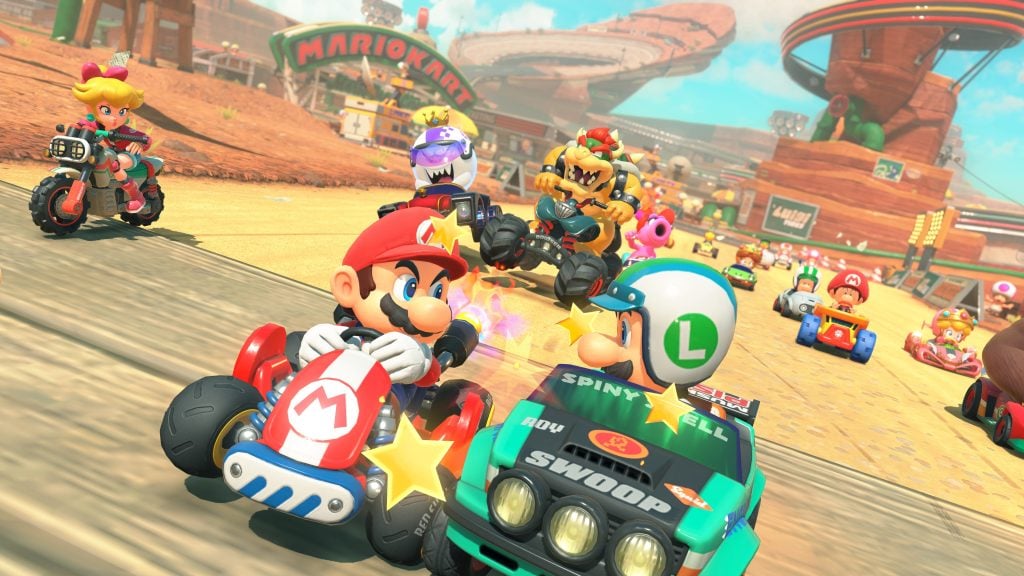
Nintendo has a bit of a leg up in that even its “bad” games are remarkably polished, much more so than the competition, but can it continue to price comparatively smaller games the same as other triple-A, massive scale titles? The Legend of Zelda: Tears of the Kingdom for $70 was understandable considering Nintendo’s then-recent stock price plummet and its desire to want to pay its developers more. Charging $80 for Mario Kart World is ludicrous in any scenario.
I’m not sure that there is an answer to any of this. I don’t want to be a doomsayer warning of the end times, but I do think now would be the time to buy a Switch 2 if you have any interest. Nintendo might hold out as long as it can on a price increase, but I expect that for the console’s first anniversary, we will see a new $100 increase to its cost. Maybe it’s time to heed online advice and “touch some grass” like the old days.
Leave a Comment

Written by Peter Glagowski
Peter has been a freelance gaming and film critic for over seven years. His passion for Nintendo is only matched by the size of his collection.
