
It’s a little hard to believe that the Dynasty Warriors series will be turning 26 this year. Released as a North American PlayStation 2 launch title all the way back in 2000, Dynasty Warriors 2 (which received its number due to a PS1 fighter called Dynasty Warriors in the US) set itself apart for being such a boldly different kind of hack-n-slash that could render hundreds of enemies on screen at a time. It was maybe lacking depth, but the sheer spectacle of mowing down hundreds of soldiers made it a popular first game to buy with the new console. Developed by Omega Force, the series would continue to iterate on the PS2 by introducing more historical battles, more playable characters, and even more weapon variety to spice things up.
We’re not here to recount the entire series’ history, however. That would be a fool’s errand. While there are only 10 mainline games, the sheer number of spinoffs, sister series, and expansions would fool you into believing this was the most prolific franchise ever created. I’ve played a bunch of them and I still haven’t come close to experiencing them all. No, today, we’re talking about Dynasty Warriors: Origins, something of a reboot for the series that released on PC, PlayStation 5, and Xbox Series consoles last year.
Announced for Nintendo Switch 2 during the September 2025 Direct, Dynasty Warriors Origins is a retelling of the 14th century historical epic “Romance of the Three Kingdoms.” Based on ancient Chinese history, Romance of the Three Kingdoms covers the events of the “Yellow Turban Rebellion,” the titular Three Kingdoms Period, and the foundation of the Jin Dynasty in the third century. Origins comprises an alternate history version of events where a singular character takes part in reshaping China a-la some Forrest Gump styled meddling. Somehow, that means co-op had to be dropped.

You don’t really need to know that to enjoy Origins, however. Likely as a result of the Dynasty Warriors games becoming rote and confusing, Omega Force set out to mix things up with Origins and provide a new starting point for players. As such, the game covers only the first half of the Three Kingdoms period while providing more context for individual characters’ motivations. That last bit plays a key part of how Origins unfolds as roughly halfway through the game, you’ll need to make a choice about which leader you feel is the true hero of China.
Getting to that point means engaging in large-scale battle after large-scale battle, and sitting around while characters talk rather monotonously. I’ll get to the gameplay in a bit, but it’s surprising how much time in this game is dedicated to cutscenes. Past Dynasty Warriors titles obviously featured them, but in the first two hours of Origins, you’ll engage in only a single battle and watch maybe six or seven different cutscenes. It doesn’t set the best first-impression.
Most of that time is explaining how various mechanics work and letting players roam around a big map that connects all of the various battles and story events. Unlike the previous installment, Dynasty Warriors 9, Origins does away with open-world design and simply links its battles with a map that is similar in structure to a strategy game. Through this, you can control the player character as they move around different regions of China and visit different towns to buy gears, talk with different warriors, or battle. I think a simple menu could have handled this better, but I understand why it’s here.

Last mention of story, I swear, but the plot in Origins is very lackluster. Omega Force has never been great at condensing the lore of Romance of the Three Kingdoms, but Origins’ presentation fails the new story ambitions. I do think it’s a good idea to focus the story on a singular character, but cutscenes are so basic with barely any animations that they start to drag on.
When you do finally get into battle, however, it’s very similar to how things played out in Hyrule Warriors: Age of Imprisonment. I didn’t have the chance to play Origins last year, but did finish the latest Hyrule Warriors game, so I was shocked. Most of the mechanical differences that title sported are present here. You still have basic “Light” and “Heavy” attacks that can be strung together, but Origins introduces a mechanic based around “Battle Arts” that lets you bust out special moves to counter your foes. The biggest similarity to Age of Imprisonment is that enemies will glow orange to indicate that you need to use an SP attack, which then stuns them and drops their guard.

As you progress through the story, you’ll also acquire the ability to guide troops, which then brings “Tactics” into your arsenal. With tactics, you can instruct soldiers to fire a volley of arrows, rush forward at troops, or guard a specific spot, etc. It’s a lot more depth than Dynasty Warriors has ever had, even in the games that were specifically more strategy oriented. It never becomes overwhelming, but I was constantly surprised by how many different factors you needed to account for at times.
Similar to guiding troops, some battles will let you take a companion along for the ride and that’s about the closest Origins comes to featuring different characters. Depending on your chosen faction and where in the story you are, you can be accompanied by the likes of Guan Yu, Xiahou Dun, Zhao Yun, or Sun Shangxiang, and they offer the temporary ability to cut loose on the battlefield. While there is a mechanic that allows you to do joint Battle Arts with them, swapping over to the companion mostly feels like a limited God-mode so that you can get out of a tricky situation. It’s fun, but is thankfully balanced by requiring you to build up a meter first. It’s rare you’ll ever get to deploy them twice in one fight.
The best change is how leveling up works. With every other Dynasty Warriors game (and most spinoffs), you leveled up simply by doing battles and acquiring experience. It was straightforward, though could lead to moments where you stuck with one character so long that they were your only viable choice in the late game. For Origins, you don’t earn experience on a character level, but for the type of weapon you’re handling. Each weapon, of which there are nine types (with a tenth unlockable post-game) has eight ranks, and those ranks imbue your player character with more health, defense, and strength. As you use a weapon more, it takes longer to rank up, so the game encourages you to switch things up from level to level.

Other elements like accessories and equippable health items don’t dramatically change things up, but feel like quality-of-life tweaks from past Dynasty Warriors games. It was annoying to be low on health and have to scour a map for health items, so I appreciate that you can carry meat buns on you. Still, the extraneous elements in Dynasty Warriors Origins don’t really hurt or help the game in any meaningful way.
What I mean by that is, my time playing Origins was enjoyable, but marked with periods of tedium. When you get into battles, the game feels great and more modern than the series did in the past. You aren’t getting a Team Ninja masterpiece with regards to combo depth, but having parries and perfect dodges pushes the skill ceiling up and makes combat more engaging as a result. Giving players clear difficulty options is also nice, not to mention that “Hero” mode gives you more experience alongside a much tougher challenge. It’s just that everything in between the battles doesn’t feel like it was given the same effort.
The player character is simply not an interesting protagonist. They never speak, have next to no personality, and are praised for even the smallest things that it comes off as trying too hard. I appreciate during Chapter Three that you need to make a choice on which kingdom to follow (which actually locks you out of other missions and changes the finale), but that’s about the most significant choice you’ll ever make. Everything else is your character following a pre-determined path with some “fated hero” nonsense that never manifests into anything interesting. With so much time allotted for this story, it can grow tiresome well before the credits roll.

As for this Switch 2 port, Dynasty Warriors Origins doesn’t necessarily look bad, but the performance can be spotty. Players are given the option of a 30 fps lock or what the menu calls “Variable,” and the frame rate is definitely variable. Dropping the resolution down, variable can sometimes facilitate 60 fps, but is often just north of 30 with stuttering. It’s not horrendous and actually functions fine on the Switch 2 display, but it can jump up and down wildly in some instances. When selecting 30 fps, the game seemingly outputs at 1440p and is noticeably sharper, but then feels a bit sluggish in comparison.
It’s very clear that Origins is utilizing DLSS as it exhibits some of the same artifacts I’ve seen in PC games. I do wish there could have been an option for a locked 60 fps, however, as that would have been much better. In the moments where the game can hold to that frame rate target, it feels fantastic. I still stuck with the variable mode as controller response was always tighter, but it’s a shame that Nintendo hasn’t enabled VRR for docked mode as it would clear up some of the visual bugs. As far as non-performance related issues, the only thing I noticed is that the few FMVs present are highly compressed. They don’t suffer from playback issues, but they definitely aren’t 4K videos.
Some of that won’t matter to players, and that’s great. If you’re okay with sometimes spotty performance, Dynasty Warriors: Origins’ Switch 2 conversion is solid. Problems inherent to the game’s presentation, however, cannot be solved by Nintendo’s console. If this game focused more on its combat and less on the plot surrounding it, it would be a far better experience. It’s a solid way to restart the series, but Omega Force really needs to hone in on why Romance of the Three Kingdoms has endured for centuries instead of trying to concoct some nonsensical plot to staple onto it.
Leave a Comment
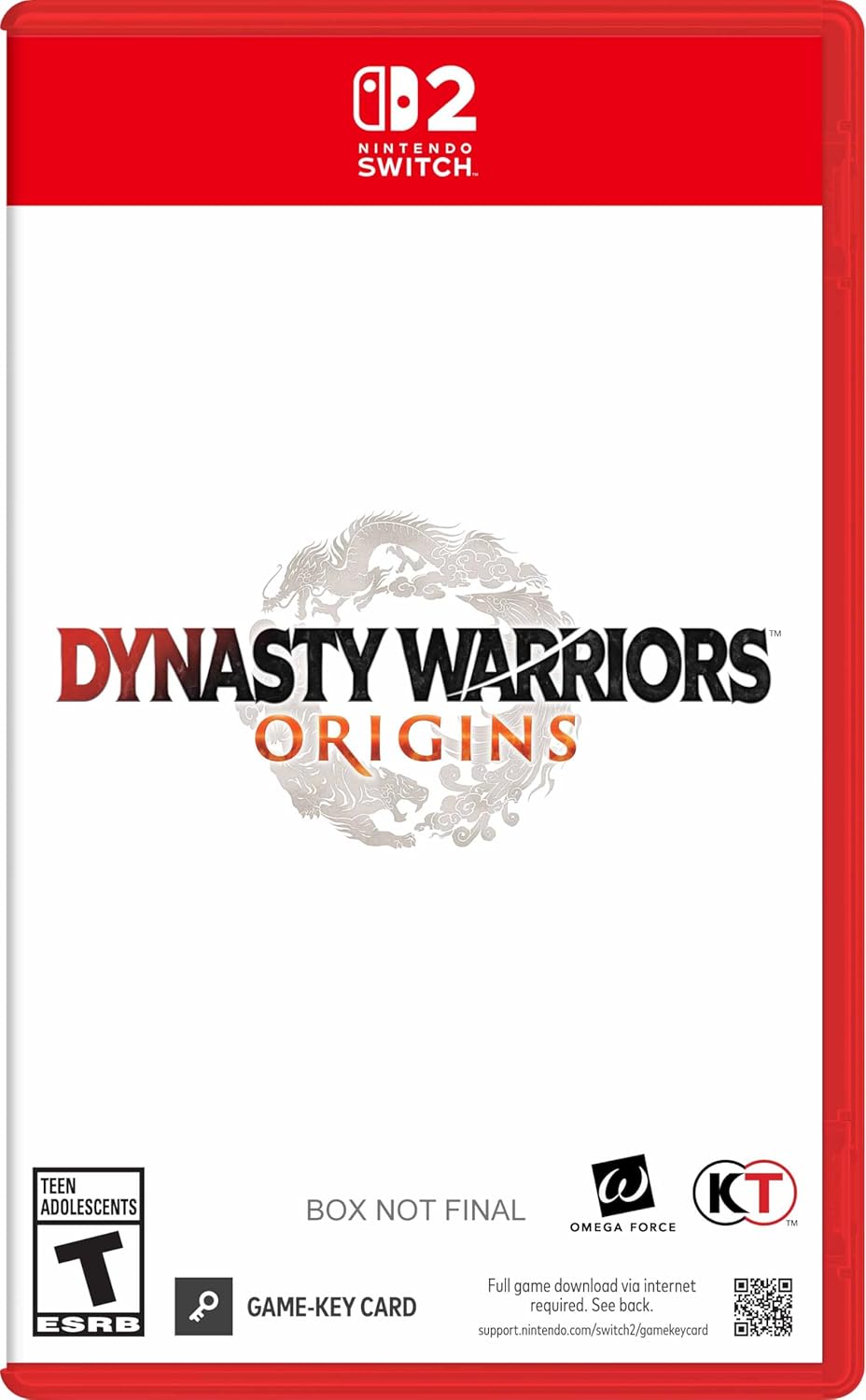
System: Nintendo Switch 2
Release Date: January 22, 2026
Categories: Action, Strategy
Publisher: Koei Tecmo America
Developer: Koei Tecmo, Omega Force

Written by Peter Glagowski
Peter has been a freelance gaming and film critic for over seven years. His passion for Nintendo is only matched by the size of his collection.
